Weighting set and shadow costs
The weighting set converts individual environmental impact categories into a single weighted environmental performance score. This page explains how this works and which weighting factors apply as of 1 July 2026.
For LCA practitioners, calculation tool providers and users of environmental data in the construction sector.
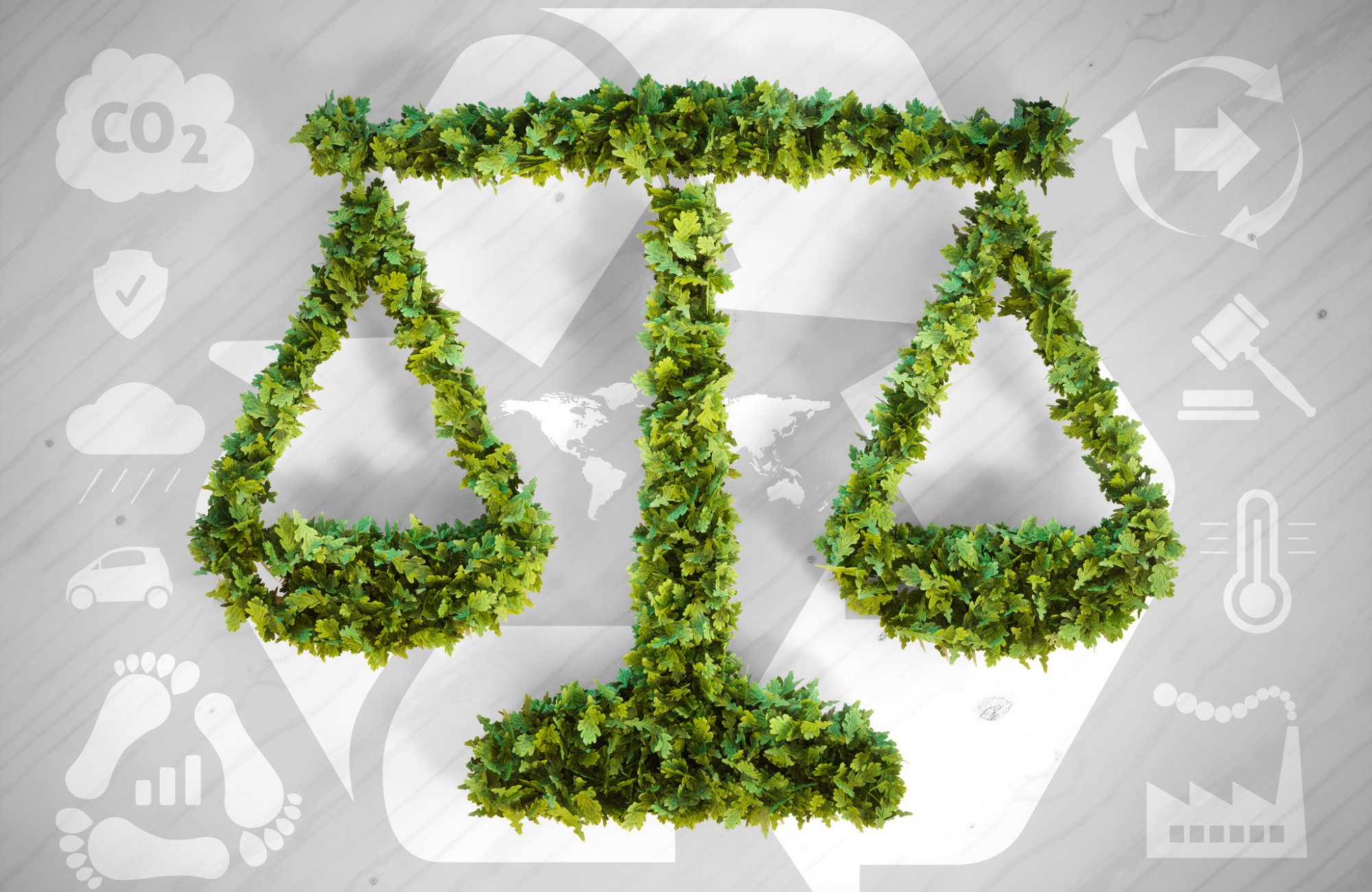

To convert individual environmental impact categories into a single environmental performance score, weighting factors and shadow costs are applied. This system is part of the Assessment Method for Environmental Performance of Buildings. As of 1 July 2026, the weighting set corresponding to set A2 applies, designated by VRO. This contains 19 impact categories, compared to 11 in the previous weighting set.
From impact category to shadow costs
The environmental performance of a building is calculated on the basis of multiple environmental impact categories. A life cycle assessment (LCA) maps which raw materials are used and which emissions are released during the life cycle of construction products. These emissions are classified into individual impact categories, such as climate change, acidification and eutrophication.
Because these impact categories use different units, they cannot be added together directly. To arrive at a single weighted score, fixed weighting factors are applied. The result is expressed in shadow costs.
Shadow costs express environmental damage as a single monetary value, making the different impact categories mutually comparable.
The collection of these weighting factors is referred to as the weighting set. The applicable weighting set has been designated by VRO and is applied in the environmental performance calculation of buildings.
From 11 to 19 environmental impact categories
The classification of impact categories follows the European standard EN 15804. Until 2019, work was carried out with 11 environmental impact categories based on EN 15804+A1. This set is referred to as set A1.
With the revision of the standard to EN 15804+A2, the number of impact categories was expanded to 19. This more comprehensive set is referred to as set A2. The expansion provides a more detailed and complete representation of environmental effects.
Environmental data in the Dutch Environmental Database is compiled in accordance with the applicable version of the standard. The transition from 11 to 19 impact categories means that environmental profiles have become more extensive and that the environmental performance of buildings is based on a broader set of environmental effects.
What has changed?
The expanded set of 19 environmental impact categories is based on EN 15804+A2. Compared to the previous set, indicators have been refined and expanded.
Existing categories, such as acidification, eutrophication, photochemical ozone formation, human toxicity and ecotoxicity, have been adjusted. In addition, climate change has been broken down into three separate indicators.
This expansion changes the composition of the environmental profile of construction products and materials. Because environmental performance is a weighted sum of this environmental profile, the outcome of the environmental performance calculation may also differ when calculated using the expanded set of impact categories.
Weighting set and shadow costs
The weighting set determines how much weight each impact category carries in the total environmental performance. The weighting factors applicable to set A2 as of 1 July 2026, designated by VRO, are listed below.
| Environmental impact category | Unit | Weighting factor |
|---|---|---|
| Climate change | €/kg CO2 equivalent | 0,116 |
| Climate change: fossil | €/kg CO2 equivalent | 0,116 |
| Climate change: biogenic | €/kg CO2 equivalent | 0,116 |
| Climate change: land use and land use change | €/kg CO2 equivalent | 0,116 |
| Ozone depletion | €/kg CFK11-equivalent | 32 |
| Acidification | €/Mol H+-equivalent | 0,39 |
| Eutrophication: freshwater | €/kg P-equivalent | 1,96 |
| Eutrophication: marine | €/kg N | 3,28 |
| Eutrophication: terrestrial | €/Mol N-equivalent | 0,36 |
| Photochemical ozone formation | €/kg NMVOC-equivalent | 1,22 |
| Resource depletion: metals and minerals | €/kg Sb-equivalent | 0,3 |
| Resource depletion: fossil fuels | €/MJ | 0,00033 |
| Water scarcity | m3 water equivalent | 0,00506 |
| Particulate matter formation | €/kg ziektegevallen | 549.750 |
| Ionising radiation | €/kg kBq U235-equivalent | 0,049 |
| Ecotoxicity: aquatic freshwater | €/CTUe | 0,00013 |
| Human toxicity: carcinogenic | €/CTUh | 1.096.368 |
| Human toxicity: non-carcinogenic | €/CTUh | 147.588 |
| Land use | Pt/m2.year | 0,000087 |
Climate change (total) is the sum of the individual climate change indicators. The weighting factor is informative and is not included in the ECI calculation to avoid double counting.
Related topics
FAQ
An environmental impact category describes one specific environmental effect, such as climate change, acidification or eutrophication, expressed in its own unit (for example kg CO2 equivalent or mol H+ equivalent). Because these categories use different units, they cannot be directly compared or added together.
Shadow costs express these environmental effects as a single monetary value per unit of environmental effect, making the different impact categories mutually comparable and allowing them to be combined into a single environmental performance score.
Without this conversion, the individual impact categories would remain separate, without a clear indication of how heavily each effect weighs relative to the others. By applying the weighting set and shadow costs, a single weighted environmental performance score is created, allowing buildings and construction products to be compared in a uniform way.
As of 1 July 2026, the weighting set corresponding to set A2 applies, designated by VRO. This weighting set contains 19 weighting factors, one for each environmental impact category. The full list of weighting factors per impact category is shown in the table on this page.
Related news


