Conversation with calculation tool owners:
W/E adviseurs
Calculation tools form an important link between environmental data and its practical application in sustainable construction. Calculation tool owners develop and manage these tools and ensure that they comply with applicable assessment methods and regulations while meeting users’ needs. In this series, we highlight the role of calculation tool owners within the sustainability framework and explore the development of calculation tools, their collaboration with Stichting NMD and current developments in practice.
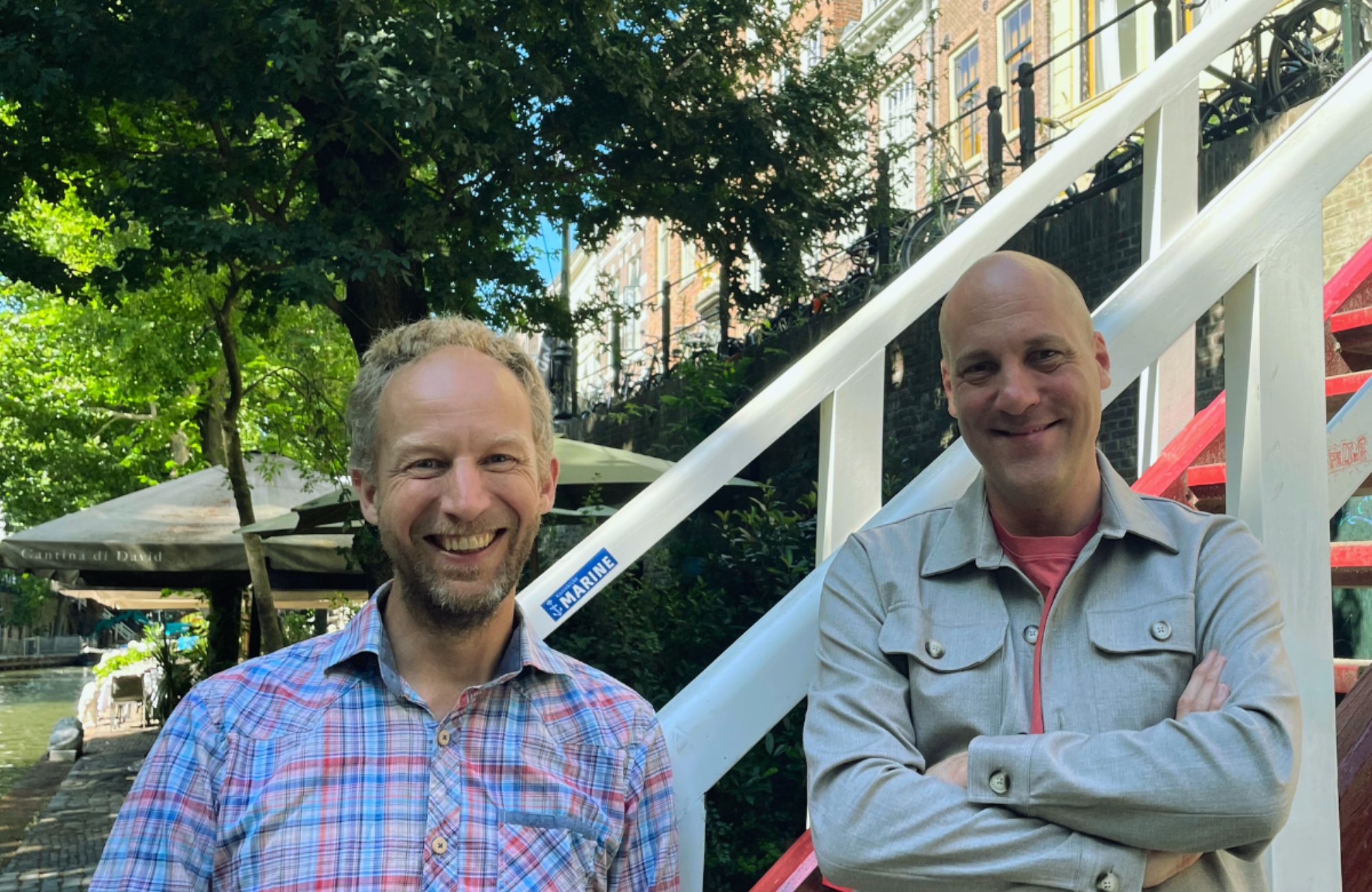
In July, we spoke with Pieter Nuiten and Rogier Wolf from W/E adviseurs.
Who are you and what is your role?
Rogier: “I’m Rogier Wolf and I have been working for Stichting W/E adviseurs since 2008. During that time, I have supported municipalities, housing associations and market participants in developing and implementing sustainable construction policies using our sustainability tool, GPR Building. I have also coordinated the ongoing development of GPR tools such as GPR Building and GPR Material throughout those years.
I see the fact that W/E adviseurs is a foundation as a real strength. Everyone within our organisation is intrinsically motivated to make the built environment more sustainable and, in doing so, make the Netherlands a better place for current and future generations.”
Pieter: “My name is Pieter Nuiten and I have been working for W/E adviseurs for more than 25 years. As a foundation, we have been around for almost 50 years, and throughout that time we have been committed to promoting sustainable construction. We take a very broad view of sustainability. In addition to environmental impact, quantified using GPR Material, we also look at energy, health, quality of use and future value. Over the years, I have worked on all these themes for a wide range of clients, including housing associations, investors, municipalities and the Dutch central government.
I am also chair of the association of calculation tool owners. In that role, I represent the calculation tools within BMNL (Environmental Performance Policy Committee Netherlands).”
What can you tell us about your calculation tool?
Rogier: “We started developing GPR Material in 2019 and launched it in 2020. This made GPR Material the first MPG calculation tool of the current generation, something we are very proud of. Together with Stichting NMD—then still known as the Construction Quality Foundation—we were working at a time when the system was still very much under development, which required us to break new ground.
At the same time, upcoming legislation and regulations put pressure on the process: a fully functional calculation tool had to be available before the MPG requirements took effect. W/E adviseurs was asked by the Dutch central government to develop it. In that sense, we paved the way for others to build on.”
Pieter: “The fact that we were the first to develop a calculation tool is closely linked to our background. As a consultancy, we have deep roots across the construction sector: we know the end users well, have extensive knowledge of the subject matter and were also involved in developing the Assessment Method itself.
For us, it is very important that our tool is as user-friendly as possible. Our calculation tool is also more than just a calculation tool; we see it as a tool that can help optimise a design in terms of environmental impact and circularity.”
Are there any new developments or innovations you would like to tell us about?
Rogier: “An environmental performance calculation can be used for various purposes: a building permit application, BREEAM, GPR Building, subsidies and more. Each application requires a different scope, which means that users would normally have to create or copy a calculation each time.
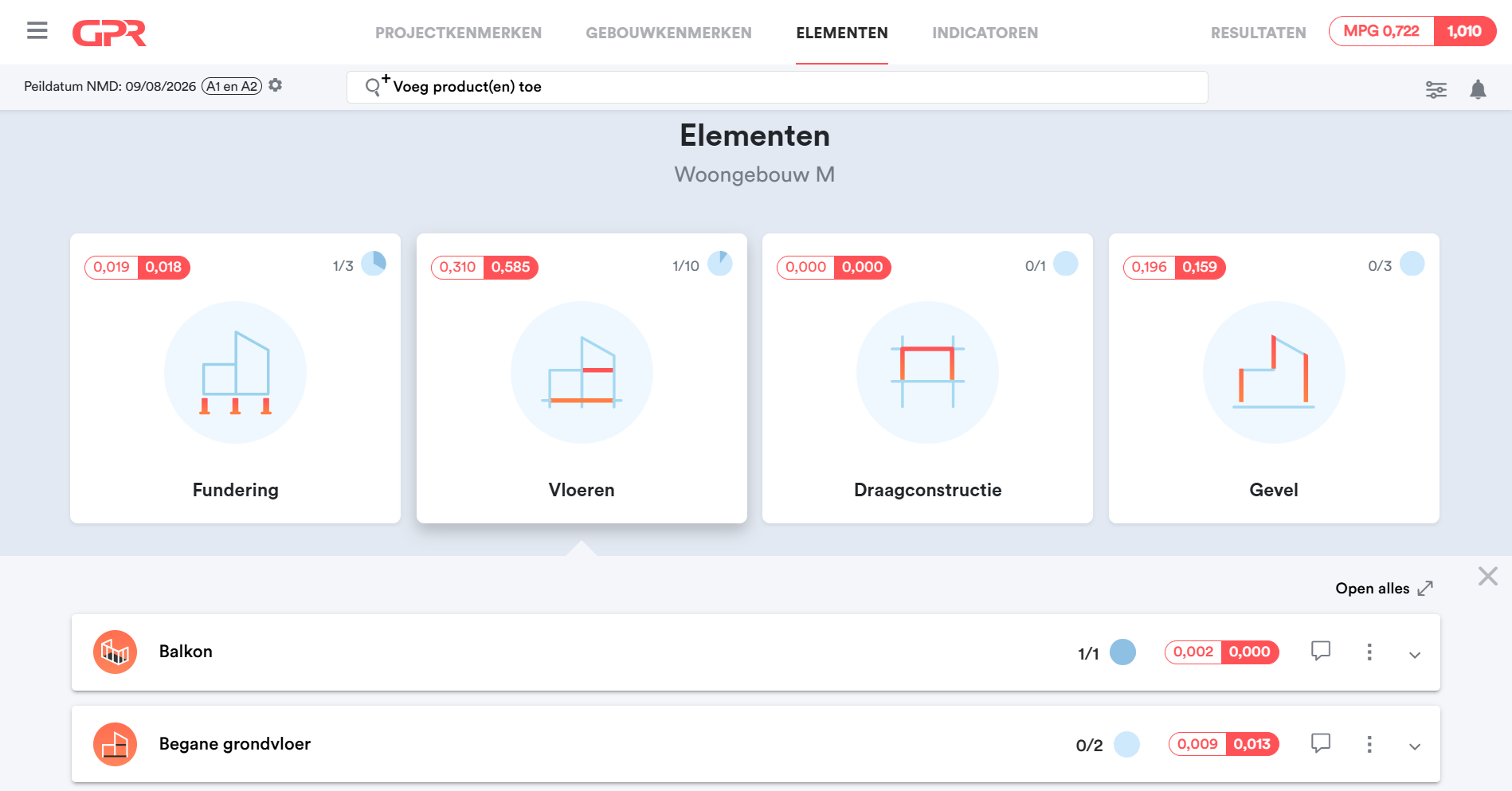
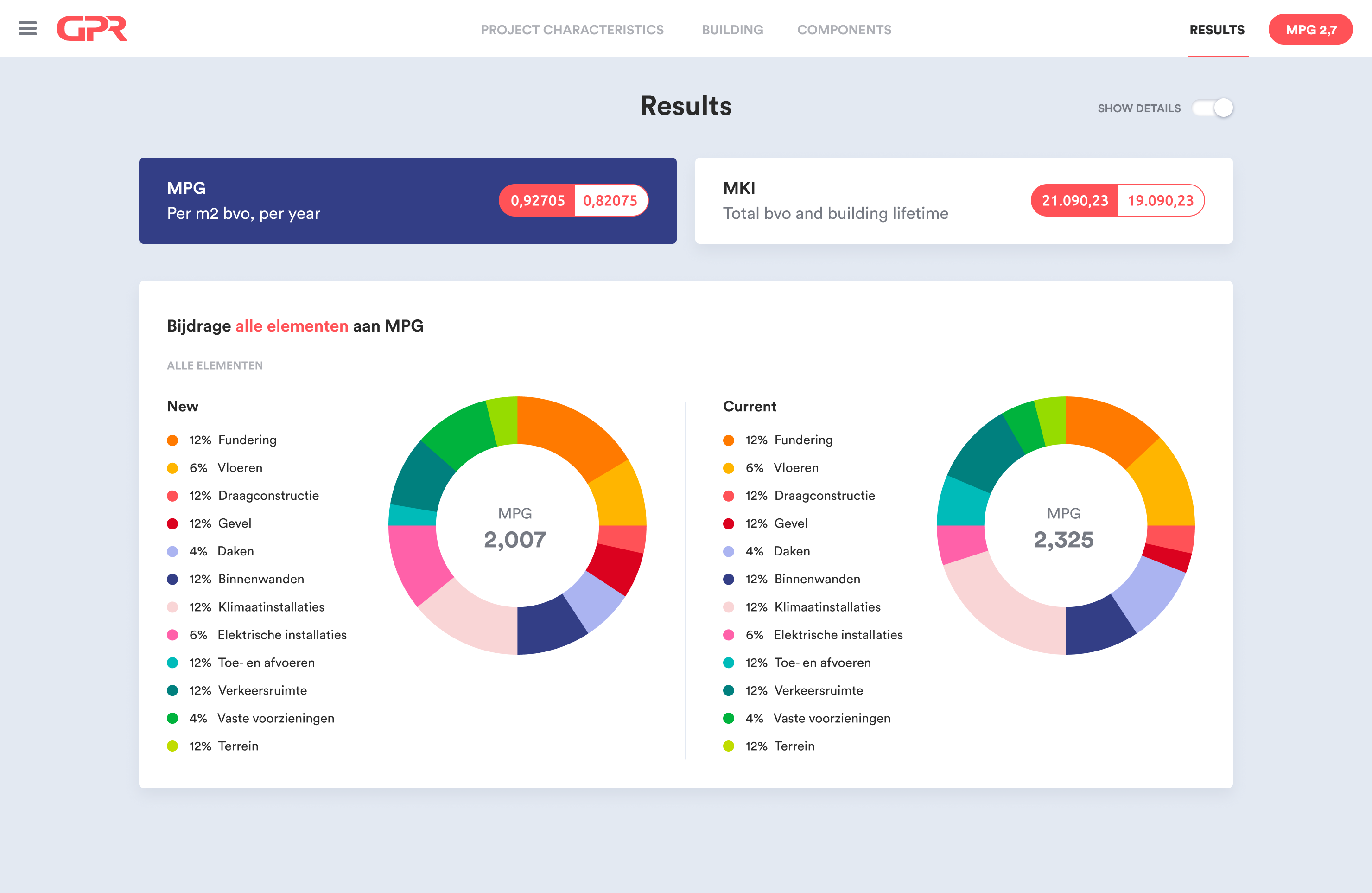
That is why we developed a labelling system. It allows you to label all products and elements within a calculation and switch them on or off depending on the purpose. This means you can create a single calculation containing everything you need and easily adapt it for different purposes. Do you need a calculation for a building permit application? Simply activate the relevant labels. Do you want to include WLC-GWP? Then you add the relevant elements. For example, in a calculation involving PV panels, this could mean including six panels for the MPG and twelve for the WLC-GWP, all within the same calculation.”
Pieter: “We attach great importance to the quality of calculations. Although the MPG system includes extensive quality controls for preparing environmental declarations and validating calculation tools, there is less quality assurance when it comes to the calculations themselves. Together with Kiwa, we are therefore developing a quality assurance process based on the BRL K11005 assessment guideline. Consultancy firms can become certified under this guideline, enabling them to demonstrate that they carry out environmental performance calculations correctly.”
How do you experience the collaboration with Stichting NMD?
Pieter: “I see the collaboration between W/E adviseurs and Stichting NMD a little like a marriage: it has its ups and downs. In my experience, we are currently on an upward trajectory.
W/E adviseurs and Stichting NMD have of course known each other for a very long time. In the early days, when we were still the only calculation tool, we were able to coordinate very quickly. Now there are more calculation tool owners, so it is only logical that consultation and coordination take more time.
In addition, the MPG has become much more important and is now used by many more parties. As a result, both our calculation tool and Stichting NMD have grown alongside the market. I also think Stichting NMD has a very good understanding of its position in the market and the influence it has, which is very positive.
What can sometimes be challenging is that calculation tool owners want to go further than what is possible within the NMD system. This is not a matter of Stichting NMD’s capacity, but rather the agreements and frameworks it is bound by. I hope that Stichting NMD will increasingly take on a strong central role in this respect.”
Rogier: “I notice that there is still a gap between policy and practice. Stichting NMD is closer to the policy side, while we, as a calculation tool owner, are closer to practice. We still feel that there is some room for improvement in translating policy into practice, and that can sometimes lead to challenges.
Long-term planning also plays an important role. As a calculation tool owner, we are at the end of the policy development process, which means we need sufficient time to anticipate changes that are coming our way, such as the WLC-GWP.”
What do you see as the added value of having one shared database for environmental performance calculations?
Rogier: “The most important thing is that everyone works from the same basis and uses the same data, ensuring that calculation results are comparable. It is also essential that the database is as complete and up to date as possible to safeguard quality.”
Pieter: “The NMD’s quality assurance is also crucial in this respect. It means you know that an environmental declaration has been prepared in accordance with the correct rules, rather than working with an EPD from elsewhere in Europe without knowing the specific conditions and requirements under which it was prepared.”
As a calculation tool owner, what are you most proud of in your collaboration with Stichting NMD?
Pieter: “In the past, W/E adviseurs and Stichting NMD sometimes had differences of opinion. That relationship has improved considerably. Today, W/E adviseurs and other calculation tool owners work more closely together with Stichting NMD. You can see this in the digiDeals, for example, in which we also actively participate. The validation protocol and the licence agreement are also important milestones where the collaboration worked particularly well.”
Rogier: “I have also seen Stichting NMD become increasingly professional. The organisation now has much more expertise in-house and is taking an increasingly proactive approach to various issues, which I see as a very positive development.”
What would you particularly like users of your calculation tool to know?
Pieter: “GPR Material is more than just a calculation tool for environmental performance calculations. It is part of a broader portfolio of tools that provide insight into the sustainability and circularity of buildings throughout their entire lifecycle: from design to use, management and demolition, including renovation, transformation and maintenance, as well as new and existing buildings. GPR Material is therefore part of the broader GPR suite, together with GPR Building, which also covers other themes such as energy and health.”
Rogier: “That is also what W/E adviseurs stands for: integrated and sustainable construction. Environmental performance calculations are part of that, but ultimately, it is important to maintain a broad perspective. It is about the end users of a building. Materials with a low environmental impact and low CO₂ emissions are important, but a building also needs to be a pleasant place to live and work: with a healthy indoor climate, future-proof and accessible to everyone.”
Want to know more about W/E adviseurs and their calculation tools?
Visit their website:
Read more about:
Read more:


