Looking back: Jan-Willem Groot gives WLC workshop in Etten-Leur
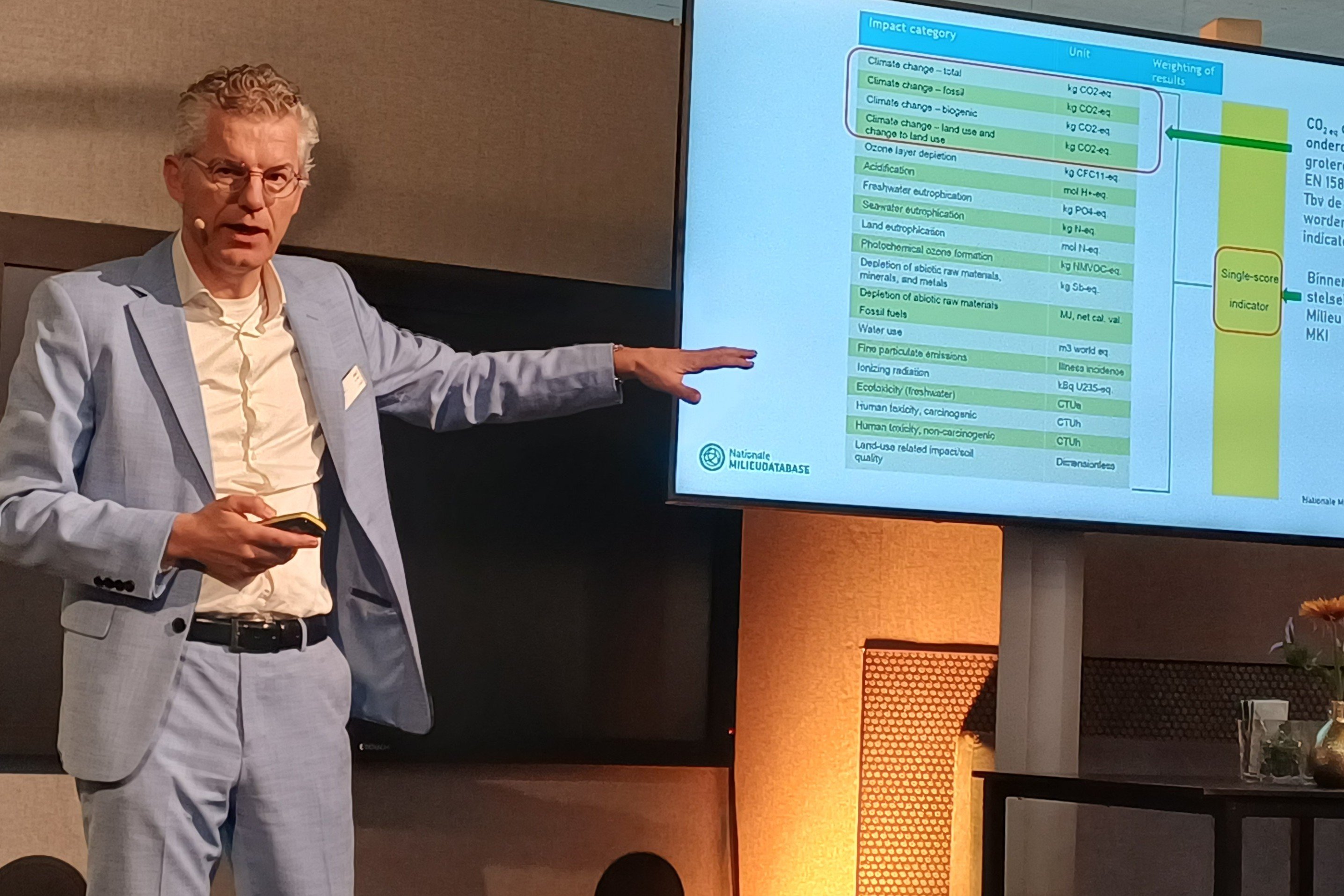
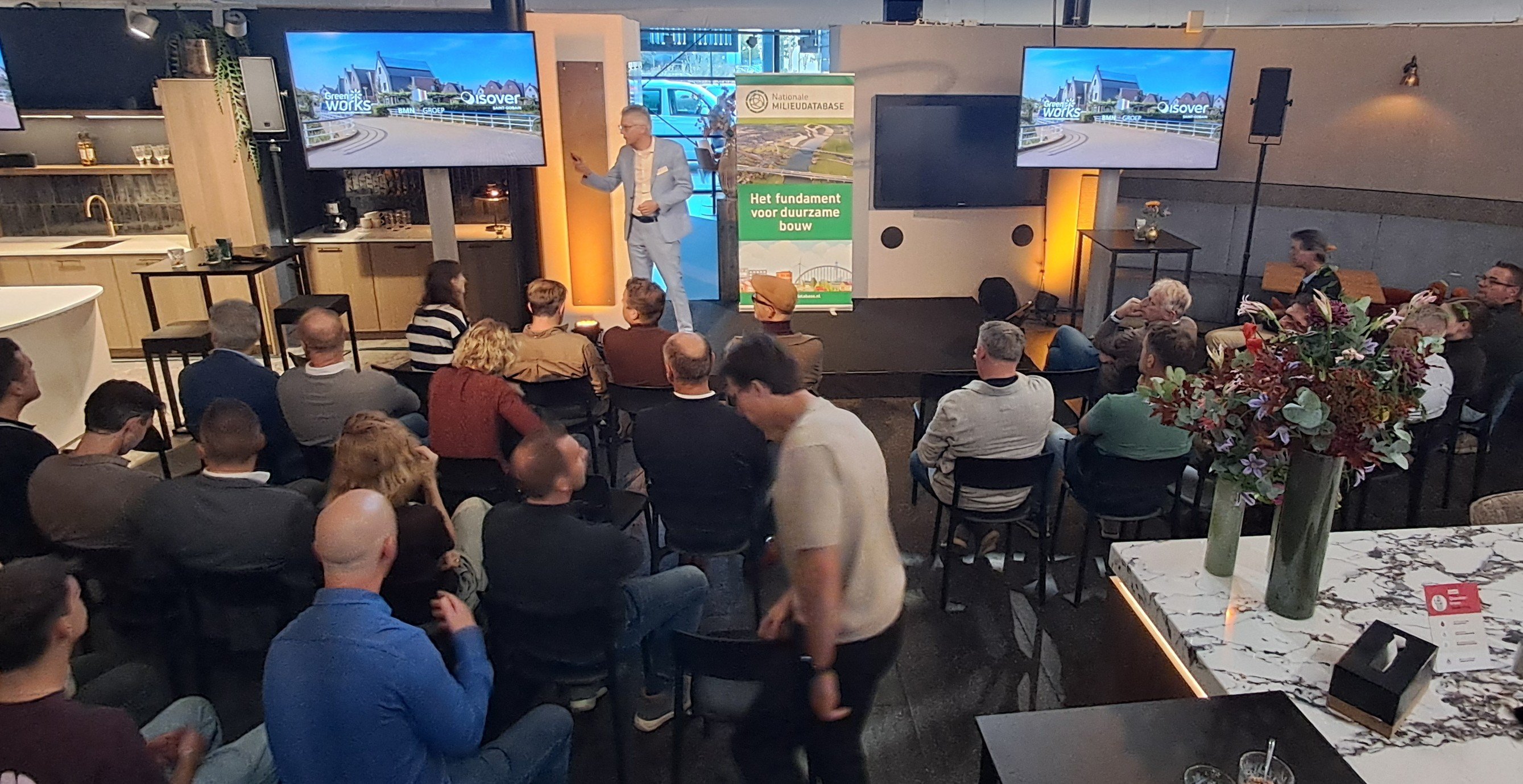
On 8 October 2026, our director Jan-Willem Groot gave the workshop “Whole Life Carbon – the route of data” twice. The workshop was part of a meeting organised by Saint-Gobain Isover and BMN Greenworks.
The meeting was intended for sustainability managers, tender managers, procurement staff and board members of nationally operating contractors. The central question: what sustainability information will soon be required in tenders, and how do you prepare for it?
The programme covered the impact of current and future regulations, the importance of CO2 data, EN 15804+A2 and WLC-GWP, and the practical application of biobased materials. There was also attention for developments that will become more decisive for tenders and material choices in the coming years. In addition, participants were given a tour of the renovated Saint-Gobain Isover factory in Etten-Leur.
In Jan-Willem Groot’s workshop, held in two rounds of around 40 minutes, one question was central: what can contractors do with CO2 data and Whole Life Carbon, and why is this becoming increasingly important for projects and choices?
CO2 management currently seems to be the most urgent topic in the production chain of construction materials. With that focus, people often talk about Whole Life Carbon, and not yet about Whole Life Cycle Global Warming Potential as it should be viewed under the EPBD-IV.
From product data to project
Jan-Willem Groot highlighted the full picture of CO2 emissions over the entire life span of construction products and construction works: both the material related emissions and the emissions in the use phase. The term WLC-GWP is used for this. He then took participants through the “route of data”. He showed how environmental data of construction products finds its way via the NMD into calculations in a concrete project.
Because of the large group of around 100 invitees, the programme was split into two sessions. This allowed participants to alternate between attending the workshop and visiting the Saint-Gobain Isover factory.
What does this mean for contractors?
The workshop also addressed what regulations and developments in the sector mean in concrete terms for contractors, and where the opportunities and challenges lie.
The reactions from the room showed that the workshop resonated. Participants indicated a need for more available product data. Clients also want more certainty about sustainability claims. This applies not only to the reliability of product data in the NMD, but also to the qualification of parties that calculate the environmental performance at construction work level.
There is also a growing need for data on the reuse of construction materials. The NMD has been drawing attention to this for some time and has included reuse in the Dutch calculation methods. Jan-Willem Groot also explained the difference between the service life of products and the model based service life of construction works.
Due to the lively interaction with the room, it was a challenge to stay within the time. Unfortunately, there was not enough room to answer all questions fully and with all nuances.
Want to know more about calculating the CO2 impact over the entire life cycle?
Read more about WLC-GWP.


