Cabinet confirms WLC-GWP calculation obligation from 2028 and limit values from 2030
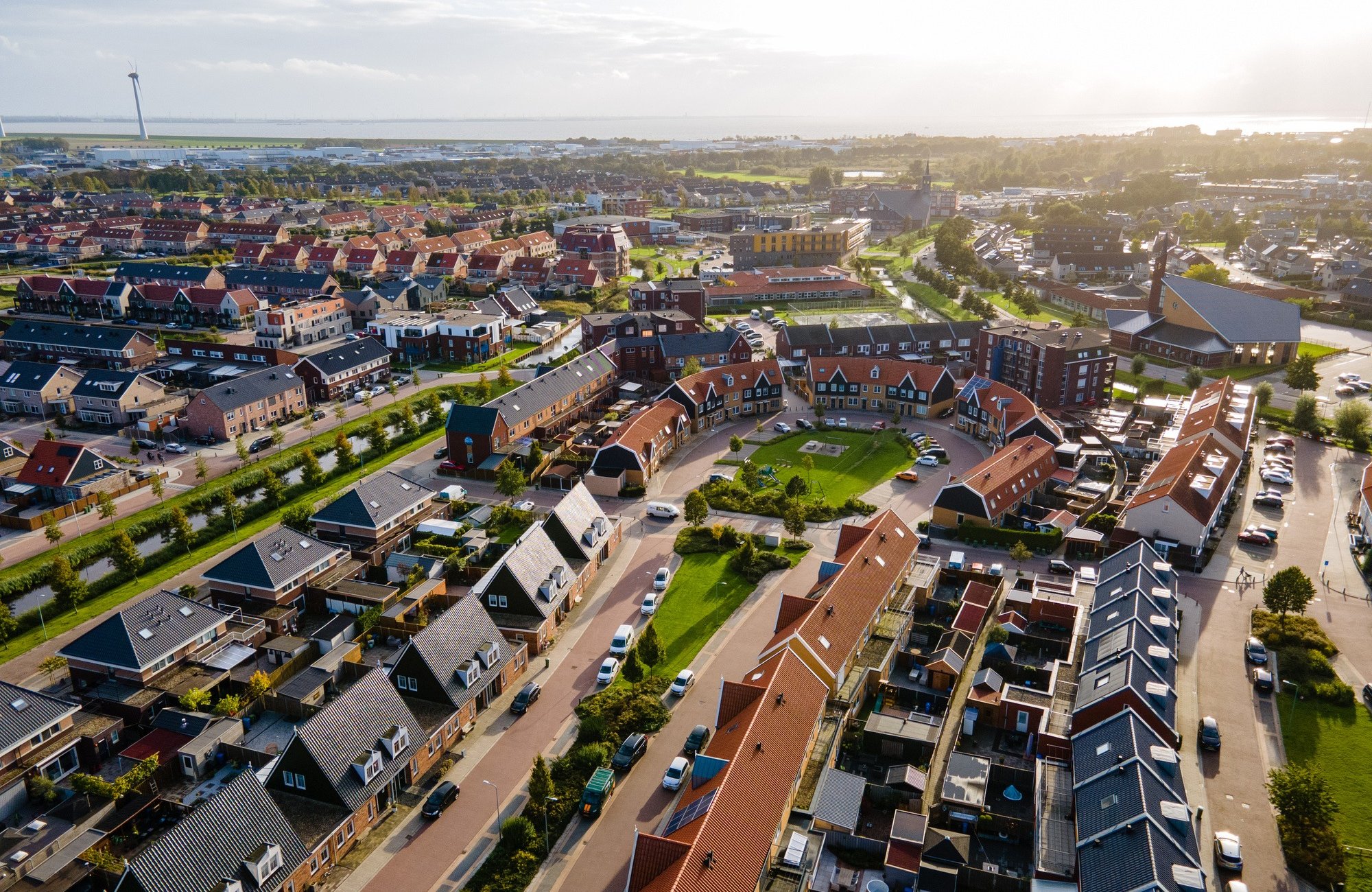
Minister Elanor Boekholt-O'Sullivan of Housing and Spatial Planning sent a parliamentary letter on WLC-GWP to the House of Representatives on 27 November 2026. From 2028, WLC-GWP will be introduced with a calculation obligation for new buildings larger than 1,000 m². From 2030, limit values will be added. The calculation is made in accordance with the WLC-GWP Assessment Method managed by Stichting NMD, using environmental data from the Dutch Environmental Database.
To avoid double steering on the environmental effect of climate change, the current MPG requirement will be removed from the building regulations as of 2030, but the Cabinet is still investigating whether the MPG can continue in another form in order to maintain steering on the other environmental effects.
WLC-GWP (Whole Life Cycle Global Warming Potential) expresses the global warming potential of a building over its entire life cycle. This includes the material-related impact of construction products and installations, as well as energy use during the use phase. WLC-GWP stems from the European directive on the energy performance of buildings (EPBD IV). The result is expressed in kg CO₂-eq/m²/year and will be included on the building's energy label.
Calculation obligation from 2028, limit values from 2030
From 1 January 2028, a calculation obligation applies to new buildings larger than 1,000 m². This will be included in the building regulations by 1 July 2027 at the latest. From 2030, the calculation obligation applies to all new buildings and limit values are introduced. By 1 January 2027 at the latest, the Cabinet will publish the Roadmap and submit it to the European Commission. It contains target values and provisional limit values on the way to climate-neutral construction in 2050. Before 2030, the limit values will be revised based on current insights. Read the full message.
Entry into force of the WLC-GWP Assessment Method
Stichting NMD developed the WLC-GWP Assessment Method. It is based on the Final report WLC-GWP: Method for determining WLC greenhouse gas emissions, prepared by LBP|Sight, in which the calculation principles and starting points are worked out.
Op 15 november 2026 publiceerde Stichting NMD versie 1.0. Deze versie wordt meegenomen in het wetgevingstraject. Uiterlijk 1 juli 2027 wordt de Bepalingsmethode officieel aangewezen in de bouwregelgeving. Tot die tijd bereiden rekeninstrumenten zich voor op de implementatie, en Stichting NMD valideert de instrumenten.
What this means for the MPG
From 2030, the MPG requirement in its current form will no longer be part of the building regulations. The MPG looks at a broad range of environmental effects, including the effect on climate change, expressed as global warming potential (GWP). WLC-GWP focuses only on this effect and also includes energy use. With limit values for WLC-GWP, there would be two requirements from 2030 that partly steer on the same thing. The Cabinet will decide later on a possible replacement form for the MPG that steers on the other environmental effects. Until 2030, the MPG remains in force unchanged.
Environmental data in the NMD remains the basis
The environmental data in the Dutch Environmental Database will remain the basis for calculations, now and in the future. This data is used for both the MPG and WLC-GWP. For the energy use of the building, WLC-GWP also uses specific category 3a environmental data. The NMD data also remains applicable for, among other things, ECI calculations in GWW, subsidy schemes and existing buildings.
For products for which a harmonised standard (hEN) will apply under the European Construction Products Regulation (CPR), declaring environmental data will become mandatory, first for GWP and in time for all environmental effects. This new data will also have a place in the NMD. It therefore remains important for manufacturers to have their environmental data prepared and to register it in the NMD.
Questions?
Submit them via our question form.
Read more:


