Refurbished window Scheldebouw -Permasteelisa Group
Scheldebouw prepared a Category 1 environmental declaration for reused aluminium windows. The lessons learned in the process – both technical and related to collecting data and documentation – provide valuable insights for the entire sector.
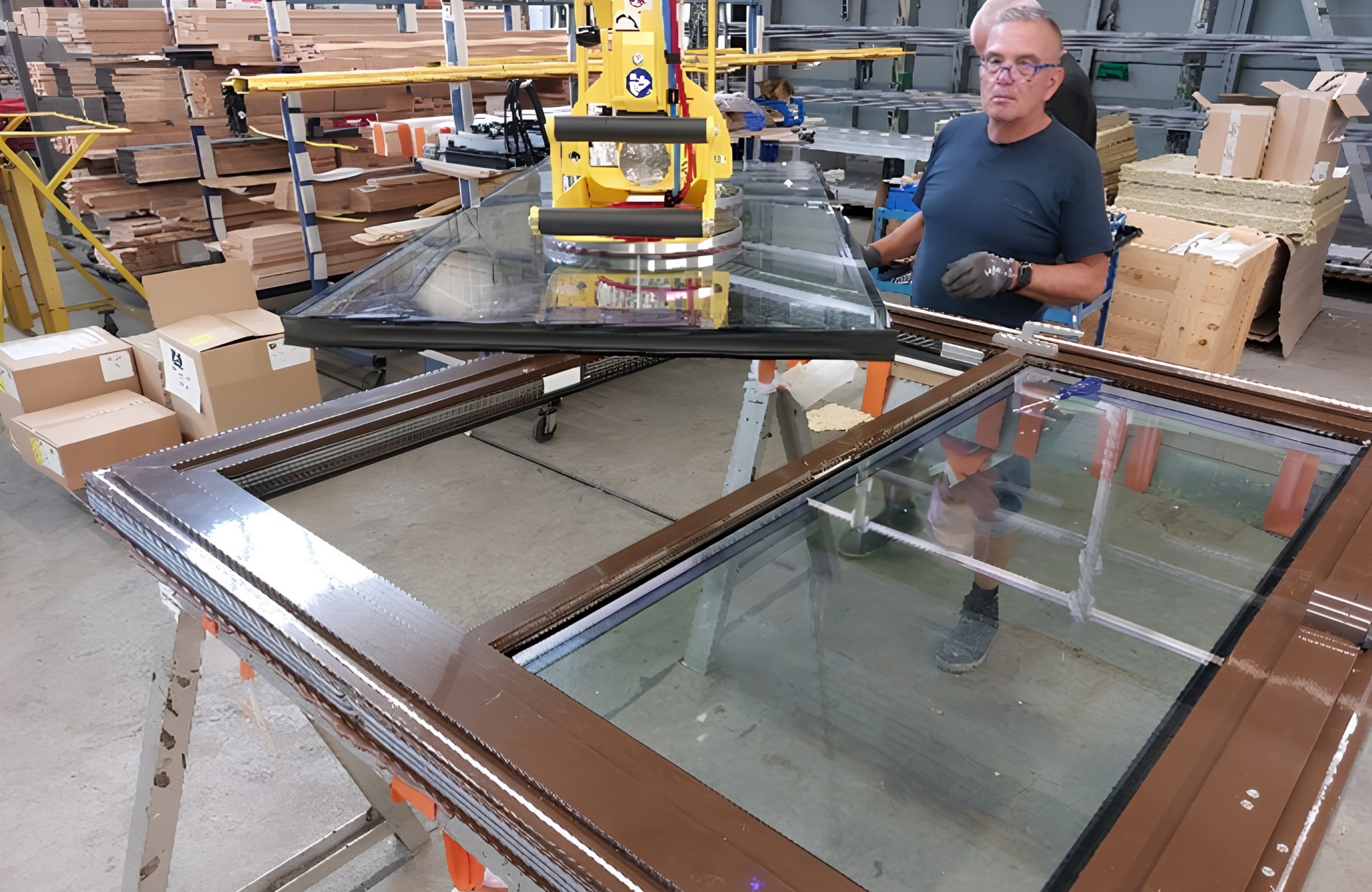
For years, façade contractor Scheldebouw – part of the Permasteelisa Group – has been carrying out life cycle assessments to gain and provide insight into sustainability. Façades play a crucial role in a building’s energy performance. However, adding extra insulation also means adding extra materials, and additional materials result in additional CO₂ emissions. Finding the right balance remains a continuous challenge. This was one of the reasons why Scheldebouw decided to focus specifically on circularity. How can a façade be reused, and how do you calculate its environmental impact? Sustainability Manager Janneke Verkerk and Lead Concept Designer Hans Jansen share the lessons they learned and explain how the entire sector can benefit from them.
Permasteelisa has worked on iconic projects around the world, including Apple Headquarters in Cupertino, The Shard, and the Sagrada Família. These are buildings with vast façade surfaces. Over the years, those façades have become increasingly sustainable. At the same time, awareness grew that the greatest sustainability gains do not lie solely in new construction.
Circularity starts with what already exists
“We have delivered thousands of façades worldwide, some of them more than 25 years ago,” says Sustainability Manager Janneke Verkerk. “That naturally raises the question: what is our responsibility for those existing buildings? Circularity does not start with something new; it starts with what is already there.”
This idea formed the basis for a series of circularity studies within Permasteelisa’s Research & Development department, including one conducted in collaboration with Delft University of Technology. Among these studies was research into the reuse potential of complete façade elements.

What exactly is the environmental benefit of reuse?
“We are not in the business of three windows per project, but rather 10,000 windows per project. We always work with large quantities, which means the potential impact is enormous,” explains Lead Concept Designer Hans Jansen.
“We became involved in the renovation of a 25-year-old building whose façade could be used as a test case. That became the basis for our first pilot project. Our research question was: how much energy does it take to reuse old façades and bring them up to current requirements for building physics, fire safety, and sustainability? And what savings does that generate? In other words, from a sustainability perspective, how worthwhile is it to reuse façades?”
From ‘waste’ to a fully-fledged product
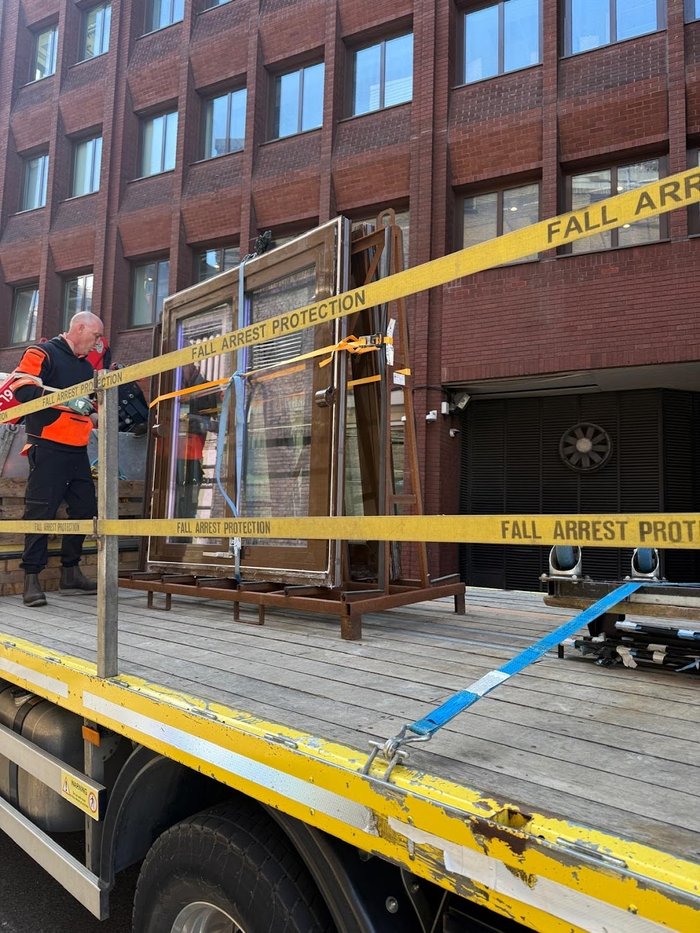
The next pilot project started with dismantling façade components from an existing office building. In total, around 350 aluminium windows were removed, with the goal of making them suitable for reuse.
Janneke explains: “To assess the technical feasibility, we removed several windows from the building and tested them extensively. We found that even relatively young windows no longer met current requirements. This is due to stricter regulations, but also because of wear and maintenance issues.”
“In collaboration with HZ University of Applied Sciences, we developed a concept for a mobile workshop where the windows could be refurbished step by step. This included replacing seals, improving insulation, or even replacing the glazing. The mobile workshop can be adapted for each project, much like we do in the production of new façades.”
Collecting and documenting data
Besides the technical challenges, there was also the challenge of creating the supporting system around it. Reused products often lack essential documentation, such as declarations of performance and CE marking.
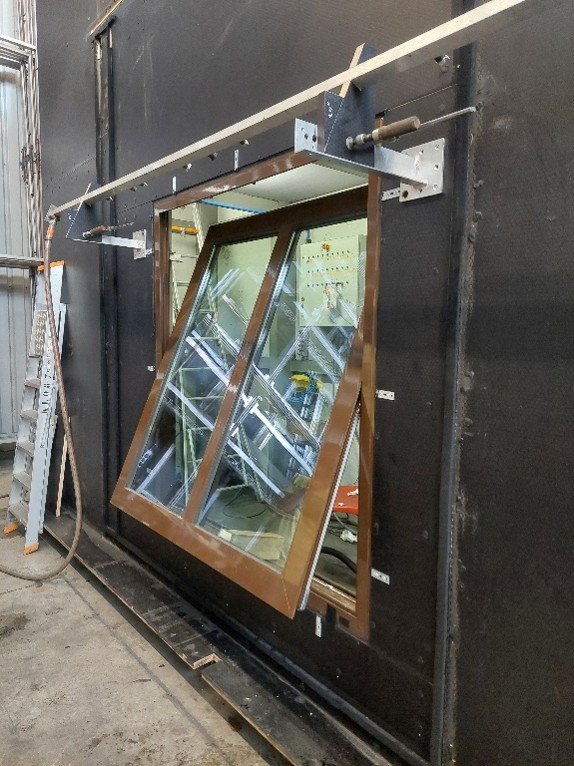
“If you buy something from an online marketplace, you buy it ‘as is’,” says Hans. “But our added value lies precisely in guaranteeing performance. That means testing, validating, and documenting it as if it were a new product.”
“For every component, we examined its mass, material type, and processing requirements. We did this for both existing components and new additions such as seals. We also determined the energy consumption of the refurbishment processes through measurements and test runs. For example, how much energy is required to clean or modify components? Those are the kinds of data you need to measure or substantiate properly.”
Collecting and documenting data
Besides the technical challenges, there was also the challenge of creating the supporting system around it. Reused products often lack essential documentation, such as declarations of performance and CE marking.
“If you buy something from an online marketplace, you buy it ‘as is’,” says Hans. “But our added value lies precisely in guaranteeing performance. That means testing, validating, and documenting it as if it were a new product.”
“For every component, we examined its mass, material type, and processing requirements. We did this for both existing components and new additions such as seals. We also determined the energy consumption of the refurbishment processes through measurements and test runs. For example, how much energy is required to clean or modify components? Those are the kinds of data you need to measure or substantiate properly.”
Environmental benefit: 75% lower CO₂ emissions
After extensive coordination and verification, the most product-specific type of environmental declaration within the Dutch Environmental Database was selected: a Category 1 environmental declaration. "That means everything has been verified and substantiated. You can truly rely on the results.” This also provided an answer to the original research question. "With only 25% of the energy, we can deliver a window that performs just as well as a new one. That translates into approximately 75% lower CO₂ emissions.”
The savings are primarily achieved because the most impactful stage—the extraction and production of raw materials—is completely avoided. "Our analyses show that around 80% of the environmental impact is embedded in the materials themselves. If you can preserve those materials, you can make a real difference.”
Applying the methodology
The approach developed by Scheldebouw can be applied more broadly to circular construction products. "We now have insight into both the technical aspects and the calculation methodology. This enables us to make much faster and better decisions in future projects. Other companies can benefit from this as well. Developing the Category 1 declaration has provided greater insight into the factors that determine LCA results. That supports the further development of calculation rules across the sector.”
Scheldebouw is convinced that these developments will continue to accelerate. "The demand for materials with the lowest possible environmental impact is growing rapidly, especially internationally. In the long term, this will simply become the norm. Solutions like these will be unavoidable.”
Janneke and Hans would also like to make an appeal to the sector: "Ensure that your data is realistic and reliable. Category 1 declarations provide an honest picture of environmental impact. Only then can you genuinely steer towards sustainability.”
Lees meer:


