Circular ECO-drainage systems from AGS Products
How sustainable is lead? A life cycle assessment of the ECO-rainwater drainage system from AGS Products shows how circular this material and product is. The category 1 declaration in the NMD results in an MKI of €0.083.
AGS Products has existed since the late 1980s. Starting out as a roofing company, AGS has since the 1990s focused entirely on producing drainage systems, emergency overflows, cable ducts, roof covering, and other solutions for flat roofs.
"Innovation is in our DNA," says director Johan Bodde. "For us, an idea becomes a prototype almost immediately." The same applies to the ECO-drainage system, made from 100% recycled lead and welded using hydrogen. "The life cycle assessment and MKI show that lead is much more sustainable than people often think."
From soldering to hydrogen
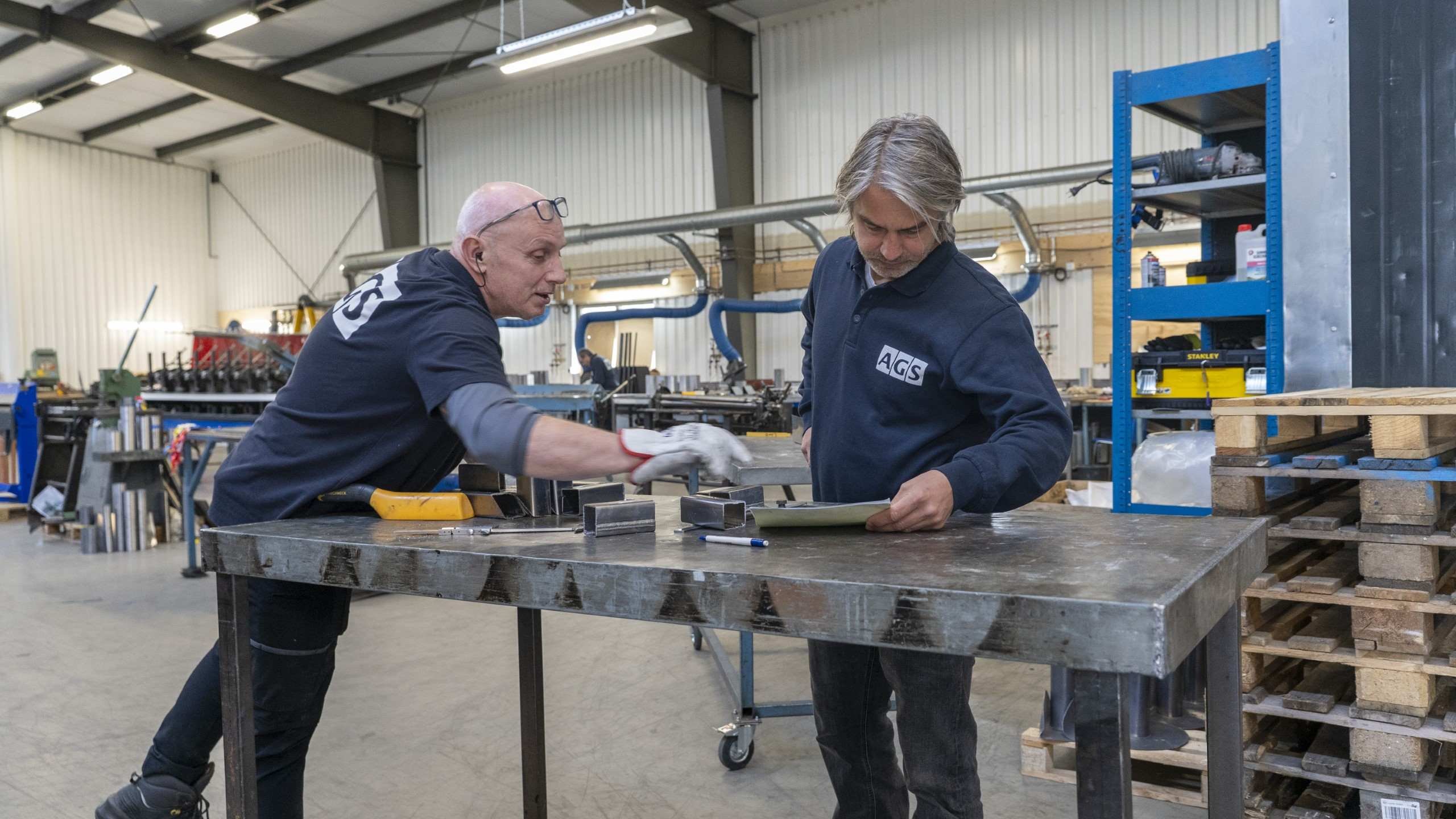
It was the idea of welding drainage systems instead of soldering them that marked the start of AGS Products as a manufacturing company. At the time, in the 1980s, choosing to weld was something new. Other roofing companies were happy to make use of AGS's services, and the focus gradually shifted from roofing to manufacturing. Ever since, AGS has kept asking itself the same question: can it be done better?
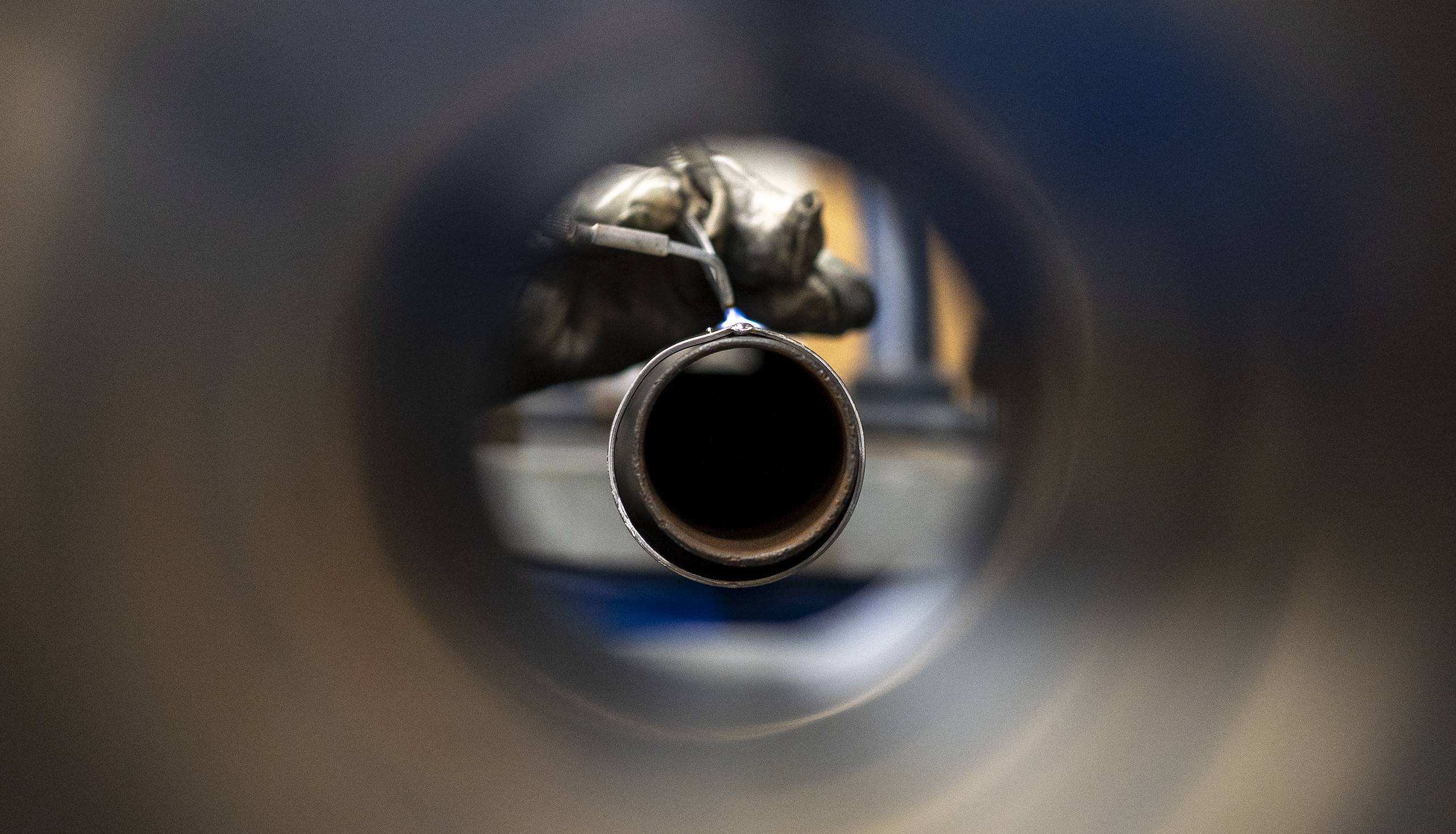
Four years ago, for example, when the company moved to a new building, it switched its entire production process to welding with hydrogen and oxygen. In hydrogen oxygen welding, water vapour is the only emission, so there is no CO2 released. AGS also continues to innovate at product level, which is how the ECO-drainage system, among other things, came about.
A fully circular product
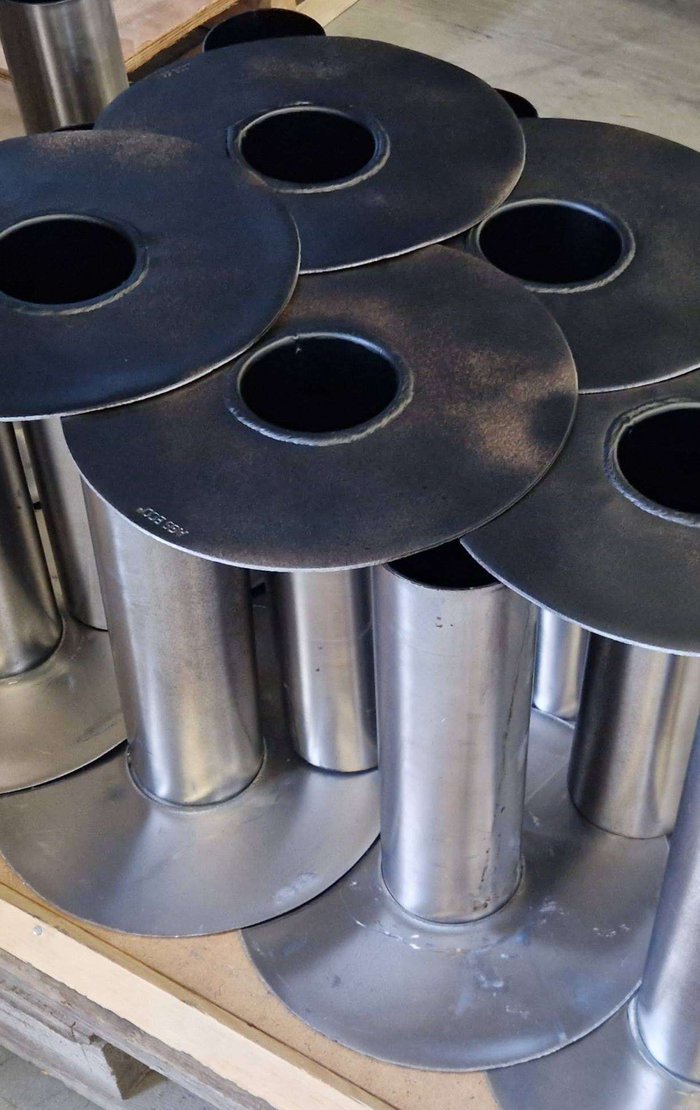
"The ECO-drainage system is made from 100% recycled lead, collected and reprocessed in the Netherlands," says Johan Bodde. "Lead is ideally suited for this: it is a single element, melts back together without loss of quality, and can be reused endlessly. In Europe, around 95% of the lead used in construction is collected and reprocessed, a collection rate that few other building materials can match."
"The waste stream during production has also been closed by now: lead offcuts generated in the factory are sent back with every delivery to our supplier Uzimet, who reprocesses them. That may seem like a small adjustment, but it makes the circular chain even more complete."
Independent testing
AGS is a strong advocate of measuring and testing. For instance, the company had adhesion tests carried out by the independent institute KIWA. Because no matter how good a drainage system is, if the adhesive plate doesn't bond properly, it shortens the lifespan of the entire system.
"The assumption in the market was that a brushed plate would bond better than a smooth one. The opposite turned out to be true. A plate primed five days in advance gives the strongest bond, even after ageing. A brushed plate actually came loose faster. We didn't expect that ourselves either. But that's exactly why you have it independently tested."
The adhesive plate is now supplied fully primed as standard, with a pre applied bituminous bonding layer. "For the roofer, that means less preparation on the roof and more certainty about the result."
Life cycle assessment for greater insight
AGS also had a life cycle assessment carried out for the ECO-drainage system. "That was an intensive process. For our own production phase, everything had to be mapped out precisely: energy use, packaging material, transport. You become aware of things you hadn't looked at so closely before. Partly based on the LCA, we reorganised the waste stream for lead offcuts."
For the raw material phase of lead, AGS was able to use the LCA that supplier Uzimet had already had made. "That saved us a lot of work."
Facts instead of opinions
AGS learned a great deal from developing the LCA and is also pleased with the results (an MKI of €0.083). "Lead doesn't necessarily have a good reputation in construction. We could say ourselves that our product is sustainable, but it's much better when independent measurement methods make this clear. The low MKI shows that the combination of 100% recycled material, a low emission welding process, and a high collection rate results in a sustainable product."
"Roofers also like working with lead, partly because of its flexibility. More than half of our customers have already switched to the ECO-drainage system. We also notice that we're having different conversations now that we have a category 1 environmental declaration in the NMD."
For AGS, registration in the NMD is not an endpoint. The data enables designers and contractors to make the most sustainable choices, but it naturally also reveals where further improvement is possible. That is an important reason for AGS to keep asking independent parties to carry out measurements. "Measuring provides insight. Insight provides input for improvement."
Read more:


