The reuse of construction materials offers significant opportunities
The high-value reuse of construction materials is on the rise in the Netherlands.
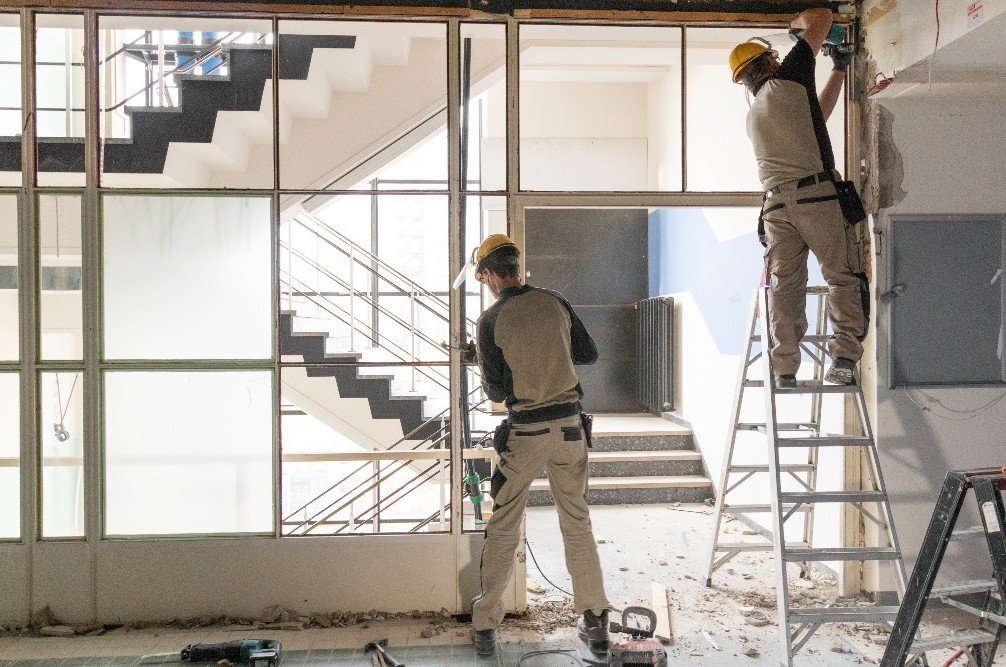
High-value reuse of construction materials is becoming increasingly common in the Netherlands. It is one of the ways to reduce environmental impact. We asked the online marketplaces Insert and Madopt, which bring together supply and demand for products such as doors, ceiling panels and flooring, about the opportunities they see.
The environmental benefits of reused materials and components can be calculated using environmental data from the Dutch Environmental Database. The MPG requirement encourages the use of construction materials with a low environmental score and therefore also supports reuse. Tightening this requirement makes reuse increasingly attractive. According to the NMD, the ECI of unforeseen reuse is 80% lower than that of the original product.
“Circular construction requires more time and effort than traditional construction,” says Roos van Borrendam, Circularity Consultant at Insert. “For example, you need to ensure that used materials are available in the right place at the right time, and they often need to be stored temporarily. The NMD provides insight into the properties and environmental impact of these materials when they are reused. So although this may require a greater initial investment, it results in lower CO₂ emissions. We see that as a positive development.”

Reuse: the figures
The Netherlands performs well when it comes to recycling construction and demolition waste. The vast majority of these materials—between 88% and 97%—are recycled. However, most of this is low-value recycling. For example, concrete and masonry are crushed into aggregate for use in road construction.
High-value reuse, on the other hand, includes the reuse of complete window frames, bricks and steel structures. This preserves the function and value of the materials and components, making it a truly sustainable and circular solution.
Several online marketplaces, including Insert and Madopt, as well as a number of regional platforms, bring together suppliers and buyers of reclaimed construction materials. What opportunities do they see to stimulate reuse and increase high-value reuse?
According to the Circularity Gap Report Built Environment the Netherlands (2022), only 8% of the construction materials used in residential and commercial buildings consist of reused materials or secondary raw materials. A report by the Netherlands Enterprise Agency (RVO) shows that just 0.24% of the total construction and demolition waste stream is reused for the same purpose. There is therefore still considerable potential to increase high-value reuse.*
Start-up Madopt
In 2012, Bas Slager founded the consultancy Repurpose in Amersfoort. Together with his team, he works with public authorities and major contractors to identify opportunities for reuse. They carry out material inventories of buildings scheduled for demolition and assess new building designs to determine which components can be reused in the future.
They are also the founders of Madopt, an online marketplace for reusable construction materials. Through the platform, anyone looking for reclaimed materials can submit a sourcing request.
“Our clients are looking for products such as building services installations, structural steel, timber, façade cladding, window frames, sanitary ware, insulation materials, staircases and reclaimed glass,” says Bas.
Madopt not only connects donor projects with recipient projects, but also provides a platform for material traders. These traders indicate the quantities they are willing to purchase each year for inspection and resale—for example, millions of reclaimed bricks, one hundred tonnes of hardwood or two kilometres of structural steel annually.
“Madopt is still in the start-up phase, so we need to continue growing our turnover to cover our costs. Thanks to the profits generated by Repurpose and public funding, we are able to develop the platform further until it becomes self-sustaining. Making a large profit is not our goal. What we really want is to see every demolition project fully harvested for reuse.”

Circular platform Insert
Insert Foundation is a circular platform with three full-time and several part-time employees. Among its clients is the Dutch central government. Insert is funded through subscription fees, contributions from core partners and public funding. The organisation supports the transition to a circular economy in the construction, green infrastructure and civil engineering sectors. Its services include material inventories, material storage, consultancy, development and research. Insert also helps construction professionals source circular building materials.
Roos van Borrendam is a Circularity Consultant at Insert. “My work focuses on accelerating circularity in the construction sector. For example, I developed a tool that quantifies the CO₂ savings achieved by reusing specific construction materials.”
According to Bas (Madopt), that type of insight is essential. “Our advice to organisations that want to build sustainably and circularly is straightforward: identify the ten materials in your design that have the greatest impact on reducing the MPG score and try to source those materials second-hand. For example, if you relocate and reuse an existing commercial building, you can reduce CO₂ emissions by around 80%. Likewise, by reusing the ten most impactful materials in the construction of terraced houses, it is possible to achieve an MPG score that is around 50% lower.”
Supply-driven versus demand-driven
There is an important difference between Insert and Madopt. Insert is supply-driven: its platform exclusively features listings of reclaimed materials made available from donor projects.
Madopt, by contrast, is demand-driven: it exclusively lists the materials that organisations are looking to source for circular construction projects or through material traders.
Bas explains: “In that sense, the two platforms complement each other. A sourcing request on Madopt, for example, could potentially be fulfilled using materials offered through Insert. That has already happened on several occasions. Through our paid Premium subscription, we manually search for suitable matches across Insert and several other material marketplaces. We then email links to relevant offers to the person who submitted the Premium request, giving them access to a wider range of options and increasing the likelihood of reuse.”
Time will tell whether a supply-driven approach, a demand-driven approach or a combination of both proves to be the most effective.
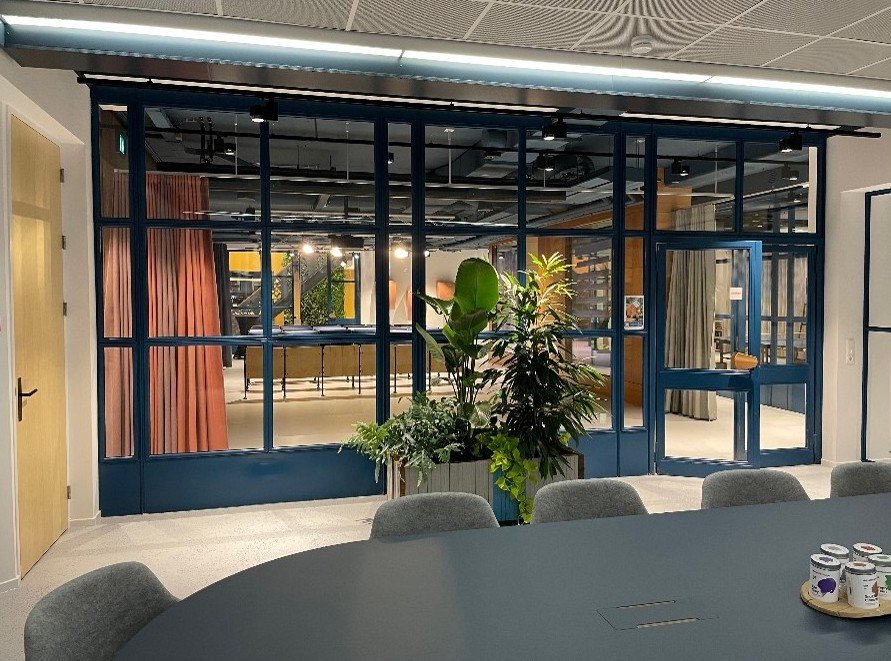
Supply and demand
Bas hopes that more organisations with surplus materials and those looking for reclaimed materials will be able to find one another, for example by making their needs and available materials visible online.
“Any organisation can get started on our platform free of charge, and it only takes a few minutes. Madopt automatically shares sourcing requests with affiliated suppliers, such as demolition contractors, material traders and construction companies. They can then respond with suitable materials.
Sharing up to five sourcing requests is free of charge, and suppliers do not pay to list their materials either. Buyers save a great deal of time because they no longer have to search for suppliers themselves—the suppliers approach them instead. Likewise, suppliers only invest time in organising the reuse of reclaimed materials once there is an interested buyer. Buyers and sellers negotiate and conclude the transaction directly; we do not intervene. We do, however, ask users to let us know which sourcing requests resulted in successful reuse and which did not.”
On Insert, buyers and suppliers also arrange transactions directly with one another. Roos explains: “We want to start monitoring completed transactions so that we gain insight into which materials are in greatest demand and the prices being paid for them.”
Opportunities
According to Bas, Madopt has significant growth potential. “In 2025, one-third of the organisations that submitted a sourcing request through Madopt successfully found and purchased the construction materials they were looking for. Another third found the materials outside Madopt, while the remaining third were unsuccessful. That shows there is considerable potential to create many more successful matches through our platform.”
Insert also sees major opportunities. Roos explains: “We are preparing to scale up significantly. Thanks to funding from the Ministry of Housing and Spatial Planning (VRO) and DigiGO, we are connecting various marketplaces and webshops for reusable construction materials. This means suppliers will no longer have to list their materials separately on multiple platforms. We are already in contact with around 300 suppliers.” Insert is also continuing to develop its platform. “The search functionality needs to improve,” says Roos. “We also want to build a community that supports suppliers.” She points to encouraging developments across the sector. “For example, a company has started refurbishing reclaimed doors so that they comply with the Building Decree and can be reused in new construction projects. Companies like these should be easy to find through our marketplace.”
Roos emphasises that reclaimed materials need to become visible to the right people within the construction supply chain. “At the moment, construction materials are usually ordered through traditional, linear procurement channels. Marketplaces are often not yet part of that process, as purchasing decisions are largely made by work planners. That needs to change.”
Insert therefore aims to connect its platform to ETIM, making reusable materials visible within the digital procurement platforms that work planners already use to source construction products.
The conditions for successful reuse
According to the experts at Madopt and Insert, increasing the reuse of construction materials starts in the initiative and design phases of a project. Decisions made early in the process largely determine how much reuse can be achieved during construction.
“The most important step,” says Bas, “is for clients to explicitly include reuse requirements in their procurement specifications. From there, it becomes the responsibility of the project team—particularly the architects—to make reuse a success.”
Roos agrees. “Successful reuse requires architects and structural engineers with creative craftsmanship.”
Bas adds: “Develop an adaptive design based on the client's reuse ambitions.”
Flexibility is key to making reuse work. “During the design phase, for example, investigate which reclaimed façade materials are actually available and present those options to the client and the planning authorities, rather than specifying a particular timber species from the outset. Designing adaptively increases the likelihood of finding suitable reclaimed materials while also reducing the need for modifications. That helps avoid unnecessary processing costs.”
Reclaimed façade tiles in a housing project in Utrecht
Roos shares a good example of how flexibility and creativity can lead to successful reuse.
“We provided consultancy for the demolition and redevelopment of a gallery apartment building on Ivoordreef in the Overvecht district of Utrecht. Materials from the original building are being reused in the new development on the same site. One example is the gravel façade tiles from the 1960s, which have been given a second life. Although these elements are easy to dismantle, they are not particularly attractive in their original form. The architect incorporated them into the new façade in a staggered block pattern, creating a contemporary appearance for the building.
We often hear from designers that they enjoy working with these kinds of unconventional materials. They appreciate the challenge of integrating existing materials into a new architectural design.”
Other organisations active in construction material reuse include:
- New Horizon – www.newhorizon.nl (kennispartner, verbinder, aanjager hergebruik)
- Stadsmijn Achterhoek – www.stadsmijnachterhoek.nl (materialenmarktplaats)
- DuSpot – www.duspot.nl (matchingtool)
- ReSource - https://anteagroup.nl/diensten/resource-de-marktplaats-voor-100-circulair-bouwen (initiatief van Antea Group en Centric)
*Sources
- -milieudatabase.nl
- -Circularity Gap Report Built Environment, the Netherlands (2022)
- -BRBS Recycling – rapport Circulair slopen & hoogwaardig hergebruik – Monitoring secundaire bouwgrondstoffen (maart 2025)
- -citydealccb.nl
- -allesovercirculairslopen.nl
- -Rijksdienst voor Ondernemend Nederland – Verkenning Beschikbaarheid en gebruik secundaire bouwmaterialen en producten (2021)
