Example projects with outstanding environmental performance
Vijverberg apartment building in Bergen op Zoom
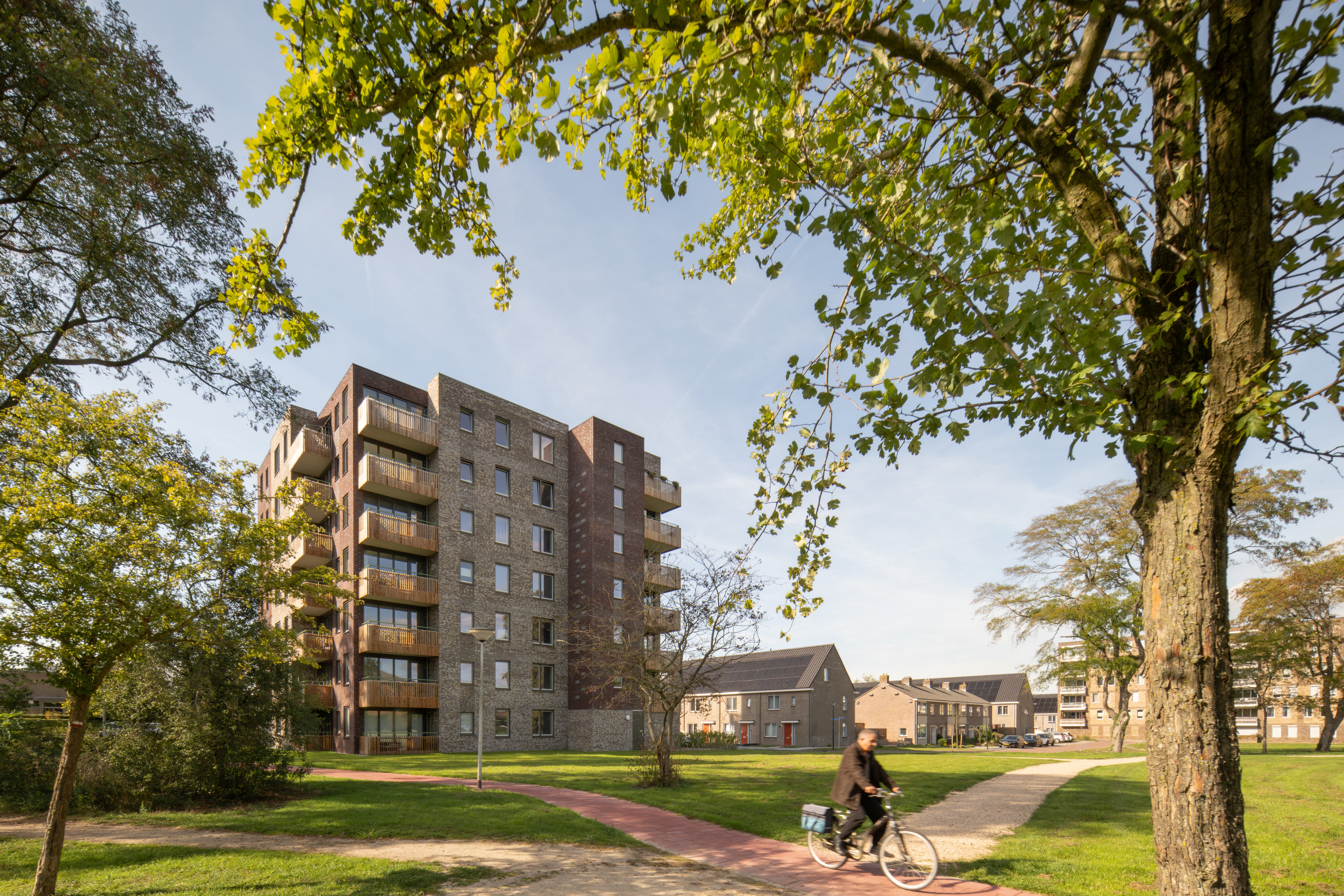
Materials from demolished apartment block reused in new residential complex
A highly sustainable circular shell around a structural frame of conventional materials
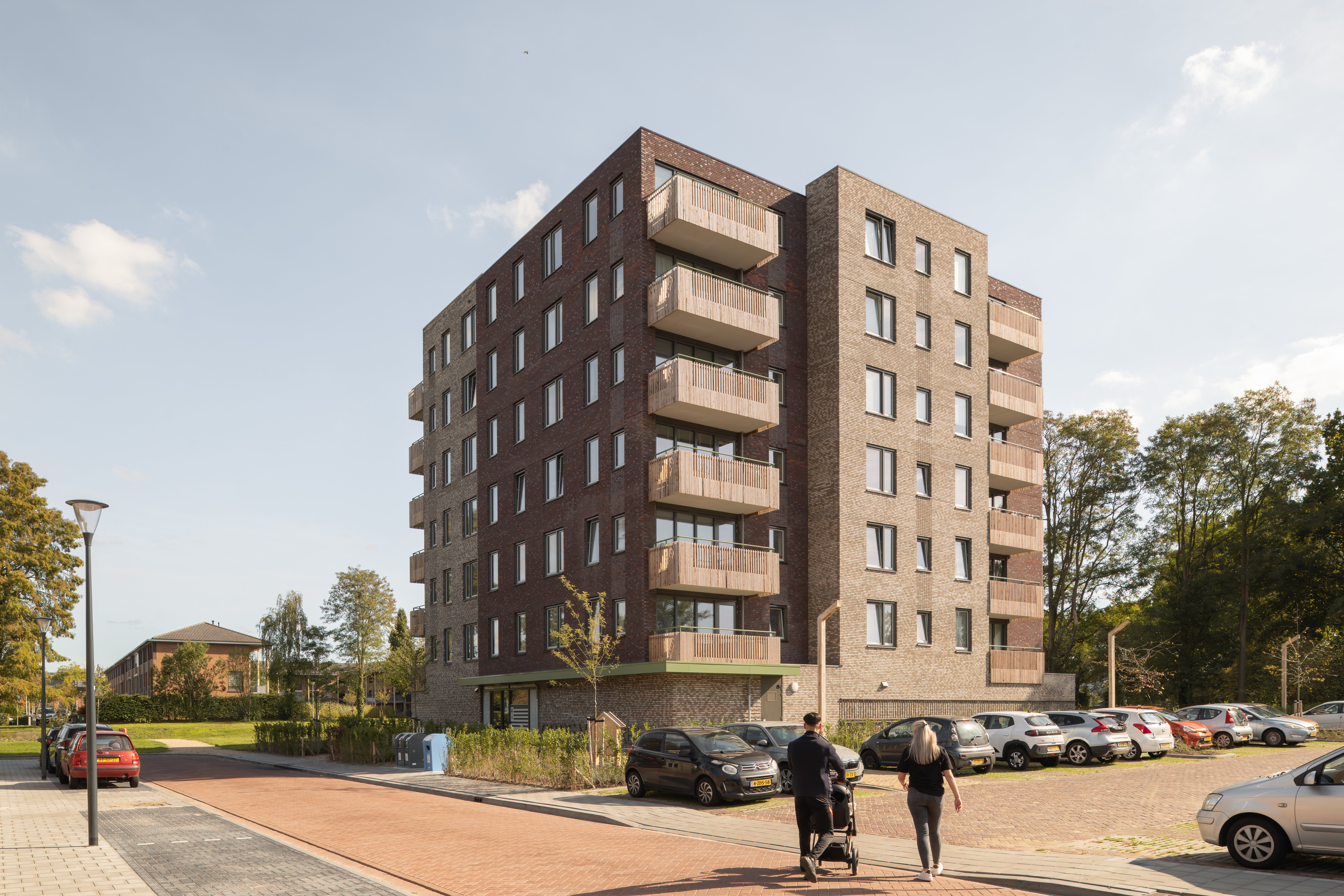
The construction of a sustainable and circular apartment complex with 32 social housing units on Teunisbloemstraat in Bergen op Zoom marked the impressive final phase of the renewal of the Gageldonk-West district. The project was designed by architect Tjerk van de Wetering: “The sustainability ambitions were defined relatively late in the design process. As a result, the structural frame was built using conventional materials. In the façades and finishing, however, we applied as many circular materials as possible.”
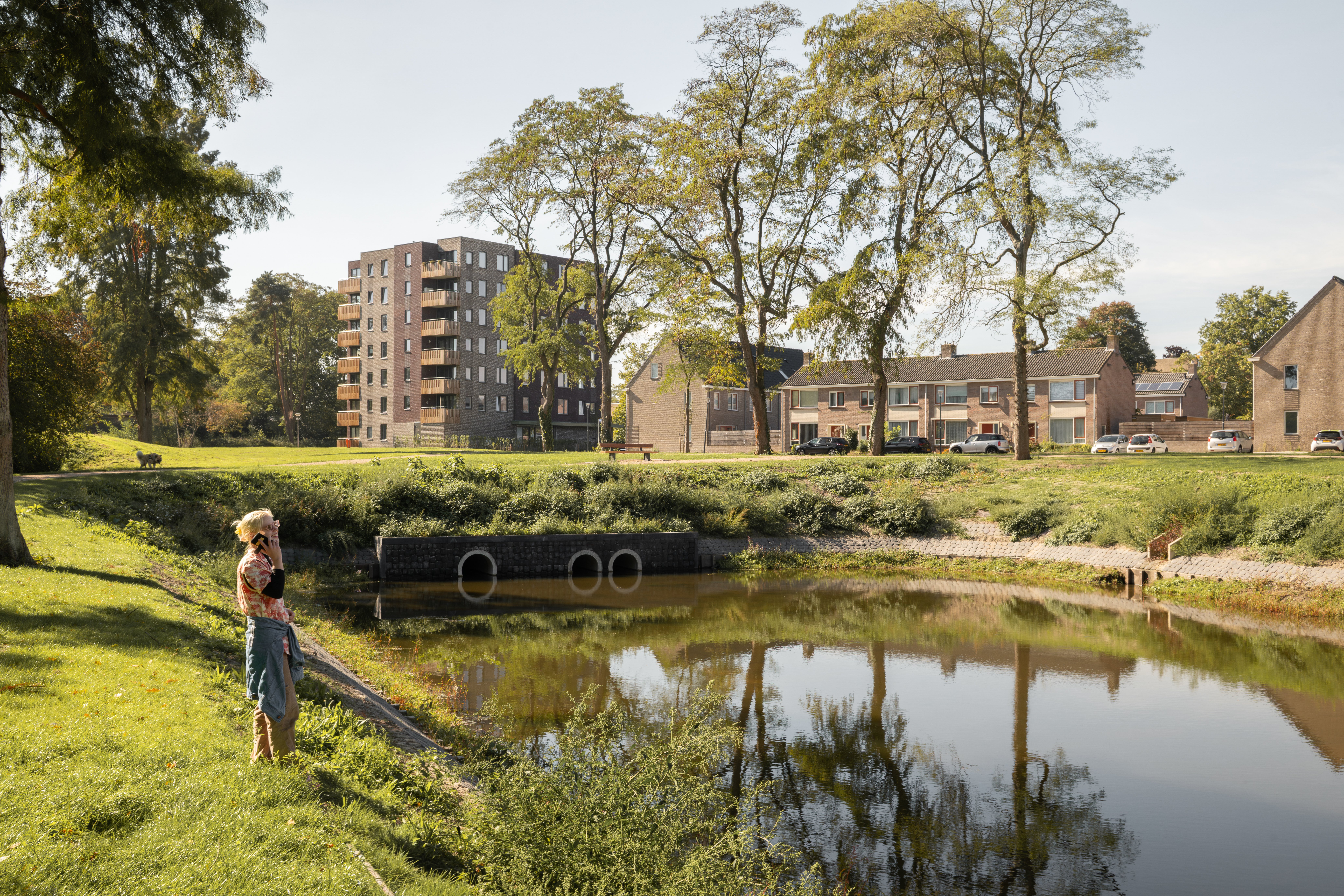
Tjerk is director of SPRING Architects in Rotterdam. For eleven years, SPRING collaborated with housing association Stadlander, Zenzo and Lithos Bouw & Ontwikkeling on the large-scale redevelopment of Gageldonk-West. “Within the existing urban structure of the district, outdated senior housing and gallery apartment blocks were demolished and replaced with apartments and accessible ground-level homes, creating additional space for greenery.”
A gesture towards residents
The project was carried out in several phases. Tjerk explains: “In Vijverberg-Noord, one of the subareas of Gageldonk-West, a large number of buildings were demolished. In Vijverberg-Zuid, the homes that were still of sufficient quality were retained and renovated.”
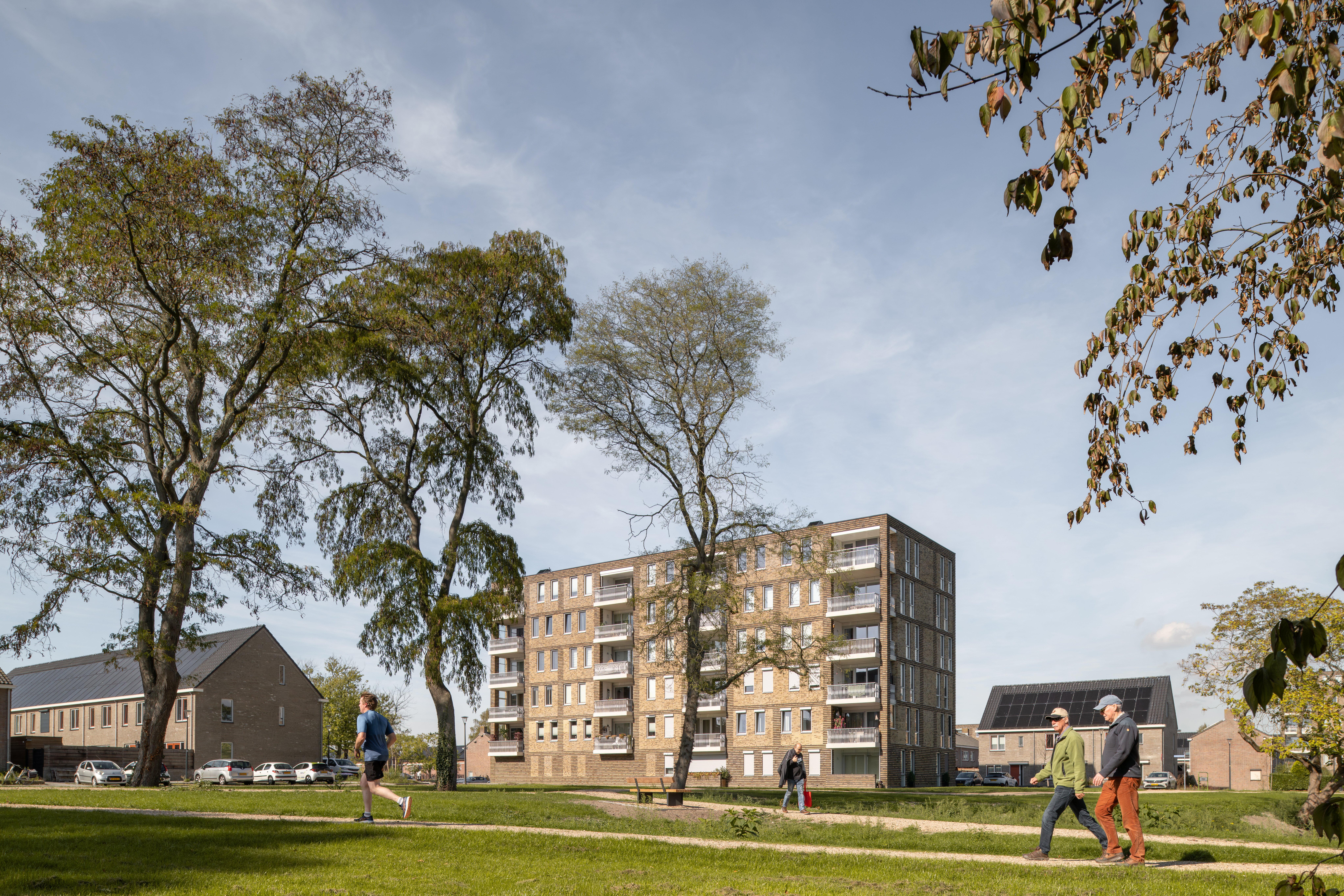
His design has a modern appearance and integrates well with the existing buildings. “While we were working on the new development, Stadlander started major maintenance works on the homes that were not being demolished. They adopted the colour palette from our design, creating a visual connection between old and new. Residents indicated that this made their homes feel almost new. I thought that was a smart decision by the housing association and a meaningful gesture towards the residents.”
More space for greenery through higher-density housing
The renovated and upgraded homes date back to the 1960s. The architect retained the existing urban grid and positioned the new apartment buildings on the sites of the demolished housing blocks. Vijverberg-Zuid now contains one more dwelling than before demolition.
Tjerk explains: “When we started this large-scale project, Gageldonk-West was a deprived neighbourhood facing significant social challenges. Drug-related nuisance, high tenant turnover due to short-term rentals, loitering youth and neglected public space shaped the area’s image. Stadlander showed real commitment by undertaking this ambitious area redevelopment.”
The 32-unit apartment complex is located in Vijverberg-Zuid, a neighbourhood within Gageldonk-West. “Stadlander consistently sets high ambitions in the areas of sustainability and circularity. It is no coincidence that the apartment block completed earlier in Vijverberg-Noord became the first net-zero-energy residential complex in the Netherlands.
For the project in Vijverberg-Zuid, however, we joined the process at a later stage, which meant we had to reassess the sustainability and circularity ambitions. The sustainability goals had been defined relatively late in the design process, meaning that the choices for the structural frame had already been fixed and could no longer be revised. Together with Stadlander, we therefore decided to use this project as a pilot: what additional gains in sustainability and circularity could still be achieved independently of the structural frame? The knowledge gained from this process can now serve as a starting point for future projects.”
Architects with a focus on the public domain
SPRING Architects has existed for 112 years. Tjerk has been working there since 2019 and, together with Nathalie Rabouille, forms the management team. Their team consists of seventeen colleagues.
“We are one of the oldest architectural firms in the Netherlands. Since our founding, our focus has been on the public domain. We feel most at home designing affordable housing for the people who need it most.”
Images: Aiste Rakauskaite
Switch to CLT was not possible
An intern at SPRING investigated the possibility of switching to CLT, but because the building’s dimensions and heights had already been fixed, this proved unfeasible. Tjerk explains: “Adjusting the technical design would have resulted in a delay of six to nine months. The resident participation process had already been completed. In addition, the use of CLT would have reduced the usable floor area of the apartments too much. So we stayed with concrete and calcium silicate brick, and focused instead on applying those materials as sustainably as possible.”
As a result, the project used masonry blocks made from recycled calcium silicate and concrete containing 30% recycled aggregate. By carrying out highly precise structural calculations, the team also reduced the required quantities of concrete and reinforcement. “These are things residents do not necessarily see, but Stadlander clearly communicated to them what makes this building special.”
The project team worked systematically towards creating the most sustainable and circular residential complex possible. Straightforward measures were implemented as a matter of course, such as kitchens supplied by Bruynzeel made from recycled kitchen units. But the ambitions extended beyond that.
Biodiversity was integrated into all newly constructed buildings. Tjerk says: “What I personally like most is the façade of the final apartment block, which includes around 40 nesting boxes for house sparrows and bats, arranged in a carefully designed pattern. The roof is also fully equipped with PV panels.”
The research into CLT and the application of circular materials provided SPRING Architects with valuable experience. “For us, it became the starting point for the first CLT residential project we were later able to design together with Lithos in Bergen op Zoom.”
Demolished apartment block supplied materials for the new development
The apartment complex in Vijverberg-Zuid partly consists of reused materials from the demolished Scheldeflat, which was located in another district of Bergen op Zoom and was also owned by Stadlander.
Tjerk explains: “The demolition of the apartment block coincided with the construction of our project. A van Liempd Demolition Companies from Sint-Oedenrode advised us on opportunities for reuse.”
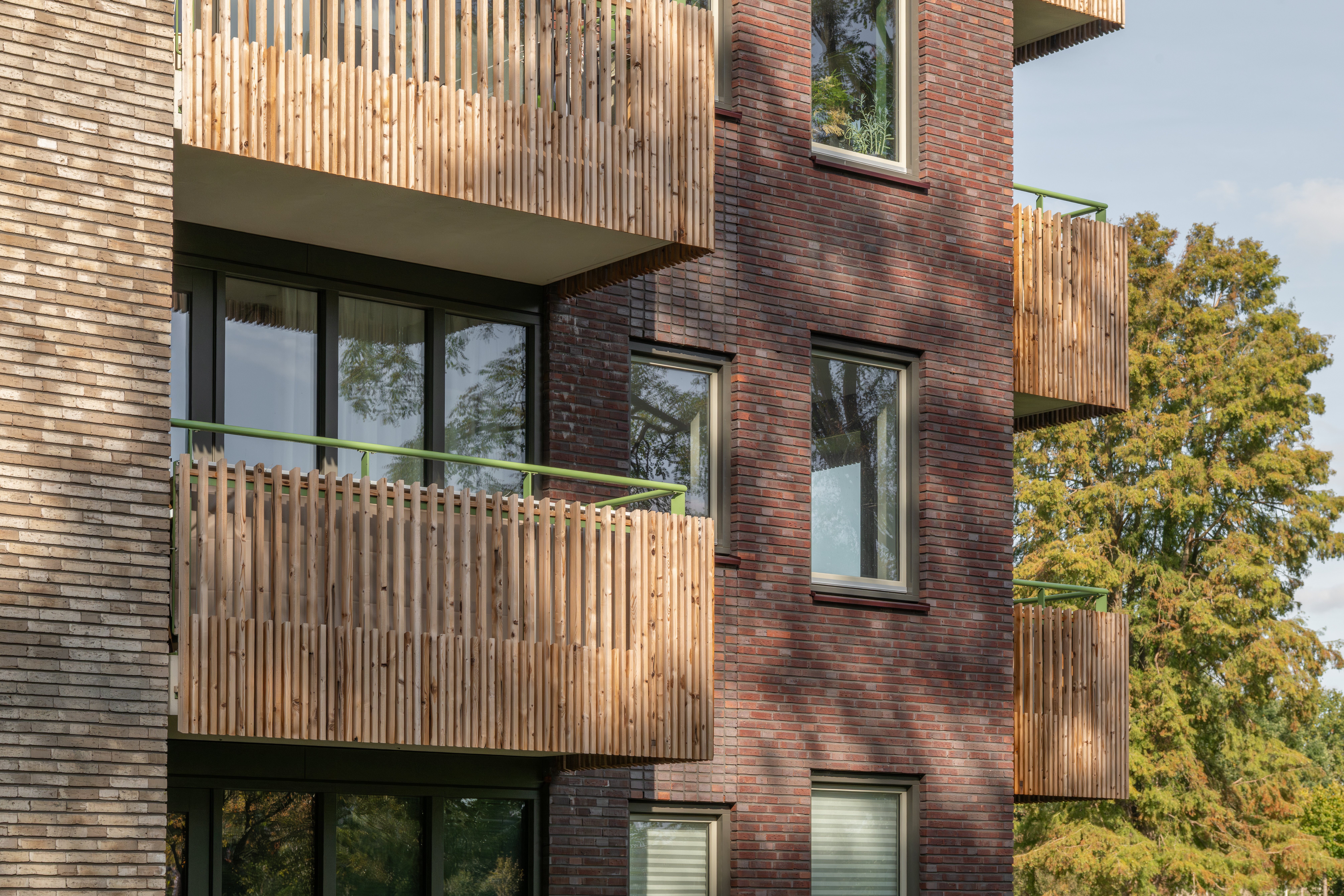
The company planed timber beams from the roof structures of the Scheldeflat and transformed them into balustrades. Former balcony railings from the building now serve as climbing structures for plants in the landscaped areas surrounding the new development. Upcycled Trespa panels were incorporated into the entrance canopy. In the central entrance hall, wall cladding was created using old radiators, and bricks from the Scheldeflat were also given a second life.
“These visible interventions clearly express the project’s sustainable and circular ambitions. Residents were also actively informed about the special nature of the building they now live in. They received guidance on how to use the installations and were extensively informed about the reused materials and sustainable measures.”
“In this way, despite the relatively late decision to pursue a circular building approach, we still succeeded in achieving a low MPG score. The MPG of the complex is 0.36.”
Tjerk continues: “The calculation was carried out by an external consultancy. We had a highly interactive dialogue with them about which parameters we could optimise to achieve the lowest possible MPG. We appreciate having access to the database and intend to use it more frequently as a design tool.”
Result of long-term collaboration: happy residents
The complete renovation of the neighbourhood was carried out by the same architect, contractor and consultants throughout the project. Tjerk explains: “It was great to work together as a construction team for such a long period of time. We brought out the best in each other. By the final block, I noticed that everyone was fully committed to making it something truly special. During the opening celebration, I spoke to tenants who said they were proud that there was no visible difference between the rental and owner-occupied homes in the neighbourhood. Several residents who had left the area fifteen years ago have even returned because the neighbourhood has become such a pleasant place to live. That is the greatest compliment we could have received.”
Tips for sustainable and circular construction
Just get started — talking alone will not achieve anything
Treat the “low-hanging fruit” as standard practice, but also dare to go further, for example by making sustainable choices in building materials and façades
Want to share or gain knowledge? Join initiatives such as the Circular Construction Covenant
MPG Vijverberg
This MPG calculation was carried out using the environmental performance calculation tools MRPI Free Tool and MRPI Pro Tool, both validated by the Dutch Environmental Database Foundation (Stichting Nationale Milieudatabase, NMD).
Architect Tjerk van de Wetering on the MPG score:
“The relatively low MPG score appears to be mainly the result of a compact and efficient building design, a modest and functional material composition, the use of timber window frames, and a limited number of finishing and installation components with a high environmental impact. Within the calculation, the largest environmental impacts mainly originate from the glazing, kitchens, and the concrete load-bearing structure and floors.”
Would you like to learn more about the MPG calculation? Download the PDF here.
MPG berekening Appartementencomplex Vijverberg Zuid
Samen realiseren zij het Vijverberg appartementencomplex:
| Client/developer: | Stadlander |
| Architect: | Spring Architecten |
| Construction / development contractor: | Lithos Bouw & Ontwikkeling |
| Process and area coordination / participation : | Zenzo Maatschappelijk Vastgoed |
| Demolition and (circular) material flows : | Sloopbedrijf Van Liempd |
