Therminon underfloor heating system
The Therminon Flex Line Open and Base Line Open manifolds, as well as the Therminon FLEX-PERT 5-layer underfloor heating pipe, are now included in the NMD with Category 1 data.
“The better installers are able to compare products, the better choices they can make.”
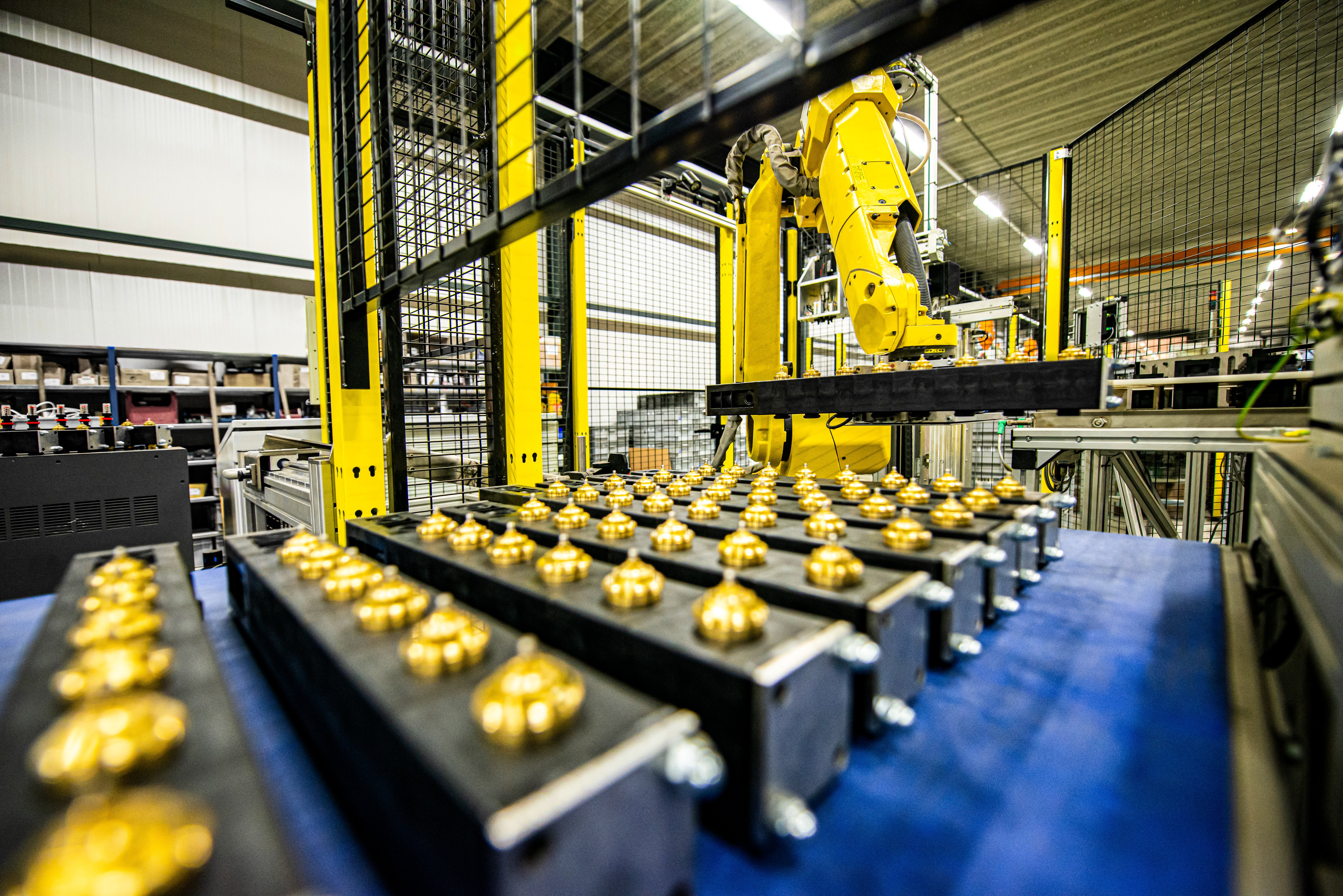
Therminon has been active as a manufacturer of underfloor heating systems since 1985. Since 2009, the company has produced not only steel manifolds but also composite manifolds. Initially, this shift was mainly driven by fluctuations in steel prices, the lower weight of composite materials and their corrosion resistance. Over time, sustainability became an increasingly important factor as well. The Life Cycle Assessment provides valuable insights into the origin of raw materials and supplier performance. Sales Director Michiel Melis explains how this was one of the reasons for seeking new suppliers. “We strongly value transparency and want to use data and certifications to provide insight into the quality and sustainability of our products.”
Therminon has been highly committed to sustainability for many years. This also led to the development of the Flex Line Open manifold. “Since 2009, in addition to our steel manifolds, we have also produced manifolds made from composite materials. Initially, sustainability was not the main reason for this, but over time it became increasingly important. The environmental data for composite materials is significantly better than that of steel. Composite is lighter in weight, 100% recyclable and much easier to recycle than steel. The moulded product can simply be shredded back into granulate and reused.”
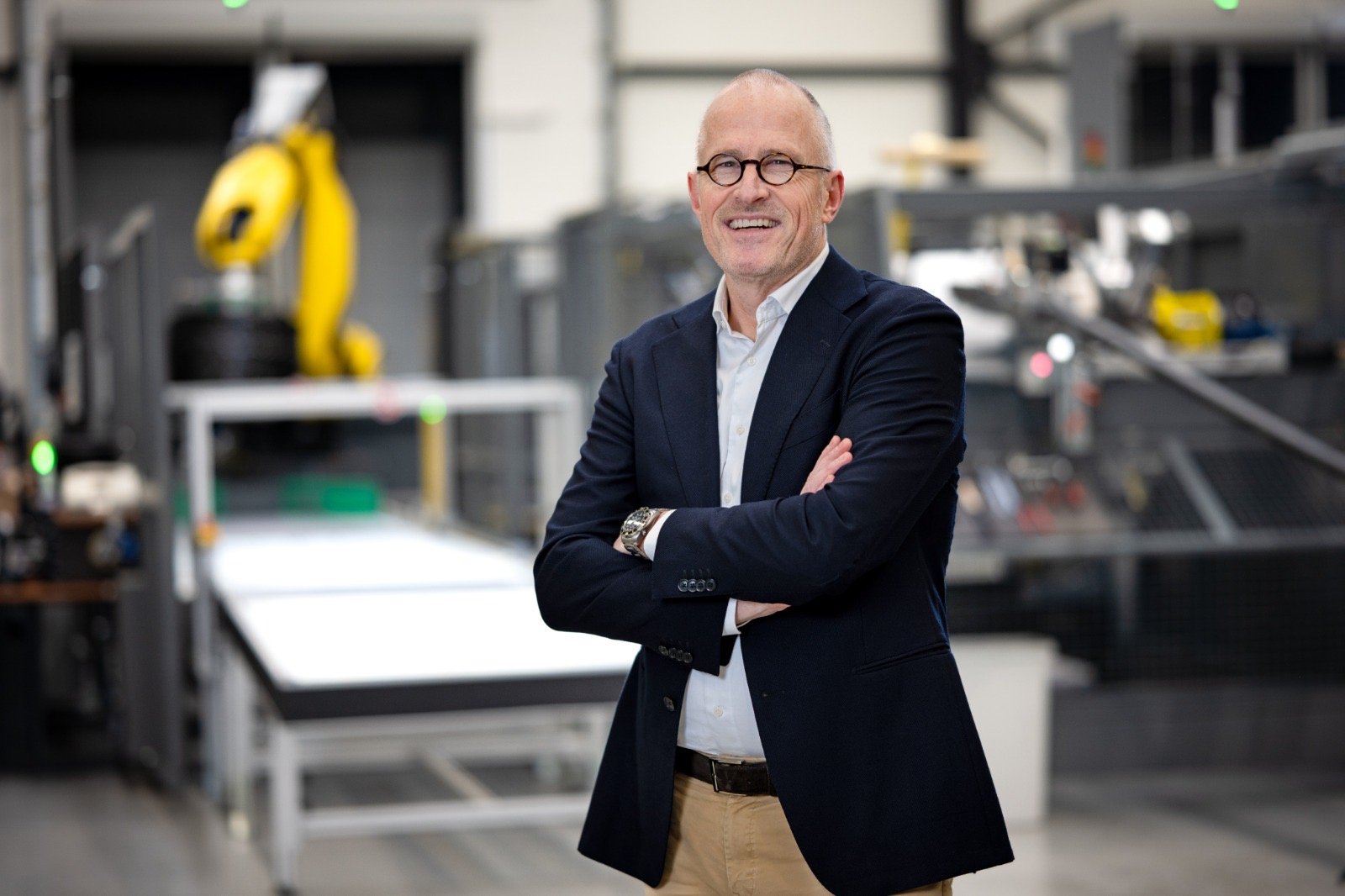
Michiel Melis
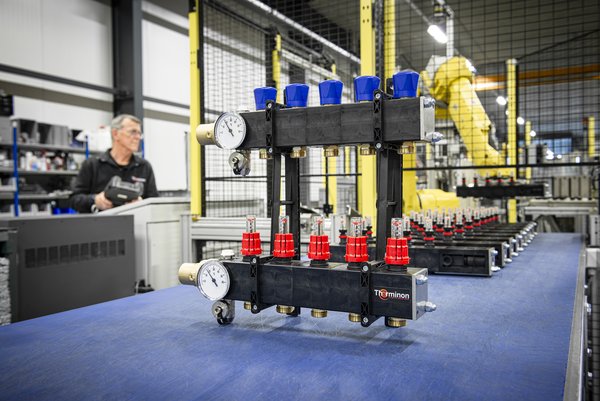
“Step by step, we explored how to make our manifolds increasingly sustainable. This resulted in the Flex Line Open manifold. Our ‘traditional’ composite manifold, the Base Line Open manifold, contains a brass ring moulded into the composite body. However, brass is a relatively environmentally intensive material. In the Flex Line Open manifold, all components are made of plastic. The brass ring has been replaced by a plastic push-fit connection. This also makes the product much easier to recycle.”
Circular production
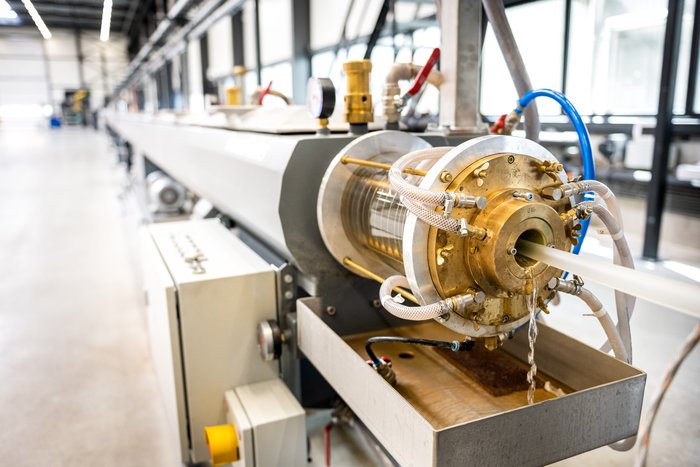
Therminon is strongly focused on recycling and circular production. “We use our production waste to create auxiliary products, such as installer tools manufactured from residual materials. We are currently also investigating whether floor bends can be made from residual materials. A great deal is already possible.”
“For components that come into contact with water, we deliberately choose virgin materials (materials used for the first time). Certification options for recycled materials in direct contact with water are still limited within the sector. We see that as unfortunate, because transparency is very important to us. Through data and certifications, we want to provide demonstrable insight into the quality and sustainability of our products.”
Demonstrating quality and sustainability
This is also one of the reasons why Therminon chose to commission a Life Cycle Assessment for the three aforementioned products and have them included in the Dutch Environmental Database with Category 1 data.
“We know that we produce high-quality and sustainable products. We want to demonstrate that, and independent certifications and registrations are extremely valuable in doing so. Among other things, our products hold KIWA-LTV CV certification, which guarantees quality. In addition, the market is increasingly requesting data, and we want to continuously improve the sustainability of both our products and production processes. An LCA provides valuable input for this.”
New, local suppliers
One of the changes Therminon made as a result of the LCA concerned supplier collaboration. “We started the LCA process by requesting data from our suppliers. To our surprise, some suppliers still did not respond even after repeated requests. That made us think: do we really want to continue working with those parties? The answer was no. We terminated several collaborations.”
“Through the LCA, we also gained insight into the actual origin of our raw materials and the associated transport flows. What initially appeared to be local or European supply chains turned out in practice to be long and complex chains with considerable environmental impact. We stopped working with those suppliers. Instead, we now work as much as possible with local and European suppliers. You may be surprised by how much is available close to home.”
Continuing to improve sustainability together
Therminon hopes that as many manufacturers as possible will also start working with LCAs. “The insights generated by an LCA make it possible to make conscious choices throughout the value chain — from raw materials to transport — and thereby reduce environmental impact step by step.”
“As a sector, we can only make fair comparisons using Category 1 data and shared principles. That keeps all of us sharp. If other manufacturers achieve a better environmental score, it challenges us to improve even further.”
In addition to carrying out the LCA, Therminon also complies with CSRD reporting obligations. The Corporate Sustainability Reporting Directive requires companies to report transparently on their impact on people and the environment. “It provides structure to our sustainability ambitions and makes our progress visible to customers, partners and the market.”
“We are now exploring whether we can further reduce the ECI by replacing even more brass components with plastic. Continuously raising the bar a little higher — that is what energises us.”