Hoex hemp insulation installed using vibration compaction
Together with Loonbedrijf Gebr. de Boer, Hoex Bouw has established a fully North Limburg-based hemp insulation supply chain: “Achieving the lowest possible ECI has been our goal from the outset.”
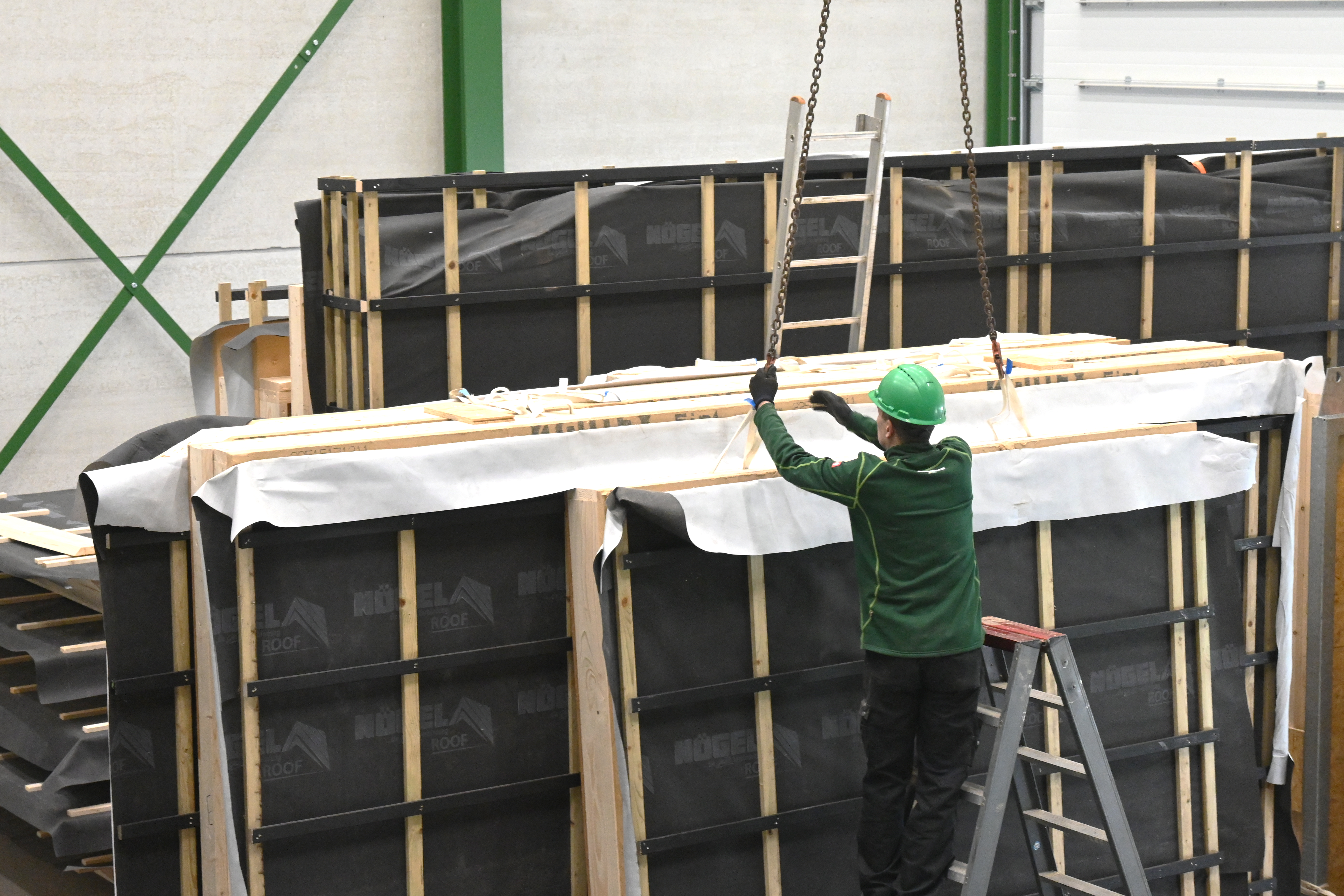
Hoex Bouw was active for many years in the construction of agricultural buildings. The company has an extensive network among farmers and understands the challenges they face. As demand for livestock housing has declined, Hoex has, in recent years, shifted its focus to the cultivation, processing and application of fibre hemp in residential and non-residential construction. The company has even developed a unique method to install fibre hemp as insulation by vibration compaction in timber frame wall and roof elements. Hoex hemp insulation is now also included in the Dutch Environmental Database with Category 1 data.
For this interview, we speak with Nik Heeren, responsible for research and development at Hoex Bouw. He explains how Hoex transitioned from a traditional agricultural builder to a production and processing company for biobased materials.
Together with Loonbedrijf Gebr. de Boer, Hoex Bouw established a fully North Limburg-based hemp insulation supply chain under the name Kennep. Nik also explains how sustainability and the ECI have been central throughout this entire process from the outset.
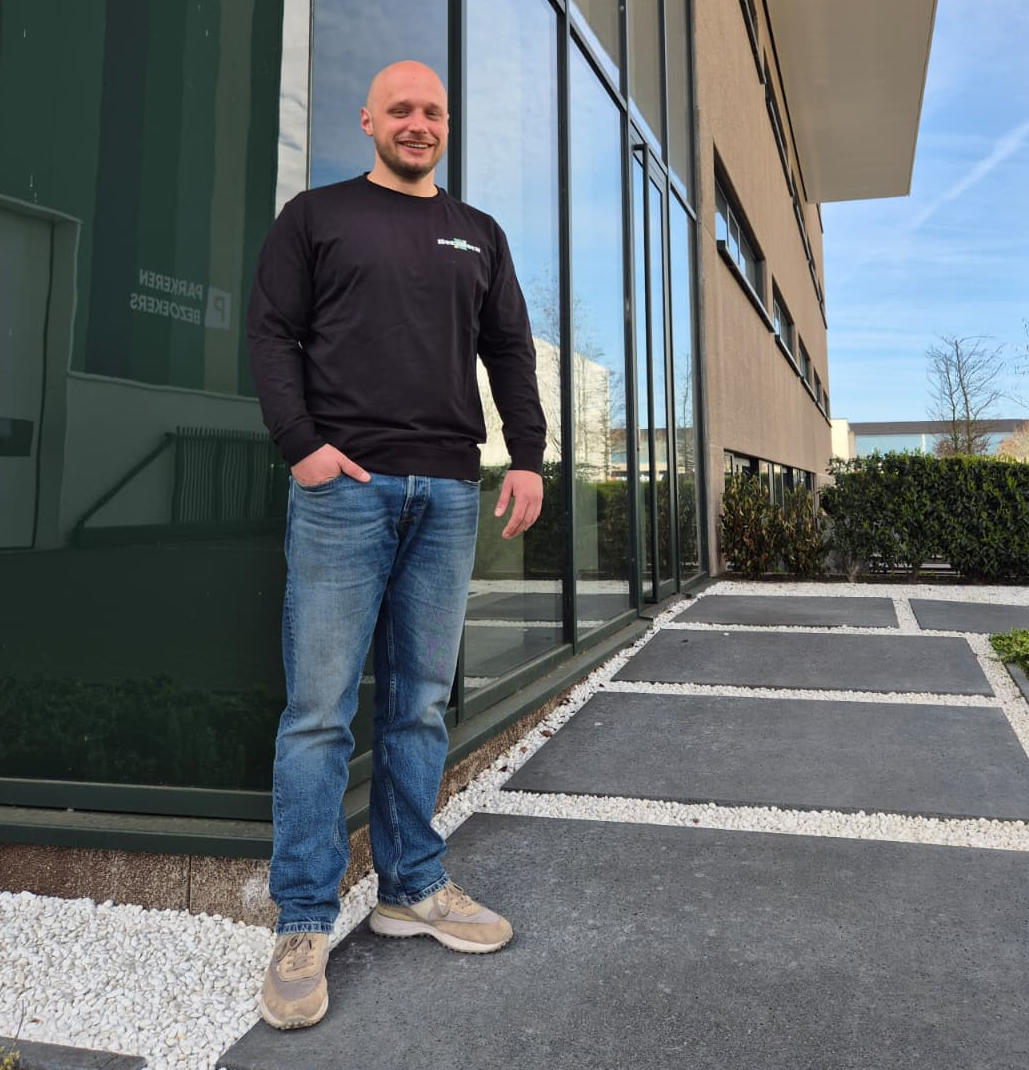
Nik Heeren
How did you transition from agricultural construction to cultivating and processing fibre hemp?
Nik: “Given our background, we know the agricultural sector and the local context here in North Limburg very well. We are aware that the construction of livestock housing is declining. For several years now, we have been exploring new business models, with sustainability as a key condition. This led us to biobased construction, and in particular to fibre hemp.”
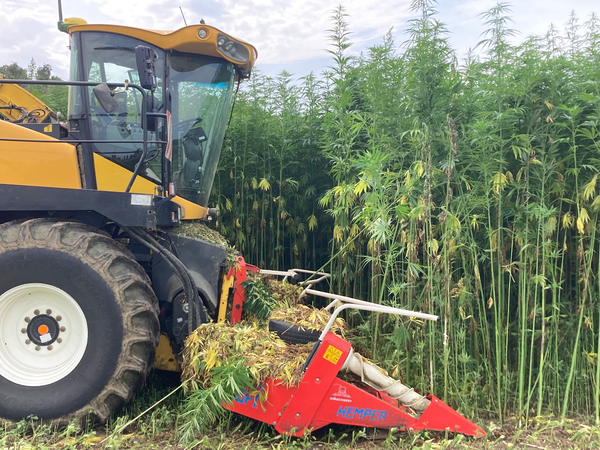
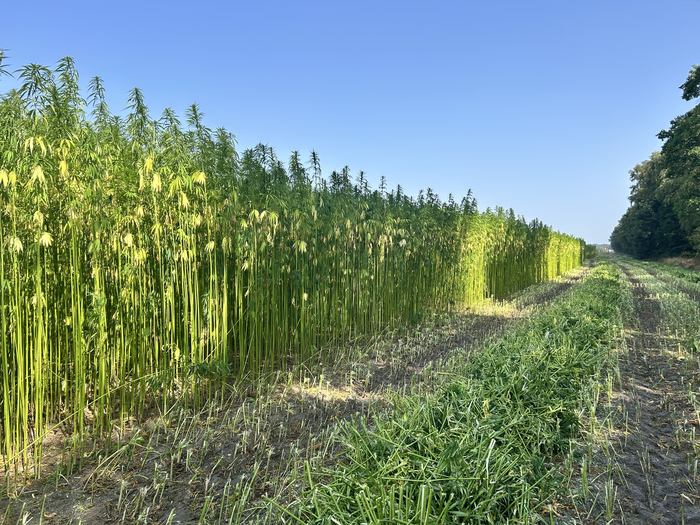
“Fibre hemp is a perfect rotational crop in this region — the Peel. Farmers can grow it to allow the soil to recover. It helps retain water in the soil and, thanks to its deep roots, improves soil quality. At the same time, it is a highly suitable material for insulating homes and buildings. It is fully circular, CO₂-negative and contributes to a healthy indoor climate. With fibre hemp, we can therefore make the construction sector more sustainable while also giving a new impulse to agriculture.”
You have now developed an entire value chain, making you much more than just a contractor. Why is it important for you to be involved throughout the entire chain?
“Partly from intrinsic motivation, but also because we believe it is essential for a viable business model, we have focused from the outset on achieving the lowest possible ECI. From the very beginning, we have made conscious choices to minimise the environmental cost of the fibre hemp product. This works best when you maintain control over the entire chain from start to finish.”
“This starts with making the highest-value use of the raw material. We do this together with Loonbedrijf Gebr. de Boer. Traditionally, only the fibres of hemp are used, but we discovered that it is also very valuable to use the shives — the inner part of the stem (hemp hurd). This is often used as animal bedding, which is a low-value application. By using it as insulation material, it can be applied at a much higher value level.”
“We strongly believe in keeping the value chain as local as possible. In our initial plan, we intended to cultivate locally, transport the fibre hemp elsewhere in the Netherlands or abroad for processing, leave the residual dust stream there, and then bring back the shives (the woody core) for further application in timber frame elements. However, this would involve a significant number of transport movements to move the product back and forth.
That is why we now carry out the entire process in North Limburg. For example, we collaborate with companies that use the fibre dust to produce board materials. All residual streams are utilised at a high-value level, and everything takes place locally.”
You now also have your own production line and developed a proprietary method to install fibre hemp insulation using vibration compaction?
“That’s correct. In standard industrial processes for (blown-in) insulation in timber frame elements, insulation is typically applied horizontally. One panel is left off, the element is filled, and then the final panel is installed. We found that this last step — completing the element — often causes bottlenecks in the production process.”
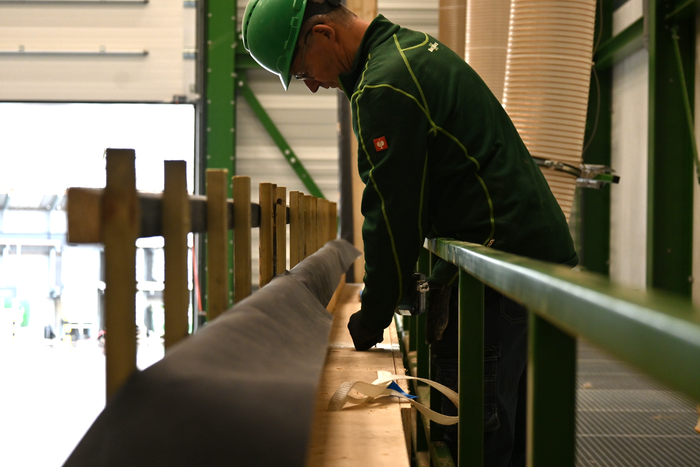
“That is why we position the timber frame elements vertically, fully complete them, and then fill them from the top with insulation material. By applying vibration and shaking during this process, we achieve a uniform and well-compacted insulation layer. We also know the weight of a non-insulated element and a fully insulated element. By weighing the elements afterwards, we immediately have an internal quality control check.”
How did the development of this production line progress? Did you encounter any obstacles?
“You always learn a great deal during a process like this. Regulations also present challenges. You really notice how much the current Building Decree is geared towards traditional construction methods. Meeting all those requirements while also developing a technically high-quality product is demanding. Fire safety, all building physics properties — it requires a lot of effort. That is why we are proud to have achieved this.”
How did the Life Cycle Assessment process for calculating the ECI go?
“Because we are involved throughout the entire value chain, collecting data for the LCA was relatively straightforward for us. From the very beginning of developing our biobased chain, achieving the lowest possible ECI has been a key objective. For example, we knew that transport has a significant environmental impact, which is why we deliberately keep transport movements to a minimum. We were therefore confident in achieving a strong ECI score. We knew we had developed a solution with low environmental impact, and this is a valuable way to demonstrate that.”
Why did you have Hoex vibration-compacted hemp insulation included in the NMD with Category 1 data?
“Because we believe the ECI will become a decisive factor in securing construction projects. There is a clear reason why we invest in the biobased economy — we see it as the future. We also believe that a level and transparent representation of the environmental impact of construction products is essential. Otherwise, there is a risk that sustainability remains limited to marketing claims. With an LCA and a Category 1 declaration, those claims can be substantiated as verified environmental performance. That is why we consider the Dutch Environmental Database highly relevant. It provides the foundation for demonstrating comparable performance.”
Lees meer:


