Drainstabiel®: Buffering and filtering rainwater with recycled concrete aggregate
Drainstabiel® uses a residual product from demolished buildings to capture, retain, filter and reuse rainwater. The results of the Life Cycle Assessment were surprisingly low, even to the founders themselves: an Environmental Cost Indicator (ECI) of €0.841 per tonne over a 75-year service life.
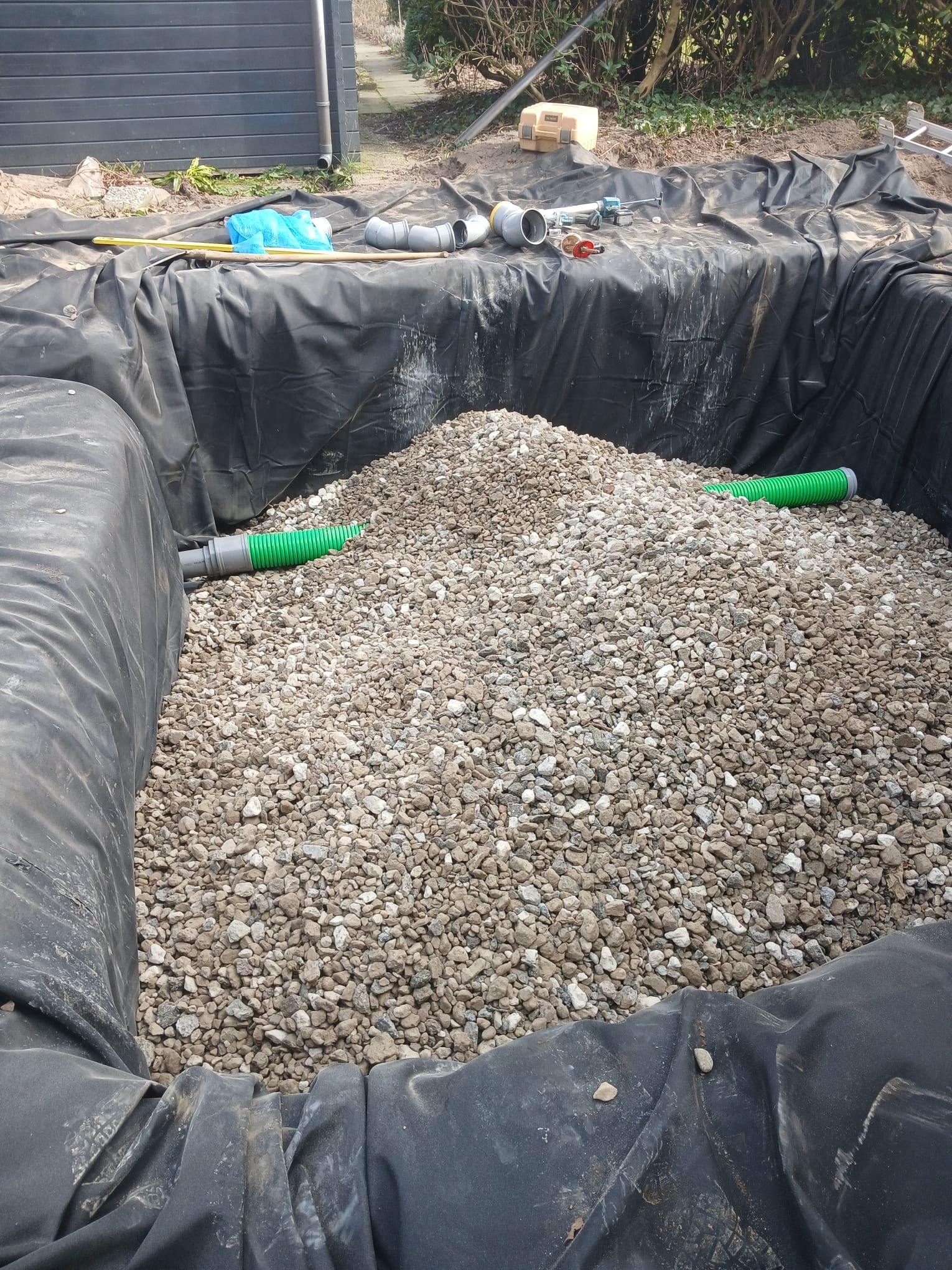
Buffering rainwater is becoming an increasingly important topic in the construction sector. During periods of heavy rainfall, rainwater storage helps reduce pressure on the sewer system. During prolonged dry spells, stored rainwater can be used to irrigate surrounding green spaces. Gert Klein and Elbert van Laar have worked in groundworks and paving for many years and were convinced there had to be a smarter solution for water storage and controlled release. This led to the development of Drainstabiel: a circular drainage foundation material made from recycled concrete aggregate that simultaneously stores rainwater. “We were genuinely surprised by how low the ECI turned out to be.”
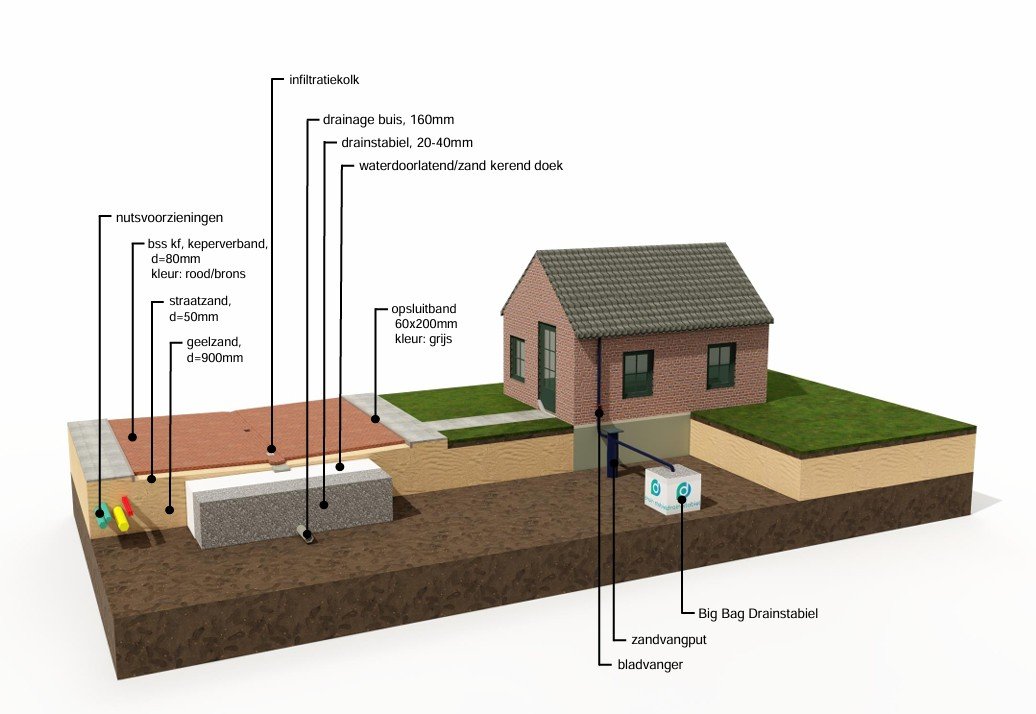
Rainwater is too valuable to simply discharge. During dry periods, water is scarce, while in wet periods, rapid runoff places pressure on sewer systems and surface water. “The idea was to solve both challenges at the same time,” explain Gert Klein and Elbert van Laar. “Store water where it falls, reuse it wherever possible or necessary, and release it when it is needed. The only question was which material would make that possible.”
Working with existing materials
The starting point was to make the solution as sustainable as possible. “Many existing solutions are made from plastic. That is not necessarily the most environmentally friendly option, and from our experience we found that plastic infiltration crates can also fail under heavy loads—such as those from mobile cranes, concrete pumps or aerial work platforms. We therefore started looking for a material that already exists and is much more robust.”
That material turned out to be recycled concrete aggregate. “Concrete aggregate does not need to be manufactured; it is recovered from demolished buildings. Ideally, the aggregate even remains on the same site where it was generated. When a building is demolished and replaced with a new one, the crushed concrete can be reused on-site as a drainage foundation. This significantly reduces transport. In addition, recycled concrete aggregate has excellent compressive strength and, with sufficient layer thickness, a load-bearing capacity of more than 110 tonnes per square metre.”
Finding the right properties
Finding the right coating to give the recycled concrete aggregate the desired functionality—drainage and filtration—took time. “Our first experiments were carried out using a small cement mixer. It really was a process of trial and error. Concrete naturally has a high pH, which can cause problems for plant roots and the biological functioning of the soil. We wanted to develop a coating that would make the material suitable for applications where untreated aggregate would not perform adequately—for example beneath roads, under vegetation or as an infiltration layer around buildings.”
A closed-loop system
After numerous experiments with different coatings and mixing ratios, Gert and Elbert found the solution they were looking for: recycled concrete aggregate coated with a water-based, biofilm-resistant coating.
“This patented coating serves two main purposes. First, it reduces algae growth to less than 1%, ensuring that the water storage capacity is maintained over the long term. Second, it makes the aggregate dirt-repellent. The material is strong enough to support very heavy traffic—or even an entire building—while remaining sufficiently porous to store water. Where space is limited, it can even be installed beneath buildings and, in some cases, improves the ground conditions to such an extent that pile foundations are no longer required.
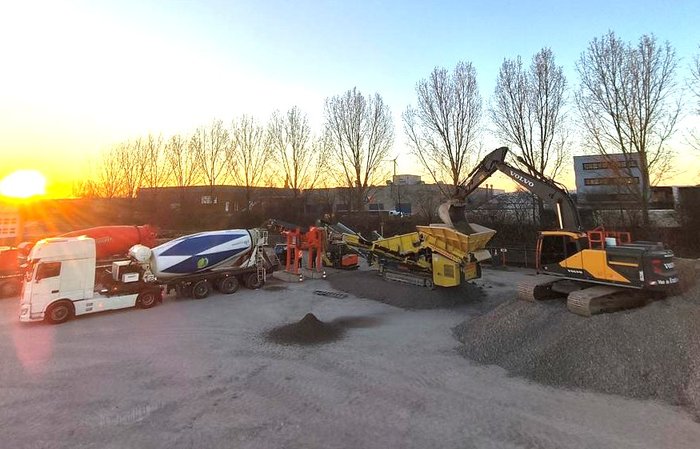
One cubic metre of Drainstabiel stores approximately 450 litres of water. Today, we can mix the aggregate on-site if required using a truck-mounted system and process up to 250 tonnes per day.”
At the end of its service life, the aggregate can be reused again—as foundation material, drainage material or in another application. “The material never leaves the circular value chain, and that is something we consider extremely important.”
Climate adaptation
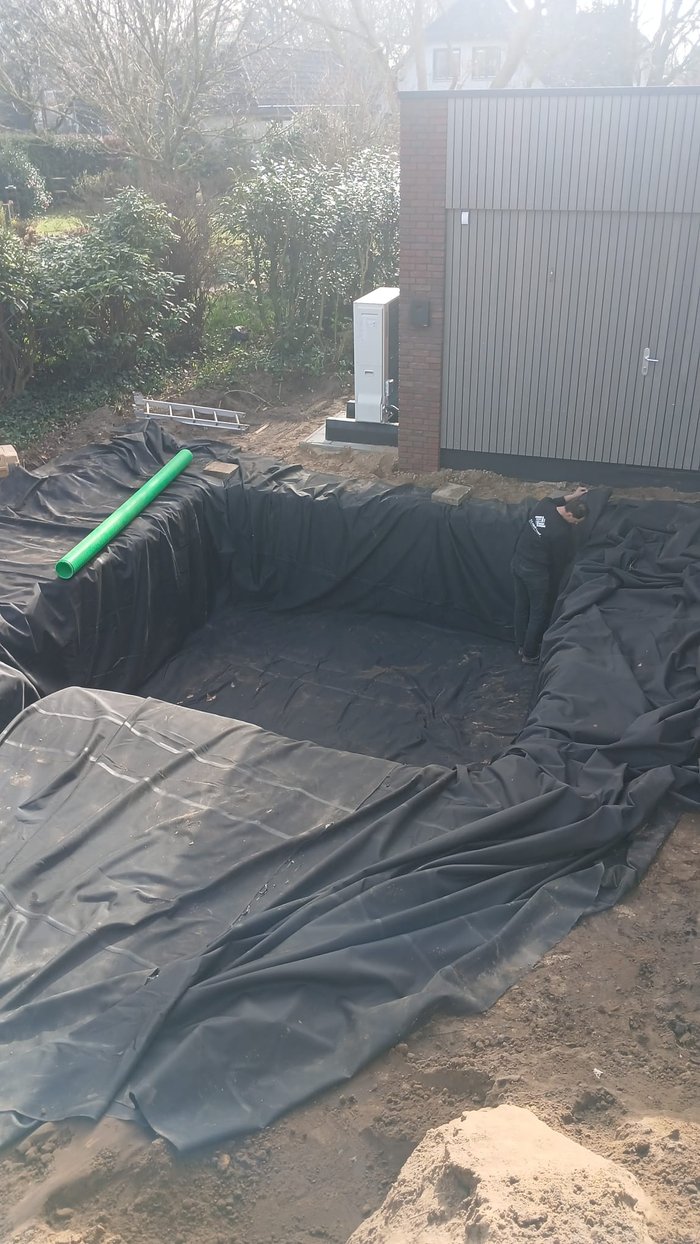
Another advantage of Drainstabiel is that it can be installed close to the surface.
“Infiltration crates need to be installed deeper underground to withstand traffic loads. The deeper they are placed, the closer they are to the groundwater table, reducing the effectiveness of drainage. Drainstabiel captures rainwater where it falls. In addition, the natural evaporation of the stored rainwater has a cooling effect on the surrounding environment, which is particularly beneficial during periods of extreme heat.”
What the LCA revealed
After five years of development, Gert and Elbert commissioned a Life Cycle Assessment (LCA) for Drainstabiel. The initial reason was practical: engineering firms and municipalities were increasingly requesting one. However, the process also provided valuable internal insights.
“For the LCA, we had to measure everything: the energy consumption of the mixer, the transport of the aggregate to the project site, the packaging—you start questioning things you had simply taken for granted.”
“A good example is our concrete mixer. It currently runs on diesel, but if we could switch it to electric power, it would significantly improve the results. We now know exactly what that would mean for the environmental impact. At the moment, converting the mixer to electric is still too large an investment, but the LCA makes the trade-offs much more tangible.”
Surprisingly low results
Drainstabiel has an Environmental Cost Indicator (ECI) of €0.841 per tonne over a 75-year service life. “On average, that is fourteen times lower than the ECI of comparable traffic-load-bearing systems made from recycled plastic. We did not expect the difference to be that significant. But when you assess the entire lifecycle of plastic—from production and transport to the fact that it cannot be given a second life without additional processing—the outcome becomes much more understandable.”
There is still room for improvement. If the recycled concrete aggregate is processed directly at the demolition site, transport can largely be eliminated. “We are currently exploring how this can be better reflected in the calculation.”
Changing conversations
The Category 1 environmental declaration in the Dutch Environmental Database changed the conversations Drainstabiel had with clients, including municipalities, engineering firms, property developers and major contractors.
“When you have a strong product backed by a low ECI, discussions become much easier. That is especially true now that more organisations are facing environmental reporting requirements.”
“We would therefore recommend carrying out an LCA for any company with a product that delivers environmental benefits. It increases your visibility, provides tangible evidence of your sustainability performance, and offers valuable insights for further product development and improving the sustainability of your processes.”