DC Bricks: brick made from residual streams
DC Bricks has developed a ceramic facade brick that already consists of at least 60% secondary raw materials, with energy consumption during production around 40% lower. This WasteBasedBrick® has also been listed with category 1 data in the Dutch Environmental Database for a few months now.
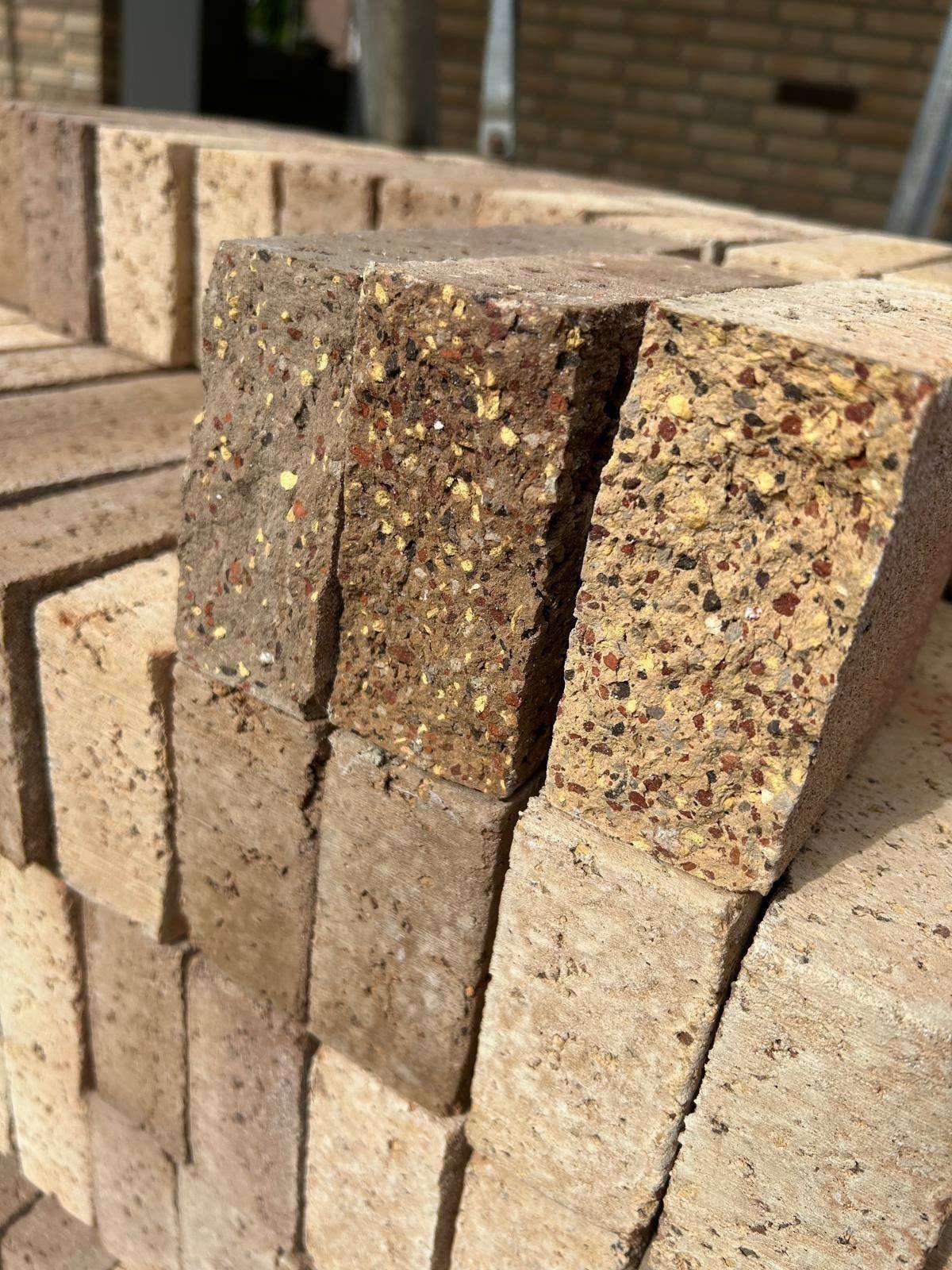
DC Bricks is a joint venture between Rodruza and Zilverschoon Randwijk. The two companies found common ground in the belief that residual streams are not an endpoint, but the start of a new, high value application. The ambition is clear: turning residual material into a fully fledged ceramic facade brick that wastes less, requires less energy, and still retains the strength of brick. What was tested and refined on a small scale for years can now be produced at large scale. Business development manager Roel Wetzel: "The life cycle assessment confirms the environmental gains that circular building with ceramic facade bricks can deliver."
The name DC Bricks stands for Durable and Circular Bricks. "Durable, because ceramic facade bricks are known for their long lifespan, colour fastness, shape stability and low maintenance character," says Roel Wetzel. "Circular, because at the end of its lifespan the brick can be reused as a brick, or ground down and used again as a raw material."
The product is called WasteBasedBrick®. "We want to combine the best elements of the past hundred years with today's challenges. Treating the planet more carefully by using more secondary raw materials. There are so many residual streams out there; turn them into a trusted, sustainable and beautiful end product."
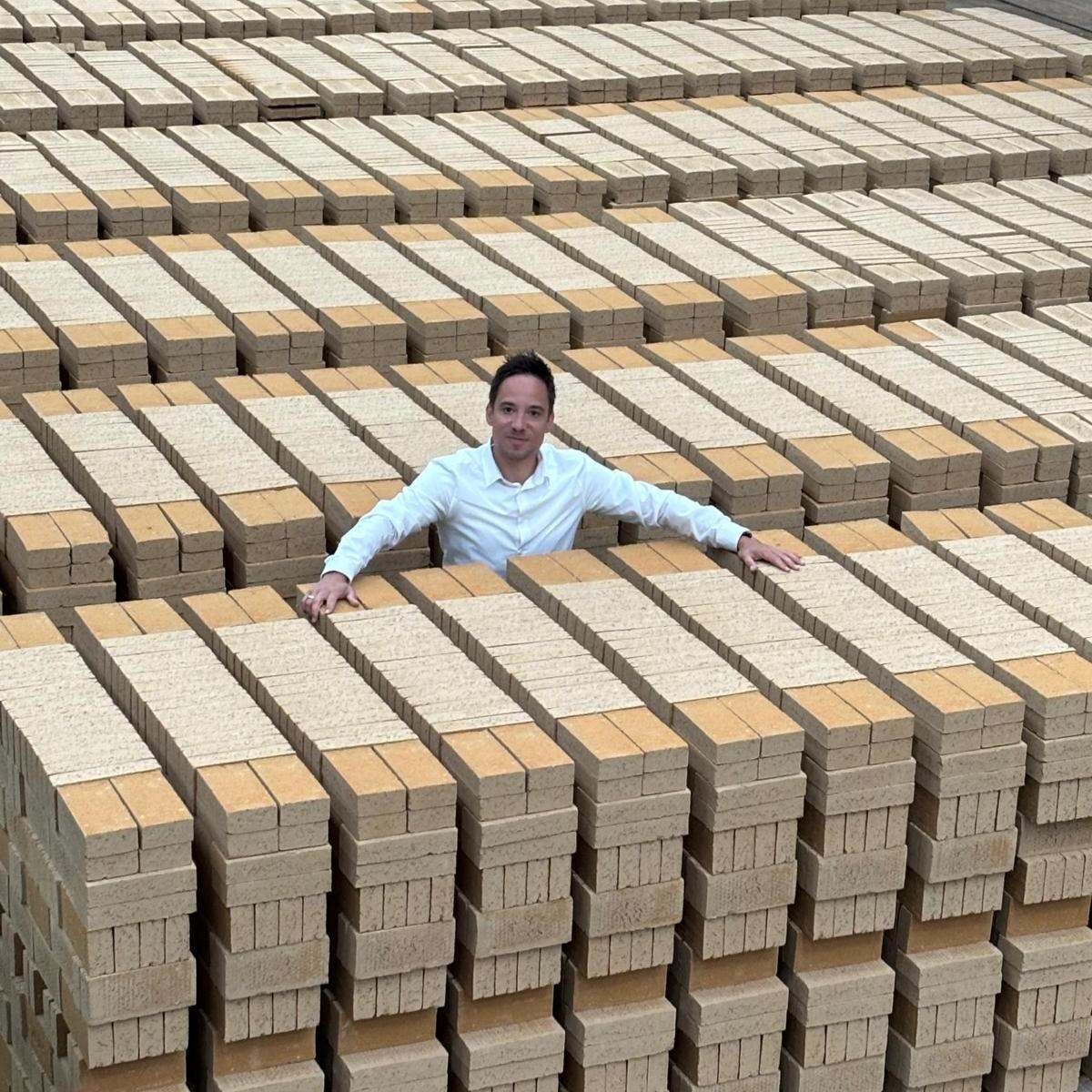
Residual streams as raw material
DC Bricks is able to process a wide range of residual streams in WasteBasedBricks®, each with its own function in the formulation.
"We use specific secondary raw materials as an addition to the clay to lower the firing temperature, make the drying process energy neutral, and minimise water use in the process. This gives low grade residual streams a high value destination in a ceramic facade brick."
Residual streams DC Bricks can use include sludge fractions from water treatment plants, ground ceramics from old roof tiles and bricks, and surplus sand from infrastructure works. "By now, WasteBasedBrick® consists of at least 60% residual material, without compromising on the appearance and performance expected of a ceramic facade brick."
In addition to saving energy through lower firing temperatures, DC Bricks also saves energy in the drying process. "The formulation of WasteBasedBrick® is tuned for optimal drying behaviour. As a result, a burner is no longer needed during drying, and the bricks are dried solely using residual heat from the kilns."
Years of testing
DC Bricks now has a formulation in which WasteBasedBrick® looks, feels and performs like a traditional ceramic facade brick. "As far as we're concerned, that's essential. The innovation doesn't lie in a compromise, but in adding circularity and energy savings to a material that has proven itself in the built environment for generations."
"The challenge wasn't just in the composition of the formulation, but also in the unpredictability of residual streams. Residual streams are erratic. They're not always available in the same composition or quantity. You need to have that well under control before running it in a large scale installation."
In 2025, DC Bricks ran its first test production at industrial scale, in Rodruza's large kilns. "A kiln 120 metres long doesn't have a pause button. If something goes wrong, the consequences are hard to predict. We rely on hundreds of years of knowledge from the ceramics industry, but adding residual streams makes it complex."
The test production was intended to validate the formulation for certification, including through KIWA. The KOMO certification that followed confirmed that WasteBasedBrick® contains at least 60% residual material. "With the next formulations, we're already at 63%. A little better each time."
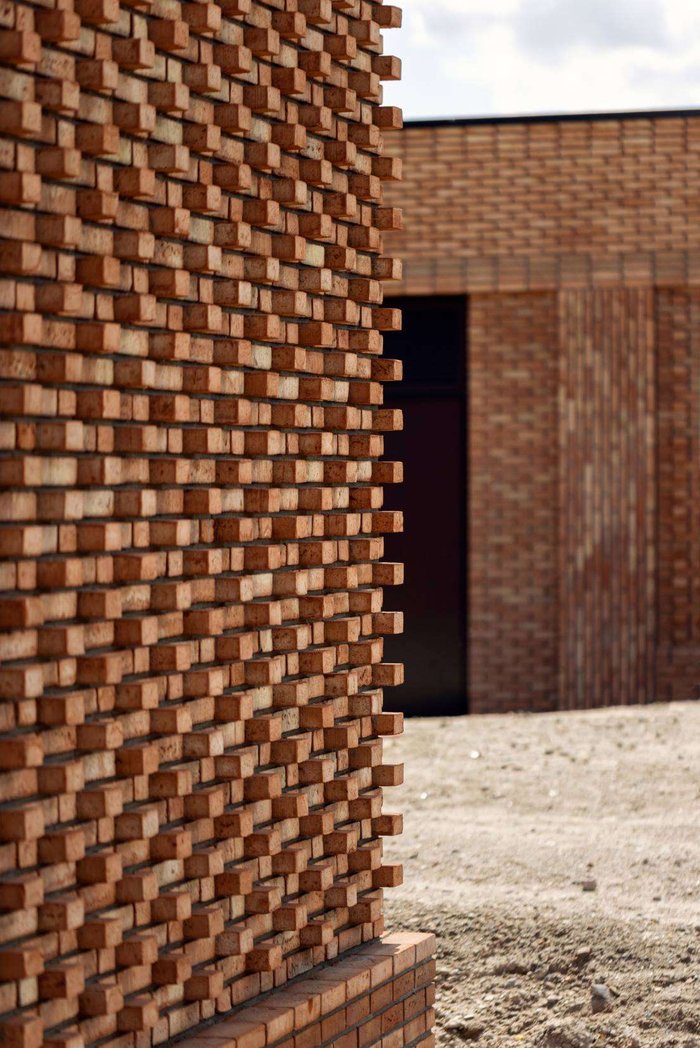
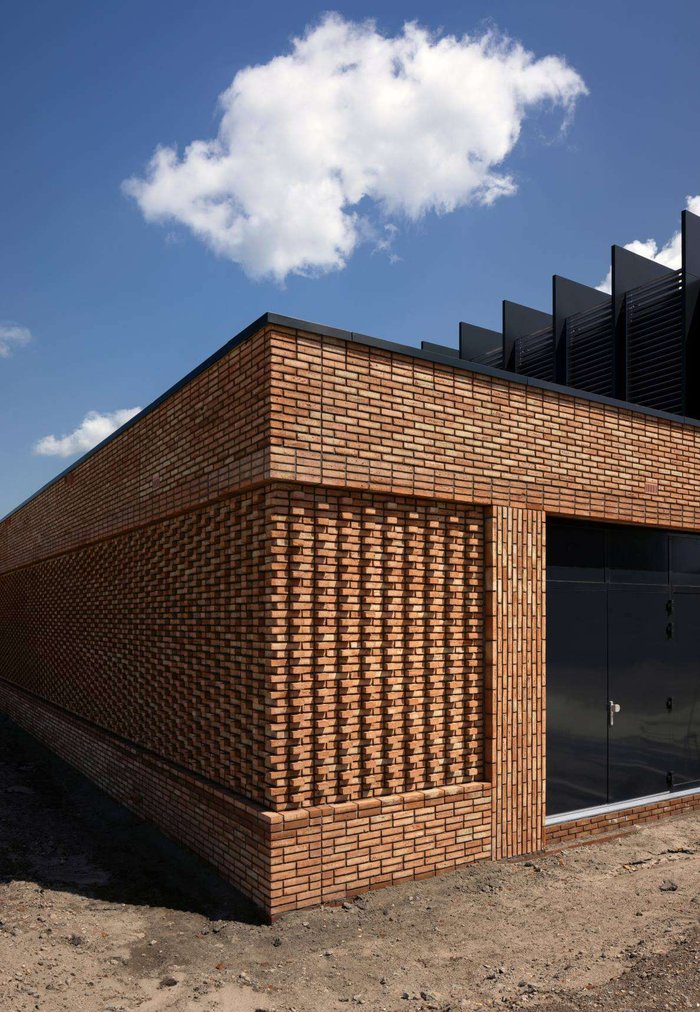
DC Bricks has since realised WasteBasedBrick® in several large projects.
What the LCA revealed
The life cycle assessment took almost a year: mapping transport movements, gathering data from suppliers of residual streams, quantifying all production data. "It really comes down to collaboration and gathering a huge amount of figures."
The results confirmed what DC Bricks is aiming for: a smaller footprint for a product with a long lifespan. This also results in a lower MKI, but for DC Bricks that isn't a goal in itself. "It's a consequence of our strategy. We increase circularity, we lower energy demand wherever we can, and the MKI follows. We think that's a healthier order than reasoning the other way around."
Factory of the future
What the LCA also made clear is where the biggest challenge still lies: the energy demand of the kilns. "The ceramics industry has traditionally been energy intensive. That's precisely why it's important that WasteBasedBrick® makes use of the strength of ceramics while also making the production process smarter."
"That's why we first tackled the composition of the brick, while continuing to research new residual streams, alternative raw materials and smarter ways to produce our ceramic facade bricks more sustainably. For example, we have proven that we're able to produce our product at production scale using hydrogen. Unfortunately, the price and availability of hydrogen is currently still a challenge for serving the market at large scale. In the longer term, we want to work towards a production process in which residual heat from one manufacturing process serves as an energy source for another."
Data as a foundation
For 10 types and colours of WasteBasedBricks®, DC Bricks now has a category 1 declaration in the Dutch Environmental Database. "This means the environmental performance is not just an ambition, but also backed by validated data."
The category 1 declaration fits within a broader development DC Bricks sees in the market. "Clients are increasingly asking for substantiated data. For example, MKI figures, CO2 footprint or Paris Proof indicators. Not just telling a story, but also backing it up and confirming it with data. That has become urgent in the Dutch construction sector."