Weerribben-wiedenreed
Sustainable and locally produced: Weerribben-Wieden reed from the Netherlands now included in the NMD with Category 1 data
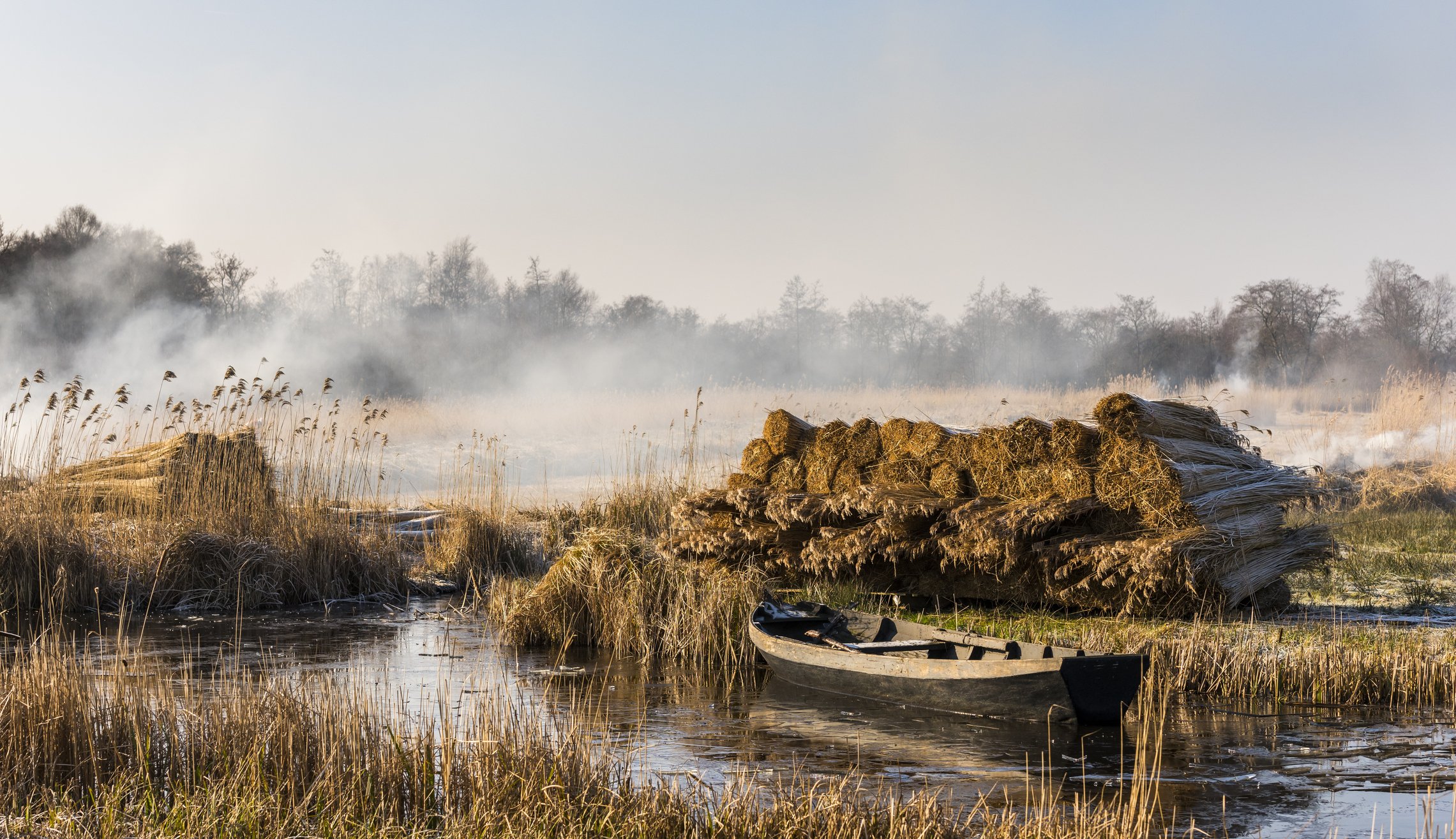
For centuries, reed has been cultivated in the Weerribben-Wieden National Park in the province of Overijssel. The specific conditions in this area result in high-quality, durable reed, making it highly suitable for use as thatching material. The reed is now registered in the Dutch Environmental Database with Category 1 data.
We spoke with nature manager and reed grower Martijn Dam, who is also a board member of the Reed Growers Association De Wieden. He explains the sustainable properties of reed, the important role of the reed sector in maintaining the natural landscape, and the increasing competition from Asia.
The main reason why the Reed Growers Association De Wieden, together with the Reed Growers Association Oldemarkt from the Weerribben area, initiated a Life Cycle Assessment of Wieden reed, is to demonstrate the sustainability of this locally cultivated product.
Martijn Dam: “Increasing volumes of reed are being imported from Asia. Transporting this reed to the Netherlands requires thousands of kilometres by land and sea. Although imported reed is necessary to meet overall demand, we want to demonstrate with data how much more sustainable locally grown reed is, so that it remains the preferred choice.”
Martijn Dam
100% biobased
Martijn is a reed grower himself, just like the generations before him. “Reed is a beautiful, natural product. It is 100% biobased and has strong insulating properties. During its growth, it absorbs CO₂ from the atmosphere, enabling carbon storage in buildings.
Reed from the Weerribben-Wieden National Park is cultivated on freshwater and peat soil, which contributes to its long service life.”
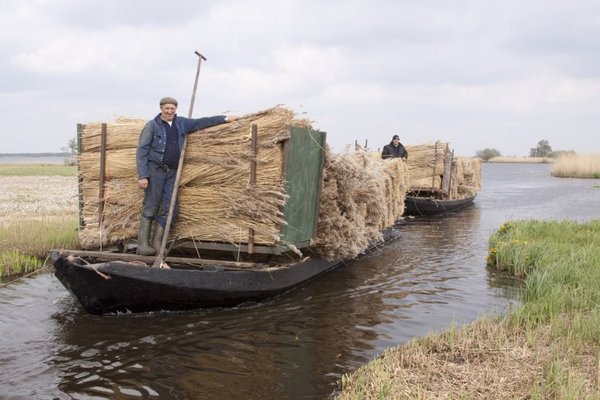
A win-win with nature management
Reed growers play an important role in maintaining the natural area, Martijn explains. “Reed grows naturally, so no fertilisation is required. However, its cultivation does involve specific management activities. We maintain waterways, ditches and windmills to ensure proper water flow, and we prevent other plants and trees from overtaking the reed. Combined with the annual harvesting, this makes reed growers essential to the preservation of the landscape.”
The initiative by reed growers to carry out a Life Cycle Assessment and provide insight into the sustainability of the product was therefore supported by the Province of Overijssel and the Municipality of Steenwijkerland.
“The reed growers ensure that the water-rich areas of the Weerribben-Wieden do not become overgrown and that the reed cultivation tradition in Steenwijkerland is preserved,” said alderman Bram Harmsma in this article.
Labour-intensive process with limited machinery
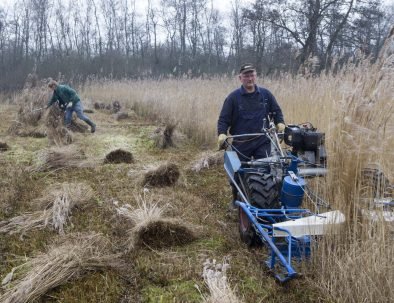
Martijn explains that compiling the data for the Life Cycle Assessment was a complex process. “We carried out an LCA for the product Weerribben-Wieden reed, in order to obtain a Category 1 declaration that applies to all reed growers in the Weerribben-Wieden area working with this product. This required a comprehensive overview of the different types of mowing equipment and transport methods used across the area, so that a weighted average could be established.”
“In practice, the differences are relatively small — reed harvesting is a labour-intensive process involving a lot of manual work and limited use of machinery — but each grower has their own way of working. That made the process time-consuming, but it was successfully completed. It has truly been a collective effort.”
Insights from an LCA
The Life Cycle Assessment — for which the reed growers were supported by Agrodome — confirms that reed is a highly sustainable product.
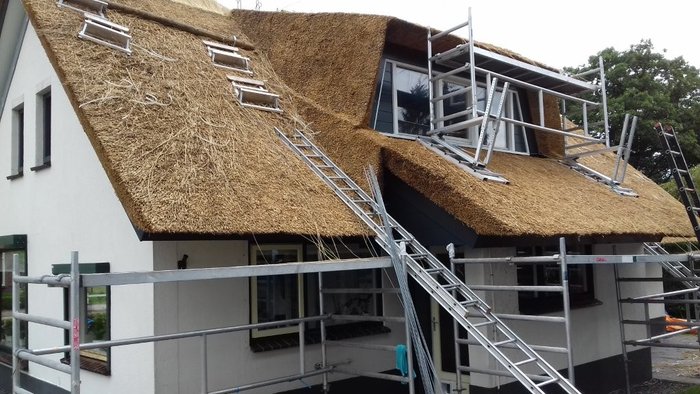
“The most significant impact in the entire LCA comes from the stainless steel wire used to bind the reed and secure it to the roof. This is not something we are directly involved in, as we focus on cultivating the reed rather than installing it on roofs. However, we are in discussions with thatchers to explore whether a suitable alternative to stainless steel wire is available.”
Comparing sustainability performance
The next step for the reed growers is to enable a robust comparison. “Our product is now included in the NMD with Category 1 data (Weerribben-Wieden reed thatching, ECI €0.579 with a service life of 40 years), whereas reed from Asia is not. This means that the difference in sustainability performance cannot yet be fully expressed in quantitative terms.”
“We will therefore use the data in a model calculation, in which we compare roof constructions for different types of roofing materials with our Weerribben-Wieden reed. We expect to perform very well, as our process involves minimal use of machinery and the limited local transport mainly takes place by boat.”
“We want to demonstrate to the Dutch construction sector how high-quality, sustainable and circular our product is. Environmentally friendly roofing material that quite literally grows in nature — it does not get more sustainable than that.”
Read more:


