Five questions for
Danielle Bakx
The Dutch Environmental Database Foundation (Stichting NMD) celebrates its five-year anniversary. The foundation was established in 2020, but work on environmental data for the construction sector goes back much further: Stichting NMD originated from the Building Quality Foundation (SBK), which laid the foundation for the current system from 2011 onward.
5 years Stichting NMD!
Over the past five years we have achieved a great deal and much has changed. We have grown significantly and important steps have been taken to make circular construction a reality. This brings us closer to a sustainable living environment, for today and for the future.
Several people have been closely involved in these developments and in the growth of Stichting NMD. Over a period of ten weeks we will share the perspectives of ten of these people through a short interview based on five fixed questions. In this way, we present ten perspectives on five years of Stichting NMD.
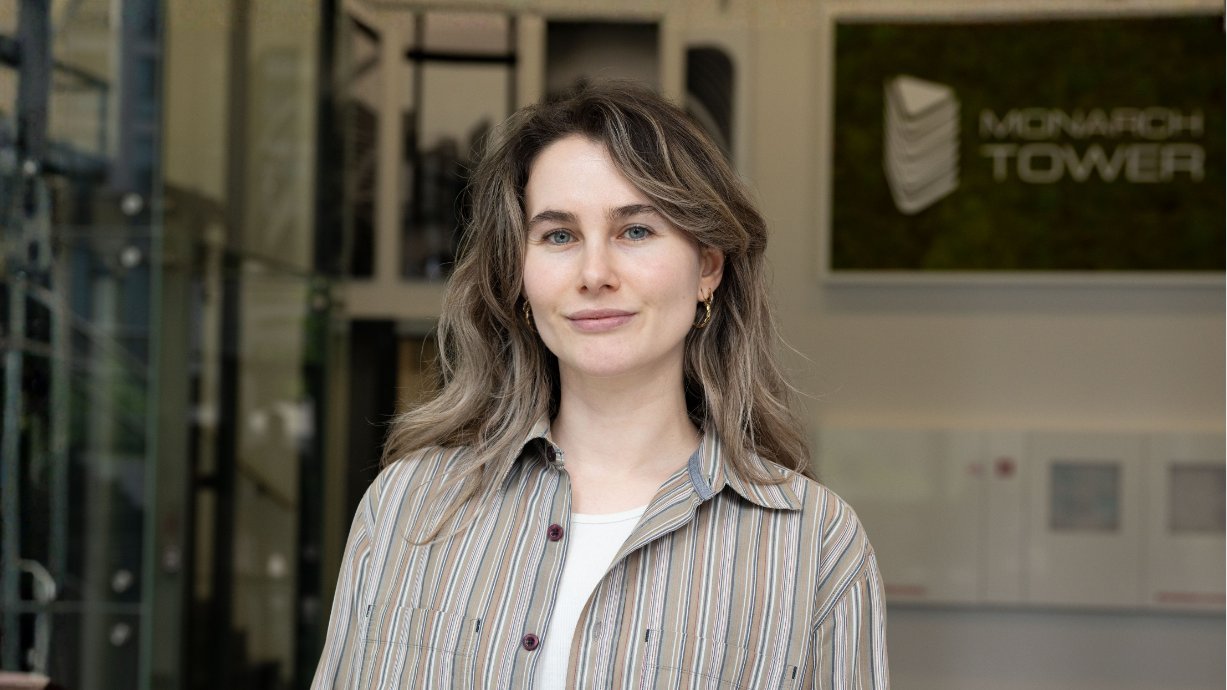
This week we have five questions for Danielle Bakx.
Danielle Bakx is a policy consultant at Stichting NMD. In this role, she focuses on translating national and European policy developments into the practice of Stichting NMD and the Dutch environmental performance system. Her work includes the further development and amendment of the Assessment Method, the preparation and implementation of the WLC-GWP, and preparations for regulation under the CPR. Through her substantive involvement and communication background, she contributes to strengthening and broadening the system, with attention to the coherence between data, methodology and policy, as well as to the needs and interests of involved partners and stakeholders.
1. How did you first come into contact with Stichting NMD?
I was approached via LinkedIn with the question of whether I would be interested in one of the vacancies at Stichting NMD, for either a project manager or data manager role. To be honest, at that time I did not yet have a clear picture of the foundation or the position. I had already been working in the construction sector for a few years, but had not heard of it before. After a phone call with the recruiter, my enthusiasm grew. His description of a friendly group of people who are passionately committed to sustainability in the construction sector really appealed to me. I am very glad that I decided to take the leap.
2. In your experience, what has changed the most in your work or in the sector over the past five years?
Vooral de invloed van Europese ontwikkelingen op ons werk is de afgelopen jaren sterk toegenomen. Er gebeurt veel en het is een uitdaging om het bij te houden, onder andere op het gebied van de CPR en de EPBD IV met de WLC-GWP. Het zijn spannende, maar ook leuke tijden.
Daarnaast zijn we natuurlijk als organisatie zelf enorm veranderd. Iets meer dan een jaar geleden hielden we soms nog meetings vanuit ons kleine keukentje omdat de vergaderzaal bezet was. Nu hebben we een hele fijne werkplek waar we met trots bezoekers kunnen ontvangen. En ik ben ontzettend blij met alle nieuwe collega’s.
3. What change or development would you still like to see?
To be honest, I am particularly curious about the period after the major changes. About what the work and the system will look like once we have become accustomed to the WLC-GWP and to European data as well. At the same time, I find the path towards that point at least as interesting.
4. What are you proud to have achieved together with Stichting NMD?
During the summer period, I completed an interesting study into opportunities for Stichting NMD to make the biobased content of products in the database transparent (we will be following up on this in the coming period). Although this project was somewhat of an outlier for me — as I currently mainly work on policy-related projects — it was extremely educational. My prior knowledge of biobased materials was limited, but thanks to this project and the input of several experts, I learned a great deal. I now have a better understanding of the carbon dating process that can be used to demonstrate whether a product contains biobased material. That was something I would never have anticipated beforehand (and probably neither would my former chemistry teacher).
In addition, I am very proud of the first results that my colleague Jara and I have achieved in the extensive preparations for the WLC-GWP, with the concrete step of developing the WLC-GWP Assessment Method. In this project as well, partly thanks to the pleasant collaboration with experts and partners, I gained a lot of knowledge and experience. I am very much looking forward to the projects that will follow from this later this year.
5. Where do you see Stichting NMD in five years?
I am very curious about that as well! Especially in a period of (European) change, we need to preserve the strength of the Dutch system. In the Netherlands, we have built something valuable, and the developments ahead offer opportunities to strengthen it further. It would be great if, as the Netherlands, we could help guide other countries using the knowledge and experience we have gained over the past years.
This interview is part of a series. Over a period of ten weeks, we publish a new interview every Thursday.
Read more interviews:


