Five questions for
Jelle Bluemink
The Dutch Environmental Database Foundation (Stichting NMD) celebrates its five-year anniversary. The foundation was established in 2020, but work on environmental data for the construction sector goes back much further: Stichting NMD originated from the Building Quality Foundation (SBK), which laid the foundation for the current system from 2011 onward.
5 years Stichting NMD!
Over the past five years we have achieved a great deal and much has changed. We have grown significantly and important steps have been taken to make circular construction a reality. This brings us closer to a sustainable living environment, for today and for the future.
Several people have been closely involved in these developments and in the growth of Stichting NMD. Over a period of ten weeks we will share the perspectives of ten of these people through a short interview based on five fixed questions. In this way, we present ten perspectives on five years of Stichting NMD.
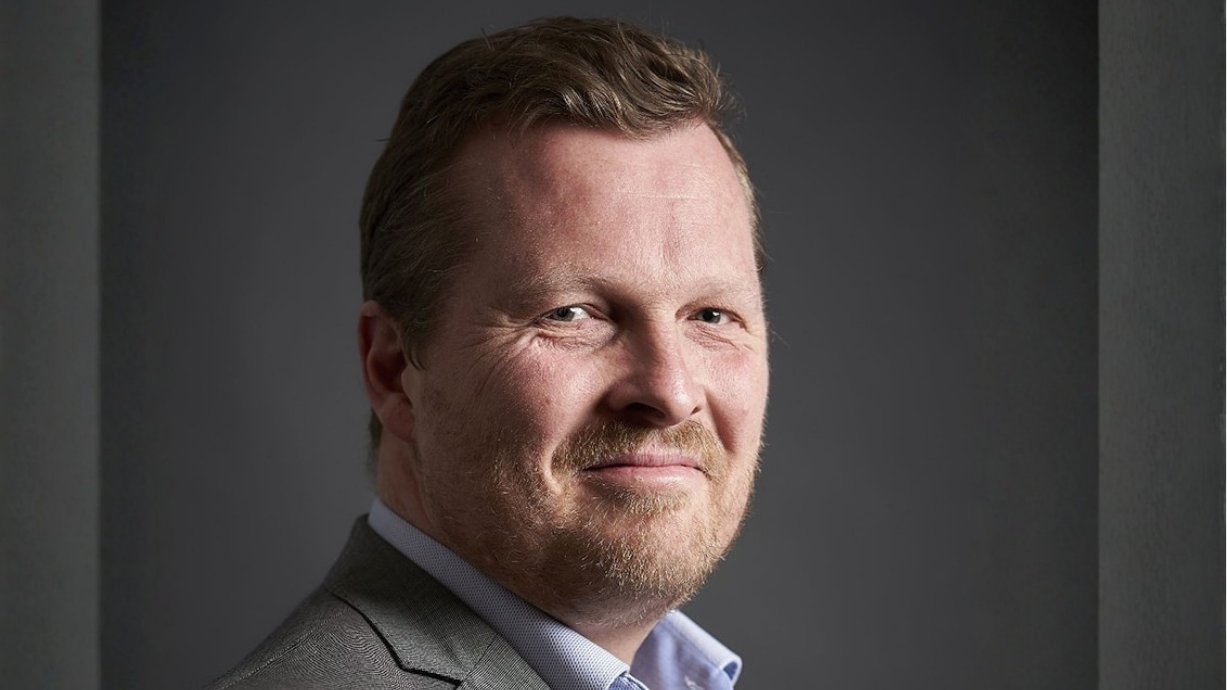
This week we have five questions for Jelle Bluemink.
Jelle Bluemink is Head of Building Regulations and Building Quality at the Ministry of Housing and Spatial Planning (VRO). In this role, he works on the development and implementation of policy relating to building quality, environmental performance and sustainable construction. With his experience on the policy side of the construction sector, he contributes to the further professionalisation and embedding of sustainability and quality frameworks within the Netherlands.
1. How did you first come into contact with the Dutch Environmental Database Foundation?
My first introduction to Stichting NMD was with Jan-Willem Groot in a Teams meeting in the final phase of the COVID period. With great enthusiasm, he introduced me to the fascinating world of environmental performance for buildings. Later, we repeated this at the ministry, where Paul ten Kroode was also present.
2. In your experience, what has changed the most in your work or in the sector over the past five years?
The growing attention for environmental and climate issues. I have been serving as Head of Building Regulations and Building Quality at the Ministry of Housing and Spatial Planning (VRO) for almost four years. During that time, starting at the end of 2022, I devoted significant attention to policy questions concerning the environmental performance of buildings.
Initially, we were working towards tightening the environmental performance requirement for residential buildings to 0.5. At the same time, we intended to introduce a statutory requirement for non-residential buildings and to revise the Assessment Method. The legislative proposal was submitted to parliament for consideration in mid-2024. In mid-2025, following the advice of the STOER advisory committee and based on the outcomes of the National Housing Summit, it was decided not to proceed with tightening the requirement for residential buildings. The assessment of the effects on the national housing challenge turned out negatively. However, the extension to non-residential buildings was implemented, as well as the stricter requirement for office buildings and the designation of the revised Assessment Method. These are expected to enter into force on 1 July 2026.
This policy process saw high peaks and deep lows, with several deadlines needing to be postponed. The environmental performance calculation instrument (MPG) has both enthusiastic supporters and various critics. Bringing these two sides into alignment proved to be a complex process.
3. What change or development would you still like to see?
Promoting a unified language in the construction sector. I have noticed that parties and organisations in the sector work with different methods, definitions, explanations and action perspectives. From a legal perspective, private methods, definitions or perspectives are not prohibited, but they do create considerable noise.
It would be far more sensible for the entire construction sector to align itself with the Assessment Methods, demarcations and definitions developed and managed by Stichting NMD. This would save a great deal of consultation, coordination and ambiguity. It also means that the sector must allow Stichting NMD to fulfil this role and not assume it knows better.
4. What are you proud to have achieved together with Stichting NMD?
The cooperation agreement between the national government and Stichting NMD. Together with the Ministry of Infrastructure and Water Management, we worked in 2024 on an agreement to ensure continued government funding for the NMD. Several steps were taken and arrangements were made to achieve this. Although this was new territory for Stichting NMD, for I&W and for myself, we nevertheless succeeded — with external support — in establishing and securing this cooperation for the coming years.
5. Where do you see Stichting NMD in five years?
The foundation will continue to evolve. With the introduction of a new instrument in the field of climate policy for the built environment — namely the WLC-GWP — the scope of Stichting NMD will be expanded. It must become the central place in the Netherlands where all designers and builders obtain their environmental and climate data. And in this, I see Stichting NMD as an organisation operating on the basis of operational excellence.
This interview is part of a series. Over a period of ten weeks, we will publish a new interview every Thursday.