Conversation with calculation tool owners:
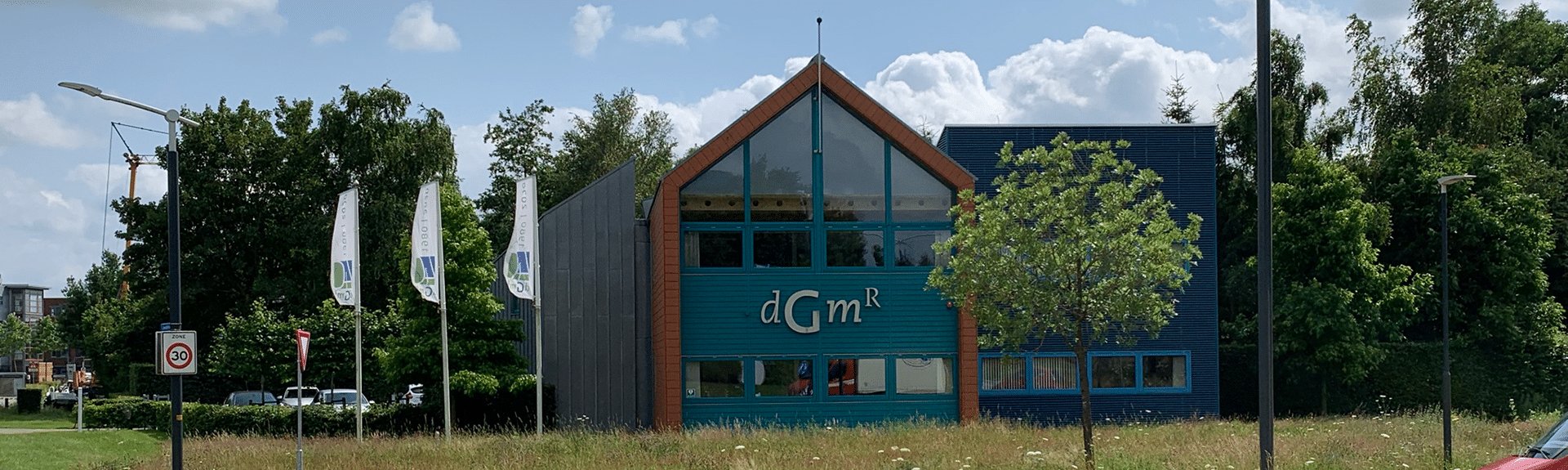
DGMR
Calculation tools form a crucial link between environmental data and its practical application in sustainable construction. Tool owners develop and manage these calculation tools and ensure that they align with current methodologies, regulations and user needs. In this series, we highlight the role of tool owners within the sustainability framework and reflect on the development of calculation tools, the collaboration with Stichting NMD, and current developments in practice.
This month, we are in conversation with Sybe de Wit of DGMR.

Who are you and what is your calculation tool?
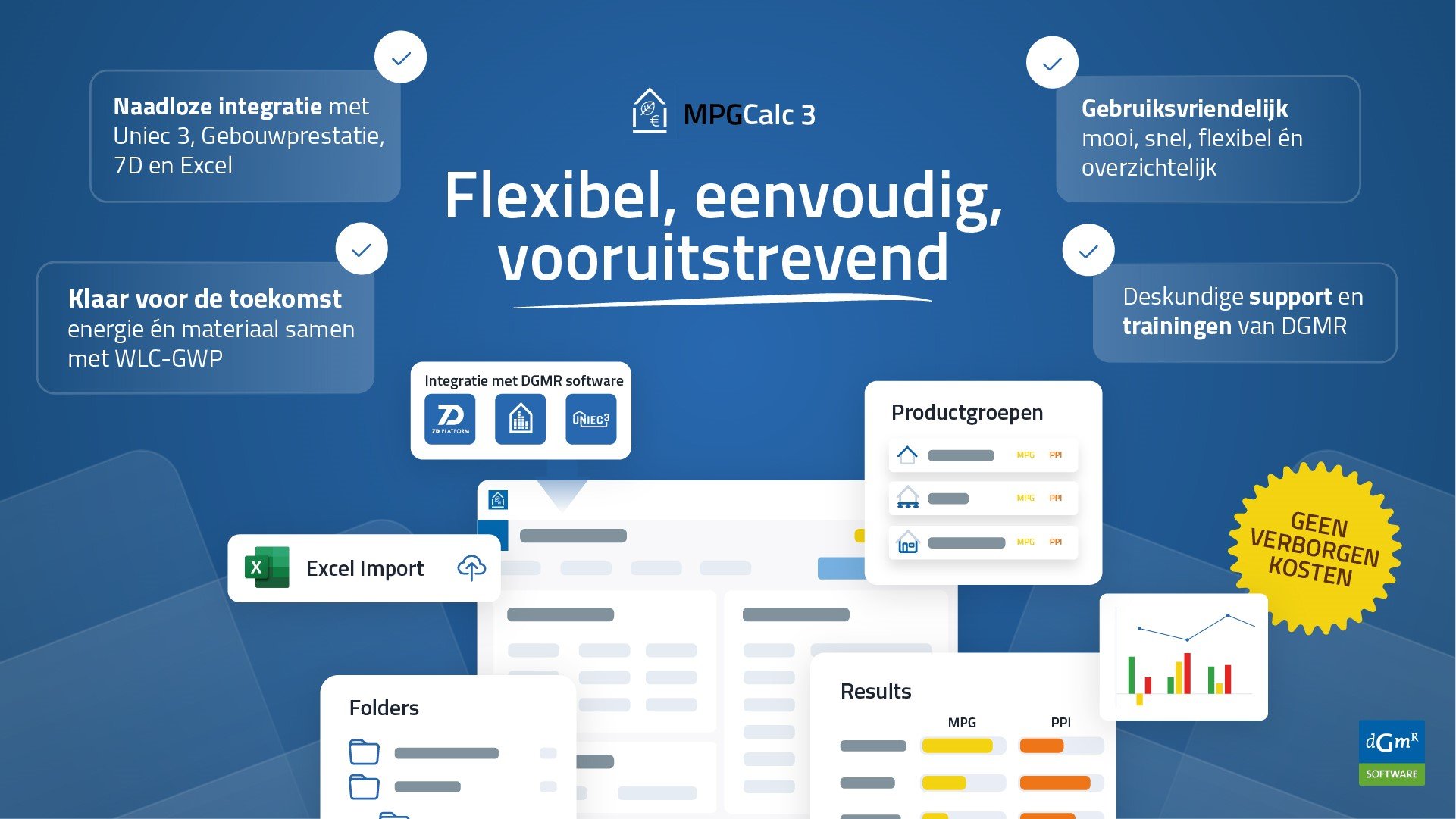
We are DGMR Software. For over 30 years, we have been developing software to support the sustainability of buildings. Our calculation tool is MPGCalc 3, which has been live since October 2025. With this tool, we strongly focus on synergy with our other product, Uniec 3. MPGCalc 3 is used for building materials, while Uniec 3 is used to calculate the energy performance of buildings.
We have two main goals for our users. First, it is a waste of time to redo the process in MPGCalc 3 after already completing a Uniec 3 calculation. We want to facilitate this much better. Second, both methodologies provide insight into CO₂ emissions. Uniec 3 measures CO₂ emissions related to building-related energy use, while MPGCalc 3 measures CO₂ emissions resulting from material use, particularly in the production and construction phases. Our aim is to assess these impacts in an integrated way.
We do this through our software, but the government and Stichting NMD are also working towards this integration through the development of the WLC-GWP.
How do you intend to facilitate that process?
A large amount of data needs to be entered when carrying out a Uniec 3 calculation. Much of this data is also required for an MPGCalc 3 calculation, such as window areas and construction assemblies. Our goal is to enable a seamless transfer of this data from Uniec 3 to MPGCalc 3, so users do not have to re-enter everything manually, step by step.
We believe it is important that consultants can focus on providing high-quality sustainability advice, rather than spending unnecessary time on data entry.
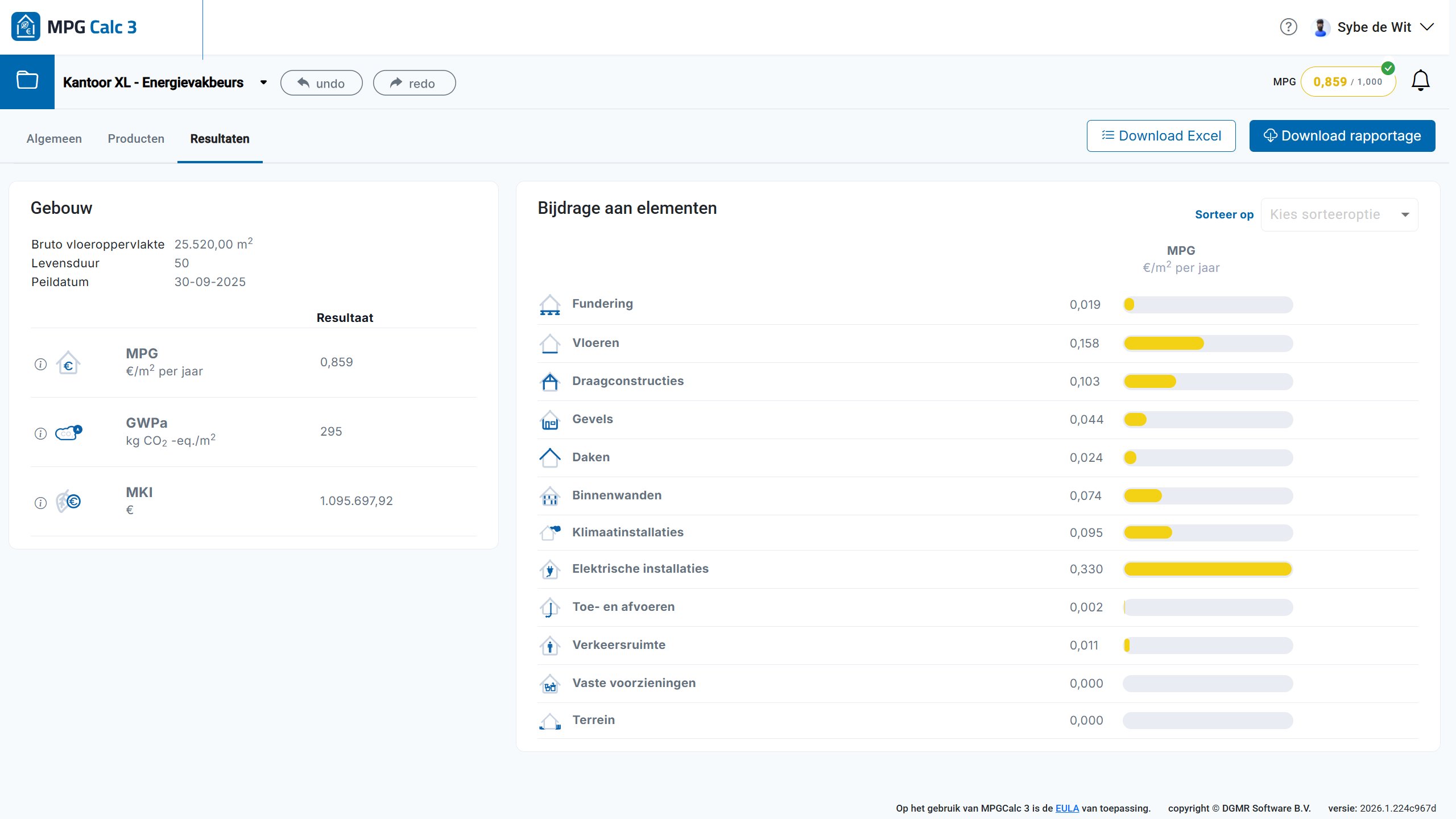
The new calculation tool was launched in October 2025. Are there any other developments you would like to share?
Absolutely. We have launched a new product built with state-of-the-art technology, including features such as undo and redo functionality. Our first users are very enthusiastic and positive, and they actively provide feedback, which allows us to continuously improve the software. This year, we are releasing a new update every month. Sometimes these include major features, sometimes smaller ones—but often it’s the small improvements that make everyday work much easier.
Our focus is primarily on enhancing usability. Reliability is extremely important to us, and this is also something on which we are validated by Stichting NMD. Each release is therefore thoroughly tested, so users can rely on accurate and trustworthy calculations.
In addition, we are already preparing for the WLC-GWP requirements for 2030 and the calculation obligation expected in 2028. We aim to integrate these developments as much as possible into the existing MPGCalc 3 platform, which we can further expand over time.
How do you view the collaboration with Stichting NMD?
Stichting NMD fulfils several roles that are essential for us: developing the methodology, providing the environmental data, and validating the calculation tools. I have been working at DGMR for about three years now. In the beginning, I noticed that some aspects of NMD’s work were still relatively new and developing, but over the past few years I have seen a strong professionalisation.
As a software provider, because you are in close contact with users, you sometimes notice where things get stuck in practice. What I see is that Stichting NMD has become increasingly effective at picking up these signals and addressing them.
What is the added value of having one shared database for environmental performance calculations?
It is crucial that the database is managed independently. There are many competing interests in the construction and manufacturing markets, and everyone wants to perform well and have their product specified. That is precisely why fair and independent assessment is so important. And when a manufacturer comes up with a genuinely innovative and high-performing product, it should be properly recognised and rewarded for that.
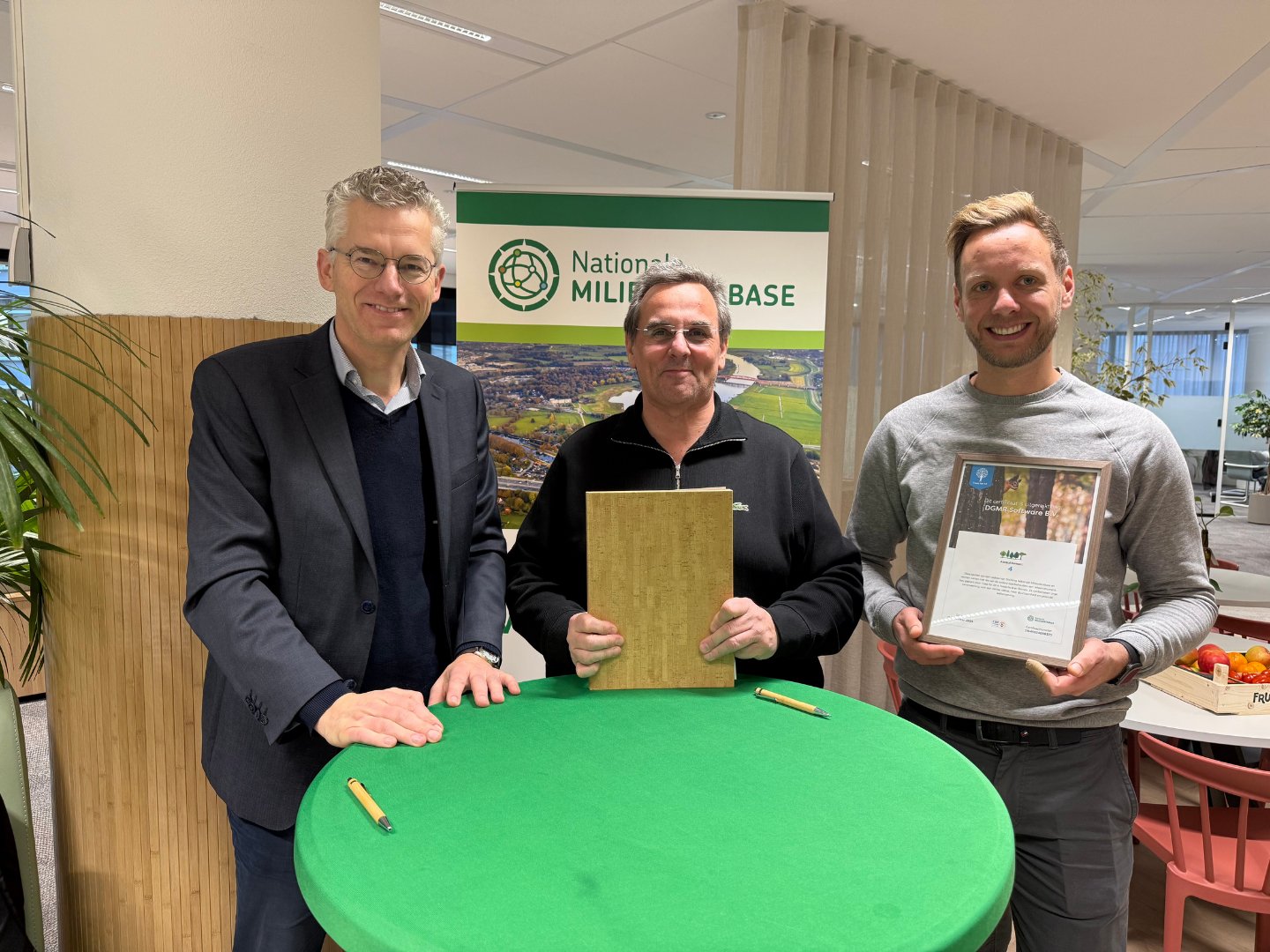
What role do the calculation tool owners and Stichting NMD play together in this?
As a software provider, we are essentially a kind of calling card. Users look up a product in our application and sometimes are not even aware that the data comes from the National Environmental Database. We pass on the data we receive from Stichting NMD as accurately and completely as possible. This means that users can see not only the product name and the MKI, but also, for example, the service life of a product. In fact, everything that is relevant for a calculation can be displayed in columns within our tool, and we present that information in a clear and consistent way. For more detailed information, we refer users to the NMD Viewer.
How has that relationship grown over the years from your perspective?
DGMR has been involved from the very beginning, back when it was still Stichting Bouwkwaliteit. I personally joined in 2023, and one of the most important changes I have seen is the modernization of the IT infrastructure. In 2023, there was a transition from the V2 to the V3 API and database. The old data structure allowed a lot of freedom and interpretation, whereas the new setup is much more structured. As a result, I’ve seen major improvements in the IT infrastructure, making it possible to retrieve the correct data from the NMD in a predictable, transparent, and user-friendly way.
Which current policy and regulatory developments are impacting your calculation tool?
First of all, it has now been officially published that a new methodology will come into force on 1 July 2026. This includes a tightening of the MPG requirements for offices and an expansion to cover all building functions. In addition, information sheets have been published that clarify how an MPG calculation should be carried out. This sends an important signal to the market that the MPG is not a temporary experiment, but a core component of sustainability and circularity.
As a result, the MPG is being taken increasingly seriously, also in relation to the WLC-GWP, which will have to be calculated from 2028 onwards. What we see in the market is that the MPG has evolved from a “box to tick” into a key element of building design. Design teams are increasingly working together with suppliers to initiate and support the circular transition. In that sense, the importance of the MPG is growing both within government policy and among private organisations.
What impact do these developments have on your external communication as an calculation tool owner?
We receive a lot of questions about this. DGMR Software is part of the DGMR consultancy and engineering firm, so in addition to developing software, we also provide webinars and training sessions. In these, we explain topics such as how the Bbl is structured or how calculations should be carried out in practice.
When new regulations are introduced, people naturally turn to us and ask: “Okay, how do we translate this into day-to-day practice?” We take that role—and the responsibility that comes with helping users correctly apply calculations—very seriously.
What are you most proud of as a calculation tool owner in the collaboration with Stichting NMD?
I’m actually most proud of the improvement of the validation process. It has become fair, clear and predictable. A good example is the validation of the MEPG. The MPG focuses on building materials, while the MEPG focuses on energy performance. In that sense, the MEPG can be seen as a first “sneak preview” of the WLC-GWP. We are currently being validated on this by Stichting NMD.
Our deadline to submit everything is February 1st. On the first of April, we will release it together with other calculation tools that have also successfully completed the validation. This results in a very transparent process in which calculation results are properly validated. We have truly made significant improvements together in this area.
I contributed ideas to this process, and Stichting NMD actively followed up and put them into practice.
Do you have a message to users of your calculation tool?
For MPG practitioners, the market is changing rapidly, both in terms of methodologies and software. My advice would be: take the time to explore what is available, see how different tools work in practice, and choose the software package that best fits your own workflow.
Make sure you follow the right channels and stay up to date. A lot is changing at the moment: the software, the methodology and the data. So subscribe to the relevant newsletters and keep yourself informed. Standing still means falling behind. Those who stay ahead of developments can significantly expand their services. The consultant who can advise integrally on both BENG and MPG will definitely have an advantage.

Want to learn more about
Validated calculation tools of the NMD
or DGMR and their calculation tools?
Visit their website:
Read more:


