TULiPPS Click&Go
Mounting system for solar façades now included in the NMD with Category 1 data
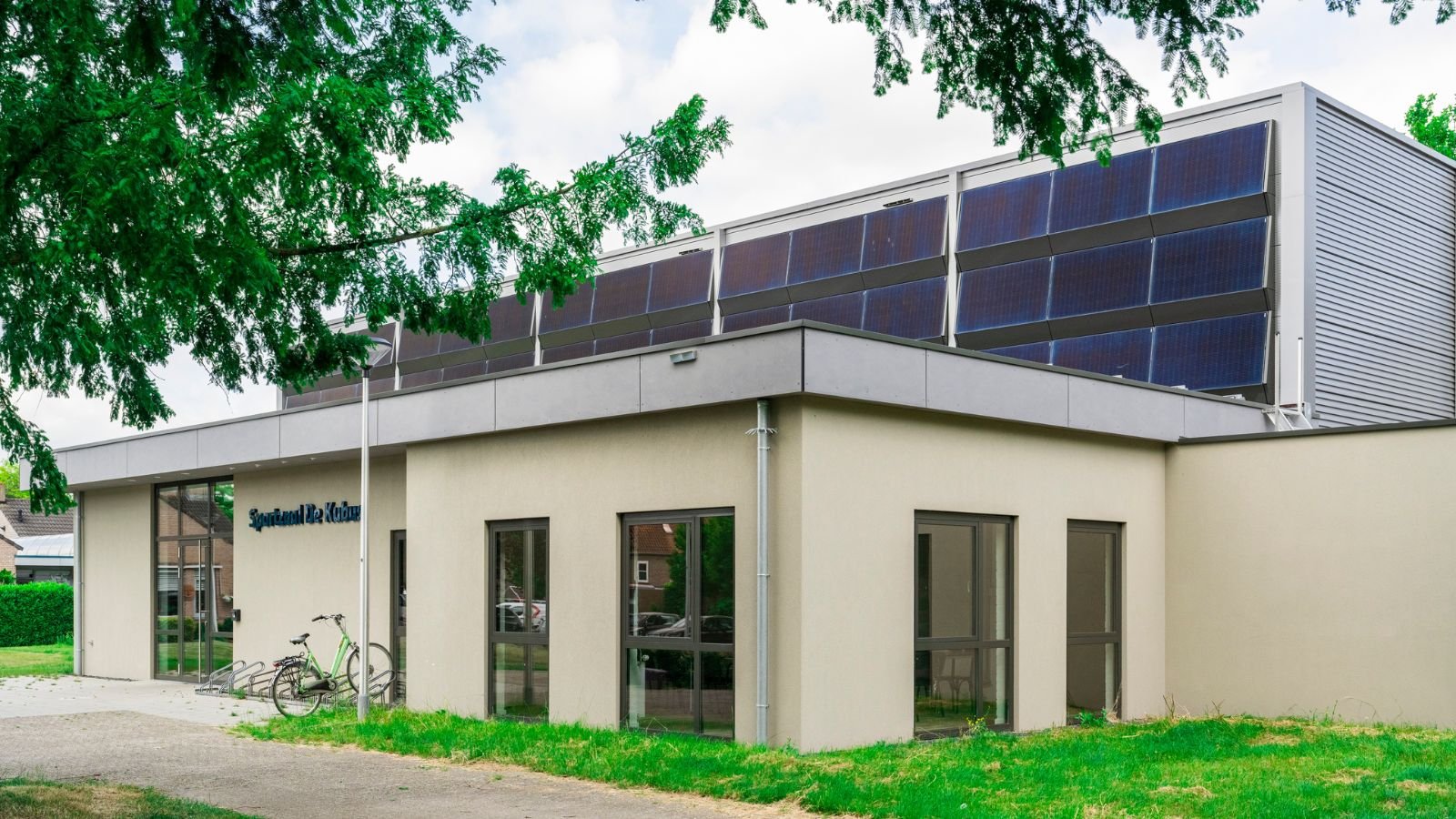
When founding TULiPPS, Paul Stassen and Eugène Widlak initially focused on developing mounting systems for rooftop solar panels. Experiments with various materials led to a solution that enables the blind installation of solar panels, with all fixing points fully concealed. This immediately opened up new possibilities: the aesthetic integration of solar panels into façades. The Click&Go mounting system has recently been included in the Dutch Environmental Database (NMD) with a Category 1 declaration.
TULiPPS was founded at a time when existing mounting solutions still offered significant scope for further development, explains Chief Technology Officer Eugène Widlak. "My business partner Paul Stassen came from the plastics industry and initially aimed to develop a system made of plastic. Together with a German research institute, we demonstrated that bonding plastic to glass did not meet the required performance standards. We therefore switched to metal and focused on developing a simpler, standardised system.
Ultimately, we arrived at a system that allows solar panels to be mounted blindly onto rails, with all fixings concealed. Since then, we have continued to further refine and optimise this system.”
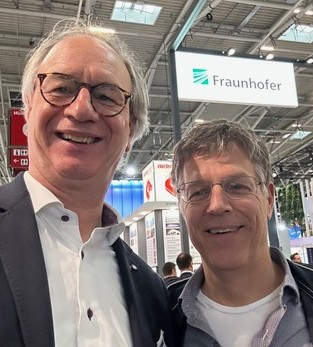
Paul Stassen en Eugène Widlak
Standardised system
“Our Click&Go system is compatible with all standard solar panel sizes and allows installers to work from top to bottom. This is significantly more ergonomic. Installers do not have to mount panels ‘under their feet’, which makes the process easier and safer. We are regularly told that projects can sometimes be completed in half the usual time.
Our system does not require clamps and allows panels to overlap, with only 10 mm spacing between them. This results in a clean and aesthetically refined appearance.”
Flexible application
With the TULiPPS Click&Go mounting system, the connectors are positioned behind the panels rather than clamped around them.
“Once the vertical rails have been installed, no tools are required to mount the solar panels. Panels can be installed in various orientations: portrait, landscape, flush-mounted or tilted from the façade. In addition, panels installed using our system can be individually replaced.”
Suitable for roof and façade applications
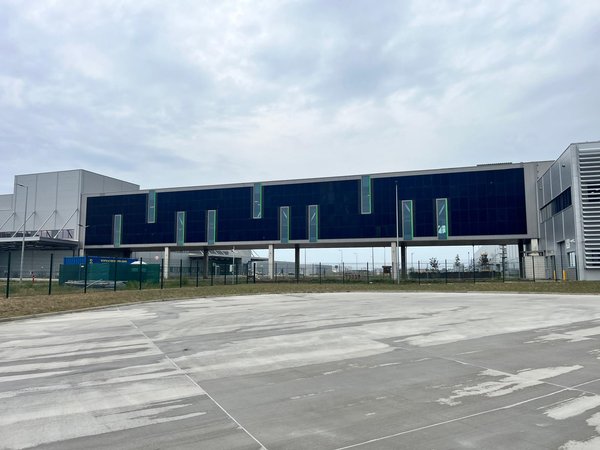
“With this system, we identified new opportunities,” Eugène explains. “Our system is particularly suitable for mounting solar panels on façades, where aesthetics are crucial. We are increasingly in discussion with industrial companies that require a heavier grid connection due to expansion — for example, new machinery or charging stations — but are unable to obtain this because of grid congestion. In addition to rooftop installations, façade-mounted solar panels are a smart addition or alternative to traditional roof systems. They enable companies to generate (additional) energy. A solar façade captures more sunlight hours and distributes energy generation more evenly throughout the day.”
To produce a Life Cycle Assessment
To substantiate the environmental performance of the mounting system and to improve its visibility for designers and contractors, TULiPPS had the Click&Go mounting system included in the Dutch Environmental Database (NMD) with Category 1 data.
“Much of the data required for the Life Cycle Assessment was already available to us, thanks to previous European and national research projects in which we conducted LCAs. This experience enabled us to complete the process efficiently and without delay.”
Continuing to improve sustainability
“Completing an LCA process is highly valuable, as it provides concrete insights into where the product can be further optimised from a sustainability perspective. We now design the dimensions of our rail system to align precisely with standard sheet materials available on the market, thereby minimising material waste. This is directly reflected in the Environmental Cost Indicator (ECI).”
“In addition, we continuously assess material choices and material reduction. Each decision requires balancing manufacturability, sustainability, ergonomics, logistics and standardisation. We have transitioned from aluminium to a steel mounting rail system. In doing so, we carefully weigh different perspectives, while consistently safeguarding the benefits of standardisation.”
Read more:


