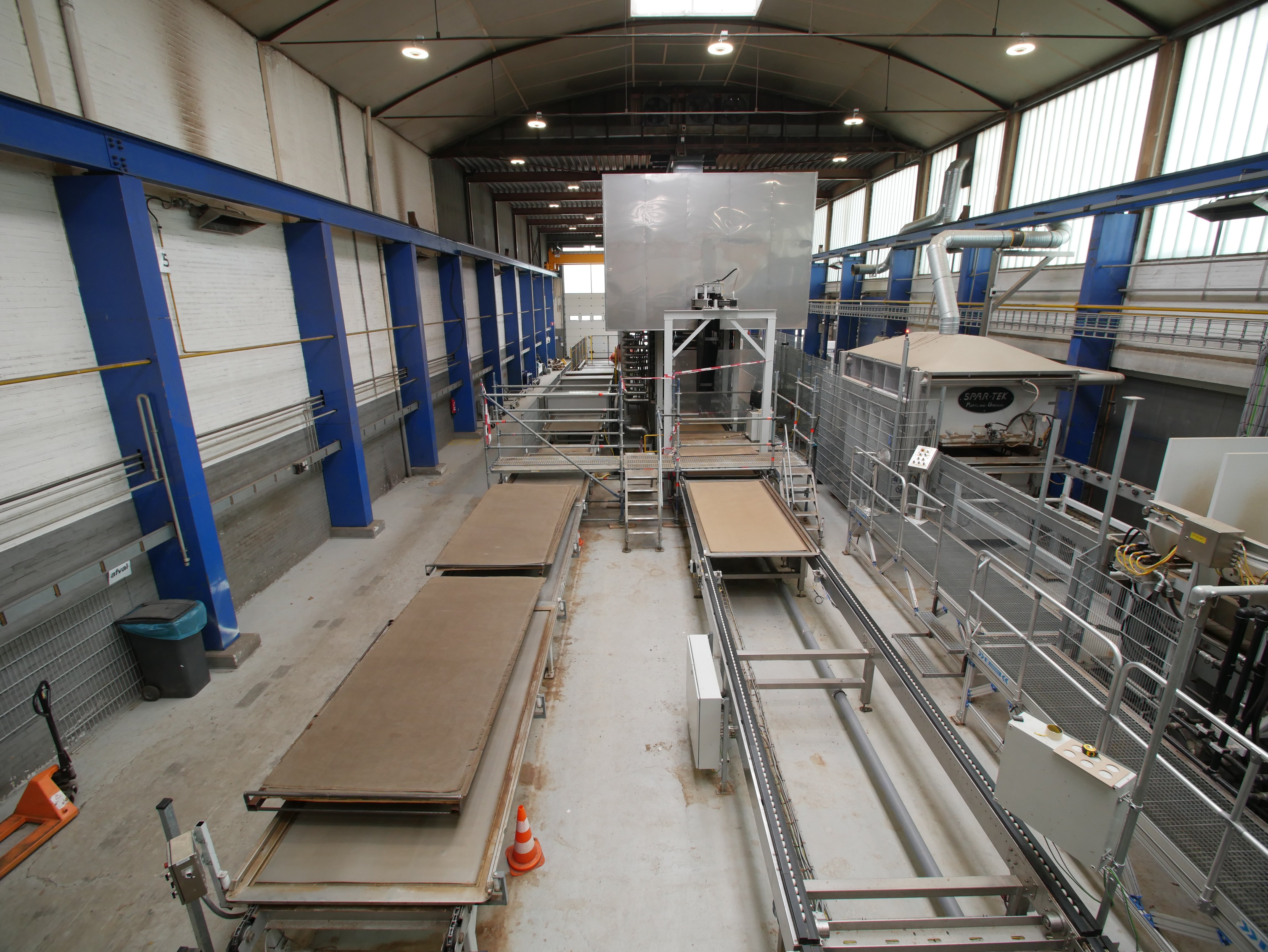
SAM Panels: turning waste streams into circular and biobased panel materials
How do you turn a worthless waste stream into a valuable product? John Smits became involved in 2019 in research into ways of converting residual streams into panel materials. It was established that this is possible with more than 150 residual streams — including grass, hemp, cow manure, miscanthus, cocoa and textiles. This resulted in a factory in 2022 that now produces around 300,000 m² of sustainable panel material per year. Several products from SAM Panels are listed in the Dutch Environmental Database with a category 1 environmental declaration.
John Smits worked for many years as an accountant. When his wife was pregnant, he discovered during the furnishing of the baby’s room how harmful some materials can be. It inspired him to work for change. In 2019 he joined SAM Panels to arrange the financing of the factory. He succeeded, and in 2020 he was asked whether he wanted to become managing director. In 2023 he took over the company entirely.
Valuable research
“SAM stands for Sustainable Advanced Materials. For years, we conducted research into how you can process fibres from waste streams into panel material. We examined and processed more than 150 types of fibres — such as cow manure, verge grass, hemp dust, miscanthus, label paper, tomato vines and the fluff that remains in dryers when recycling denim. There are so many companies that produce residual waste.”
“We learned an enormous amount from the research and invested substantially in testing equipment so that we could determine the properties of the materials and end products in detail. For example: how much moisture should the panels absorb after production to stabilise them? What are the best ways to laminate the panels? And what happens when you saw, drill or sand them? All of this research formed the basis for the materials we offer today.”
A solution to multiple problems
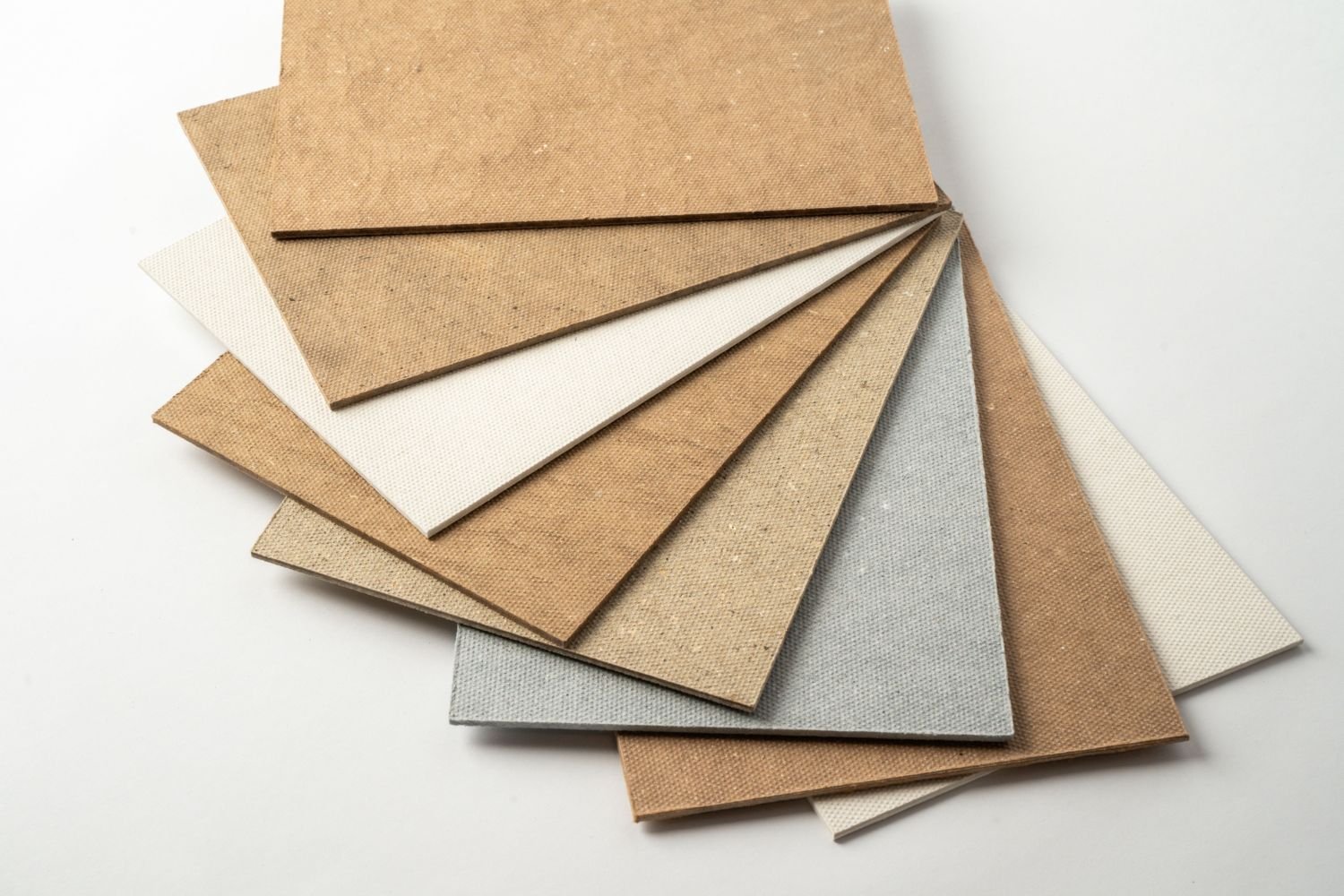
SAM Panels now produces around 300,000 m² of sustainable panel material per year. The company works mainly with five different formulations: label paper, denim residue, verge grass, hemp dust and cow manure.
“By using the residual stream of cow manure, we address three macro-economic issues. First, we reduce nitrogen emissions because the manure is collected fresh each day. Second, the digestion of cow manure produces biogas, which reduces dependence on fossil fuels. Third, processing the residue of cow manure into a building material is a CO₂-negative process. We lock the CO₂ into the panel for a long period of time.”
Non-toxic and 100% biobased
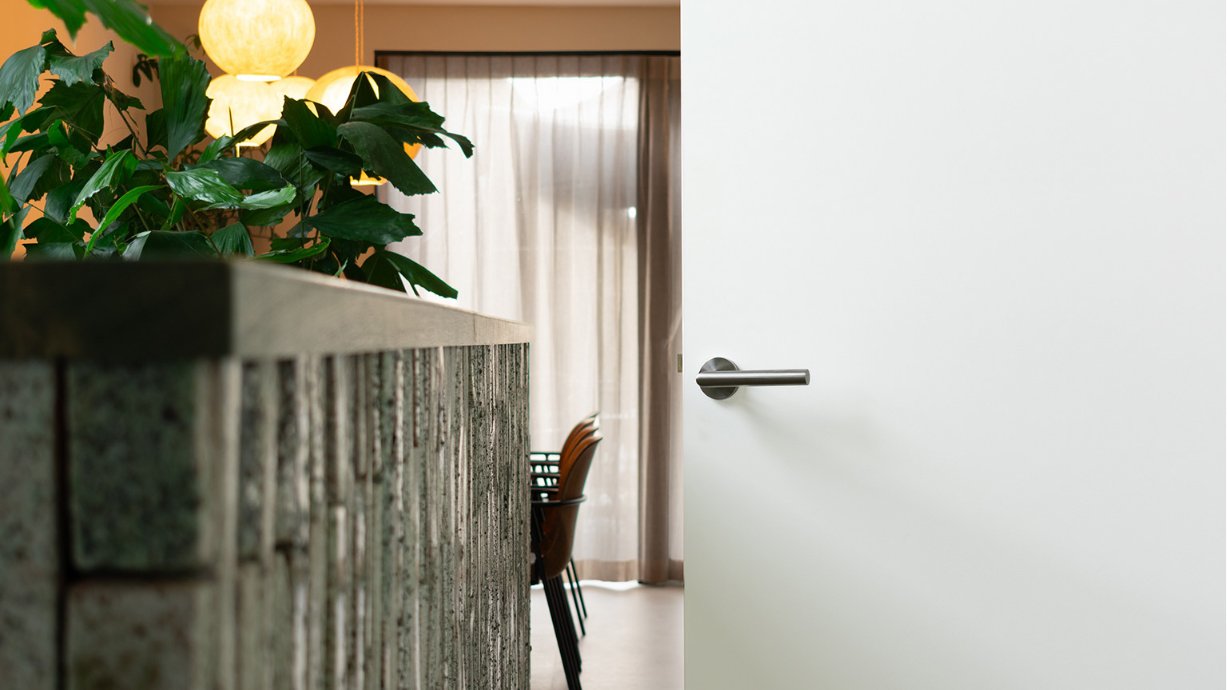
The panel materials from SAM Panels are used for roof structures, walls, doors, kitchen panels, furniture and acoustic solutions. They are non-toxic, 100% biobased, lightweight and have properties such as water resistance and sound insulation. “We use no glue or resin. All our products are made solely with water, pressure, heat and fibres. As a result, the panels can be reused again and again. We therefore sell all our panel materials with a buy-back guarantee. As part of our circular process, we buy them back after use.”
Instructive Life Cycle Assessment
Two products have been listed in the Dutch Environmental Database with category 1 data since autumn 2025: SAM Solid and SAM Pure, both used among other things for interior wall finishes.
“NMD registering is a prerequisite for growth in the construction sector. We need volume to be able to compete on price with traditional panel materials, and to achieve that volume we need to be included in the NMD. We work extensively with industrial partners, and they ask for an LCA. We fully understand that parties want substantiation for what you claim. If you say you have a sustainable product, you must be able to demonstrate it.”
“Moreover, you learn a great deal from a Life Cycle Assessment. We started by collecting the data ourselves — about our energy use, the amount of raw materials and all the other things we do. That alone creates a lot of awareness. On the basis of those insights, you can optimise much more efficiently. For example, we took an even more critical look at the settings of the press and how we could adjust them to save energy. A Life Cycle Assessment makes you even more aware of your own footprint. I recommend it to everyone.”
Circular factor
SAM Panels has a clear vision of the next step in the company’s growth. “We have the capacity to scale up to the production of 1.5 million m² of panel material. Our ultimate goal is to operate three production lines simultaneously and to manage our own energy supply with a biogas digester. That would allow us to reduce our cost price, and with our own biogas digester we would be able to bring in verge grass and cow manure ourselves and use those streams to generate gas for our press. In that case, we would not only have completely circular products — we would also operate a completely circular factory.”