Architect Omayra Mingels draws inspiration from the past

Samen lokaal circulair en biobased bouwen. Daarop focust architect Omayra Mingels (1988) van SATIJNplus Architecten in Born. ‘Hier in Limburg ligt alles voor het grijpen; de materialen in het landschap, de cultuur en historie. Voor mij is vakwerkbouw bijvoorbeeld een grote inspiratiebron. Dat bestaat uit natuurlijke, lokale materialen en is losmaakbaar en dus circulair.’
Omayra studeerde af aan de Technische Universiteit Eindhoven in de richting Architectural Design and Urban Cultures. Daarvoor behaalde ze het hbo-diploma Built Environment aan Zuyd Hogeschool in Heerlen. Ze is nauw betrokken bij het programma Building Balance en een van de drie oprichters van het Limburgs Architecten Collectief. ‘Mijn generatie architecten deelt actief kennis met elkaar en zoekt naar verbinding, met elkaar en met opdrachtgevers en leveranciers. Dit is volgens ons noodzakelijk om de overgang naar circulair en biobased bouwen te kunnen maken.’
SATIJNplus Architecten
Since 2013, Omayra has been working at SATIJNplus Architecten. SATIJNplus is a large firm with 30 employees and a flexible network of partners. “We cover all aspects of construction: from initiating projects, creating creative and technical designs, calculations and specifications, to construction management and site supervision.” The firm is active in residential construction and in the development of care facilities, and is well known for its extensive knowledge and nearly 65 years of experience in preserving and transforming existing buildings such as heritage sites. “We mainly work for housing associations, church boards, institutions and developing parties in the southern Netherlands and Belgium.”
At SATIJNplus Architecten, they believe that architects and all other actors in the construction chain should look more consciously at their surroundings. “We face major challenges such as heat stress and flooding. We must adapt to the changing climate — including in what we build. Limburg has a rich cultural and historical landscape. The terrain is hilly everywhere. The soil contains loam. We have a lot of timber. We want to contribute to circularity in construction. You achieve this by working together.”
The history of traditional timber-frame construction*
In Limburg, many examples of traditional timber-frame construction — simply called vakwerk — can still be found. In North Brabant and Gelderland it is less common, and in the rest of the Netherlands it is almost absent. The Romans introduced an early form of this building style to the Netherlands, but did not settle beyond the major rivers. The landscape also compelled them to build with light materials such as timber and loam.
Timber-frame construction was especially popular in the 17th century, but a considerable number of timber-frame buildings were still added in the 18th and 19th centuries. Characteristic of this building style is the modular skeleton with timber frames consisting of vertical posts, horizontal beams and diagonal braces. The spaces between the timber frame were filled with loam (a mixture of clay and straw), field-fired brick or baked brick, lime or plaster. Field-fired brick was baked in temporary kilns using clay from the surrounding area.
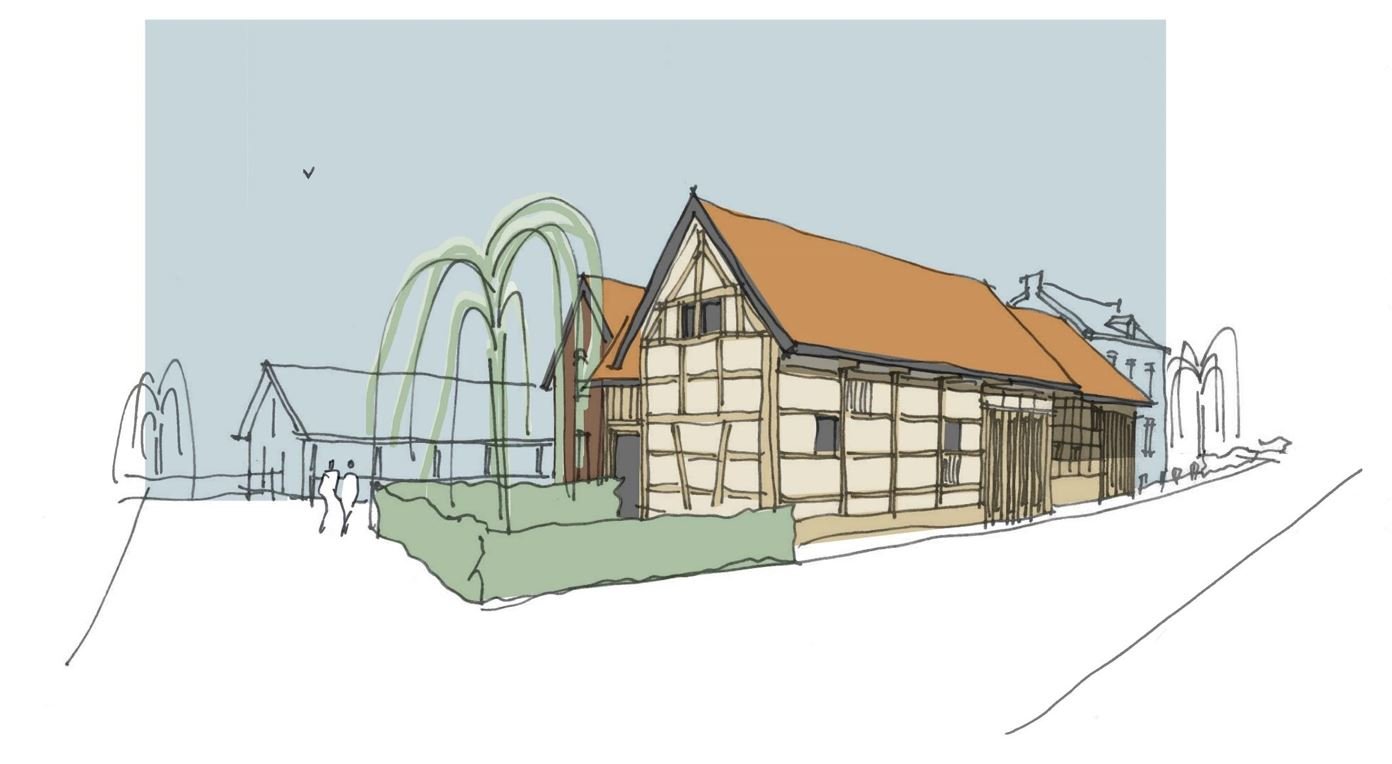
The beams were joined using mortise-and-tenon connections and were often even prefabricated in a workshop. “A wonderful example of sustainable and circular construction,” say Omayra and many fellow architects. “Farmers in particular built timber-frame houses and barns. Timber-frame structures were — and still are — demountable. Farmers could even take their house and barn with them when they went to work for another landowner. Carpenters marked their work with notches in the timber so they could always find which element belonged where.”
Sustainable and demountable
Timber-frame construction is part of Limburg’s cultural heritage and closely connected to the landscape. All materials used for these buildings are found in the region itself, which makes timber-frame construction highly sustainable. “And its demountability fits perfectly with the circular philosophy. The frame of chestnut timber posts is demountable, and the infill of loam and twigs could be removed. Exactly what we aim for today in circular construction.” Relocating a timber-frame building was done with great care and caution, as it is not a simple task. “The craft from that time still exists, though only to a limited extent. But even with modern techniques we can create buildings that are demountable.”
Experiencing and insulating together
The architect observes that the biggest challenge in the transition to circular design and construction is breaking through the current culture. “Many architects, including myself, are working hard to raise awareness about the potential of the Limburg landscape with its beautiful materials.” She tries to inspire others by sharing experiences, for example through LinkedIn. “In Limburg we have many lightweight materials in the landscape and in the soil. They are easy to transport and cause low emissions. My colleagues and I find that very inspiring.” Together with Building Balance, they signed a commitment statement in June with architects, developers and housing associations. “With this, we demonstrate our willingness to jointly explore optimal circular construction.”
Avoid greenhouse temperatures — choose natural insulation
Omayra regrets that materials with a negative impact often score well on sustainability in many databases. “That is because no integral assessment is made. Take the RC value, for example; if you were to consider other aspects, these types of products would not score well at all. Take mineral wool. It heats up within three hours. Natural materials take eight to thirteen hours to reach the same temperature. If you use mineral wool in the roof of a house, it can easily reach forty degrees. At SATIJNplus Architecten, our advice is: pick the low-hanging fruit and choose a natural insulation material, such as hemp–lime. At the moment, these natural materials are still somewhat more expensive, but as the risk costs of natural insulation materials decrease, they will become price-competitive. And afterwards, a building is cheaper to operate because of lower energy consumption and less powerful installations. We therefore need to look at a building holistically — not just at the construction costs.”
Tips from architect Omayra Mingels
- Start using biobased insulation materials today
- Look beyond the numbers and beyond the short term. Dare to choose natural materials that may not achieve the highest calculation scores but are the most sustainable choice in the long term. Make an integrated choice that also considers material extraction and the positive impact on nature
- Use your common sense and connect with the landscape and local culture in which you design. Choose natural materials to keep the environmental impact as low as possible
- Cherish the landscape in which you build and renovate, and familiarise yourself with the materials that are naturally present. You can always take a small step
Historical building technique applied with modern machinery in castle restoration
Building techniques from centuries ago, such as those used in traditional timber-frame construction, are sometimes used as inspiration by Omayra and her colleagues. Over the past 12 years, she worked on the restoration of the Van Oys estate in Eijsden-Margraten. It was completed in early 2025, and in June a luxury hotel with spa facilities and restaurants opened its doors there. The castle on the estate dates from the 16th century. “It had several roofs and roof structures, it was incredibly beautiful — but as leaky as a sieve.” At one point in its history, the castle was converted into an inn. “It was given a kind of chalet style.” Around the Second World War, artists lived in the former castle. “They suffered from leaks and wanted more daylight. They removed the deteriorated parts of the inn. As a result, the castle became more like a villa; its original character had disappeared.”
At that stage, Heritage Conservation became involved. “Using all kinds of old drawings, the committee was able to show what the castle once looked like. They even found illustrations showing a beautiful turret above the centre of the castle.” SATIJNplus Architecten created the design for the restoration. “Subcontractor Techwood from Oirschot reconstructed the oak trusses and roof turret using traditional mortise-and-tenon joints. Crafting this entirely by hand would have been too expensive. That’s why Techwood used CNC milling technology. I think that’s incredibly impressive.” The result is a demountable — and therefore circular — vaulted structure.
*For this article, the author has used information from the book: Vakwerkbouw – 600 jaar bouwen met hout en leem in Zuid-Limburg en omstreken by Coen Eggen.
